Calories Burned Swimming: MET Values by Stroke and Intensity
Published 6/2/2026 · 4 min read · Sport calculators

Swimming burns roughly 400–700 kcal per hour for most adults, depending on stroke, speed, and body weight. The standard estimate uses MET values: calories per minute = MET × 3.5 × body weight in kilograms ÷ 200. Leisurely swimming is about 6 METs, moderate freestyle around 8 METs, and fast or butterfly swimming can exceed 10 METs. A heavier person burns more at the same effort, and harder strokes burn more than an easy backstroke.
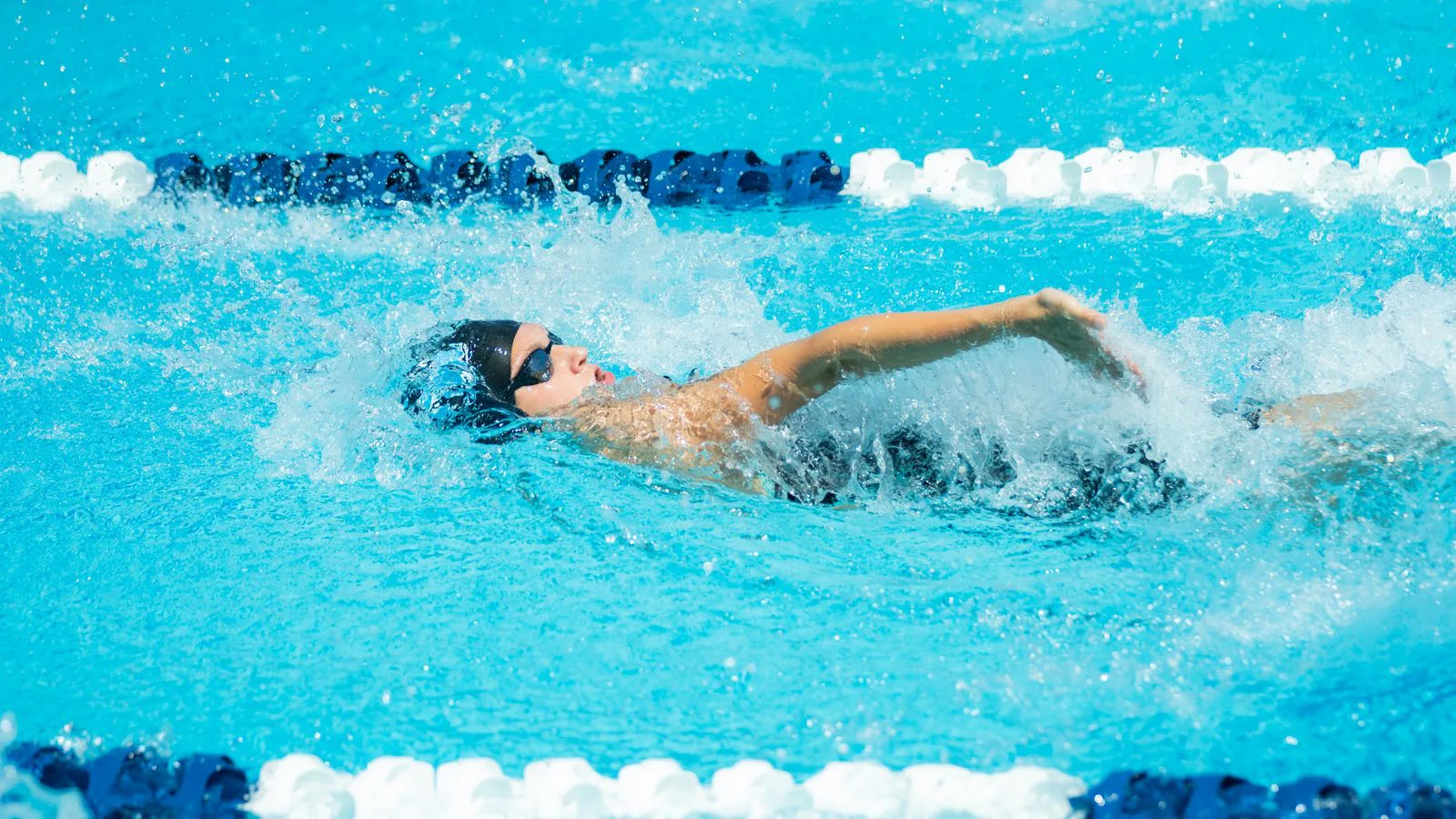
How many calories does swimming burn? Learn the MET-based formula, typical MET values for freestyle, breaststroke, backstroke, and butterfly, and how weight and effort change the total.
How the MET formula works
MET stands for Metabolic Equivalent of Task. One MET is the energy you burn sitting quietly — roughly 3.5 milliliters of oxygen per kilogram of body weight per minute, or about 1 kcal per kilogram per hour. An activity rated at 8 METs burns energy eight times faster than resting. This single number lets you compare wildly different activities on one scale, from a slow walk to butterfly swimming.
The working formula is: calories per minute = MET × 3.5 × body weight in kilograms ÷ 200. Multiply by your minutes in the water for the session total. For a 165 lb (75 kg) swimmer doing moderate freestyle at 8 METs, that's 8 × 3.5 × 75 ÷ 200 ≈ 10.5 kcal per minute, or about 630 kcal in an hour. Change the MET value for a different stroke, or the weight for a different swimmer, and the total shifts accordingly.
MET values by stroke and effort
Published MET tables give a range for swimming. Leisurely lap swimming sits around 6 METs, moderate-effort freestyle around 8 METs, and vigorous freestyle roughly 10 METs. Breaststroke is often listed near 5–10 METs depending on speed; backstroke around 5–8; and butterfly, the most demanding stroke, can reach 11 METs or more. Treading water is only about 3–4 METs when easy but climbs sharply when vigorous.
These are population averages, not exact readings. Two swimmers doing the same stroke can burn different amounts depending on technique, buoyancy, and water temperature — an efficient swimmer glides more per stroke and may use less energy at a given pace. Because water conducts heat away from the body, cold water can raise energy use slightly. Treat any MET-based figure as a good estimate, not a precise measurement.
What raises or lowers the total
Body weight is the biggest lever in the formula: a heavier swimmer moves more mass through the water, so at the same MET they burn proportionally more. Intensity is the next lever — swimming faster, or choosing a harder stroke like butterfly, raises the MET value and therefore the burn. Duration simply scales the result: double your time in the pool and, at steady effort, you roughly double the calories.
One caveat: the MET formula estimates total energy expenditure, which includes the calories you'd have burned just being alive during that time. For a rough net figure — the extra above resting — subtract about one MET's worth. For most fitness goals the gross figure from a swimming-calories calculator is fine, but keep the distinction in mind if you're carefully tracking energy balance.
Worked with our own calculator
Swimming Calories Calculator
Given
- Weight (kg)
- 63
- Intensity
- Leisure / light
- Duration (minutes)
- 15
Result
- Calories burned
- 99 kcal
These figures are produced by the calculator below, not typed in by hand — they are recomputed whenever the tool changes.
Run it on your own figures →Frequently asked questions
- Does swimming burn more calories than running?
- It depends on intensity. At matched effort, vigorous swimming (around 10 METs) and vigorous running (also around 10 METs) burn similar amounts. Easy swimming burns less than hard running, and vice versa. Swimming's advantage is that it's low-impact, so many people can sustain it longer or use it while recovering from injury, which can raise the total burned over a week.
- Why does body weight change the calories burned?
- Because moving a heavier body through water takes more energy. The MET formula multiplies by body weight for exactly this reason: at the same MET value, a person weighing 90 kg burns about 20% more per minute than one weighing 75 kg. This is why any credible calculator asks for your weight — a generic per-hour figure that ignores it can be well off for you.
- How accurate are these calorie estimates?
- They're ballpark figures. MET values come from studies on groups of people, so your true burn can differ by 10–20% or more depending on technique, fitness, and water conditions. They're perfectly useful for comparing strokes, planning sessions, or tracking trends over time — just don't treat a single number as exact when balancing intake and output to the calorie.
- Does swimming in cold water burn more calories?
- Slightly, but less than many assume. In cold water your body spends extra energy on heat production, so total burn can edge up. However, the effect is modest for typical pool temperatures and short sessions, and standard MET tables don't account for it. Don't rely on cold water to meaningfully boost calorie burn — stroke, intensity, and duration matter far more.
Articles you may find interesting
All guides →Related tools
Sources
Spotted a mistake in this article?