How Much Water Should You Drink a Day?
Published 12/12/2025 · 3 min read · Health calculators

Most healthy adults need roughly 30–35 ml of water per kilogram of body weight a day — about 2.3 litres for a 70 kg person, from drinks and food combined. Health authorities put total daily fluid near 2.7 litres for women and 3.7 litres for men. Needs rise with exercise, heat, body size and pregnancy.
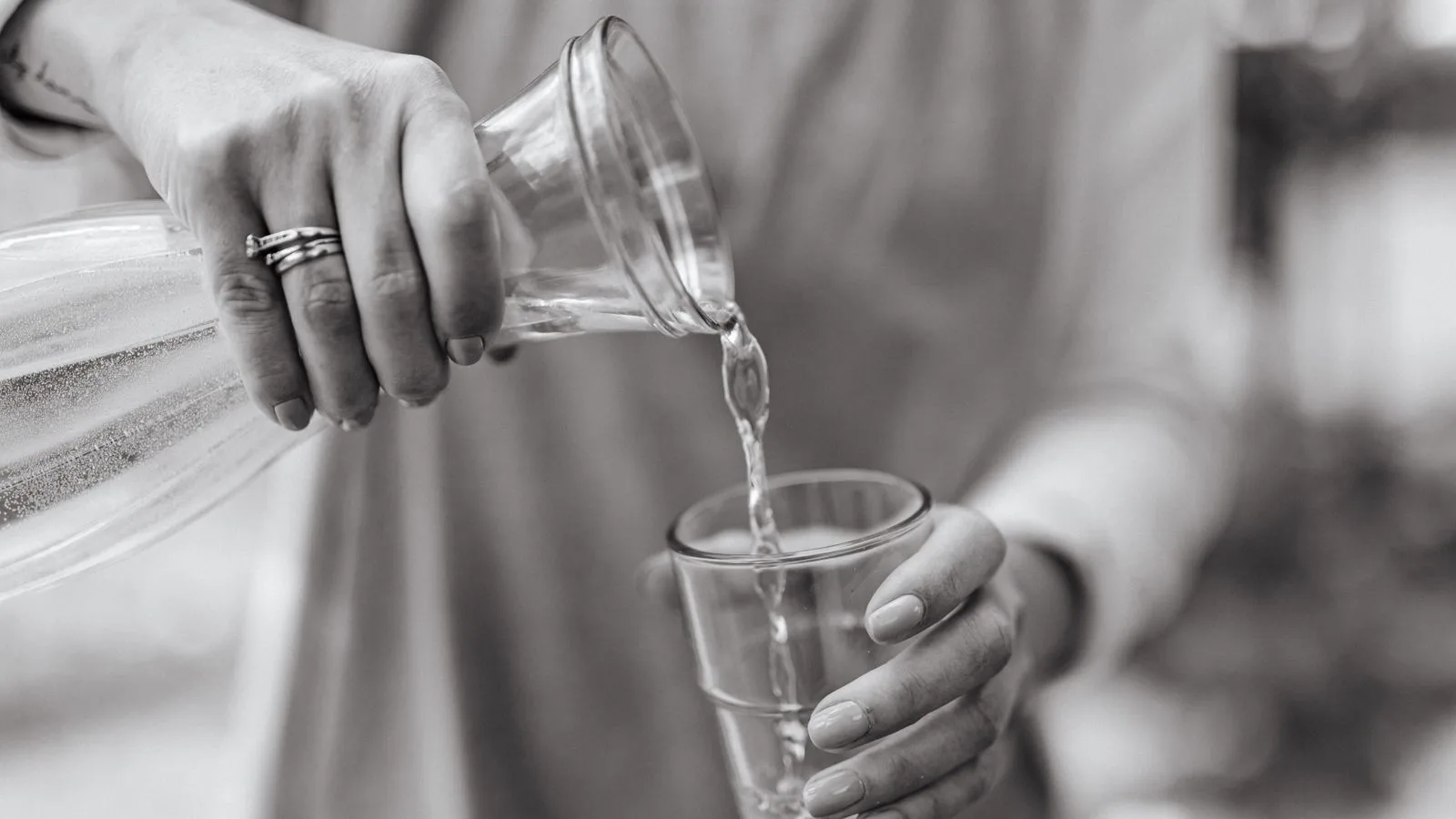
How much water you really need depends on your body weight, activity and climate — not a fixed "8 glasses". Here is how to estimate your daily target.
Is "8 glasses a day" right?
The "8 glasses" rule is a handy reminder, not a scientific target. Real needs vary with body size, activity level, temperature and diet. A widely used estimate is about 30–35 ml of water per kilogram of body weight per day, counting all sources.
Estimate your daily need
Multiply your weight in kilograms by roughly 33 ml. A 70 kg adult needs around 2.3 litres a day from drinks and food combined — food typically supplies about 20% of that. Add 0.5–1 litre for every hour of intense exercise or hot weather.
Signs you are drinking enough
Pale-yellow urine and rarely feeling thirsty are good signs. Dark urine, headaches or fatigue can mean you need more. Spread your intake across the day rather than drinking a large amount all at once.
What changes your water needs
Several factors push your target up or down. Exercise and heat increase losses through sweat, so add fluid on active or hot days. A larger body simply holds and uses more water. Pregnancy and breastfeeding raise needs, as do fever, vomiting and diarrhoea. Altitude and dry indoor heating quietly increase losses too. Older adults often feel thirst less reliably, so drinking on a schedule helps more than waiting for the signal.
Common hydration myths
A few beliefs are worth retiring. "Eight glasses" is a rough guide, not a rule — your size and your day decide the real number. Coffee and tea do not dehydrate you; their fluid outweighs caffeine's mild diuretic effect. Clear urine is not the goal — pale yellow is ideal, and completely clear can mean you are overdoing it. And thirst is a normal, useful signal, not proof you have already fallen behind.
Building a hydration habit
Hitting your target is easier with small routines than with willpower. Start the day with a glass of water, keep a bottle where you can see it, and drink alongside meals so it piggybacks on an existing habit. If plain water feels dull, add slices of fruit, cucumber or a splash of juice — flavour helps most people drink more without noticing. On hot or active days, pre-fill a marked bottle so you can see how much is left, and sip steadily rather than downing a litre at once.
Worked with our own calculator
Water intake calculator
Given
- Weight (kg)
- 70
- Exercise (min/day)
- 30
- Sex
- Male
- Climate
- Temperate
Result
- Water to drink per day
- 2.66 L
- Glasses of 250 mL
- 11
- Total water, food included
- 3.325 L
These figures are produced by the calculator below, not typed in by hand — they are recomputed whenever the tool changes.
Run it on your own figures →Frequently asked questions
- Do coffee and tea count toward hydration?
- Yes. Despite caffeine's mild diuretic effect, tea and coffee still add a net positive amount of fluid. Water, milk and most foods count too.
- Can you drink too much water?
- Rarely, but yes — drinking extreme amounts in a short time can dilute blood sodium (hyponatremia). For healthy adults, spreading normal amounts through the day is safe.
- Should I drink more when exercising?
- Yes. Add roughly 0.5 to 1 litre per hour of intense activity, and more in the heat, to replace what you lose through sweat.
Articles you may find interesting
All guides →Related tools
This is general information, not medical advice. Fluid needs change with health conditions, pregnancy and medication — ask a healthcare professional about your personal target.
Sources
Spotted a mistake in this article?