How to Pace Your Swim
Published 7/31/2025 · 3 min read · Sport calculators

Swimming pace is usually measured per 100 metres. To find yours, divide your time by the distance in hundreds: 8 minutes for 400 m is 8 ÷ 4 = 2:00 per 100 m. Pace evenly rather than sprinting the first lengths, breathe in a steady rhythm, and use the pace clock on the wall to check your splits. Even, controlled swimming almost always beats a fast start.
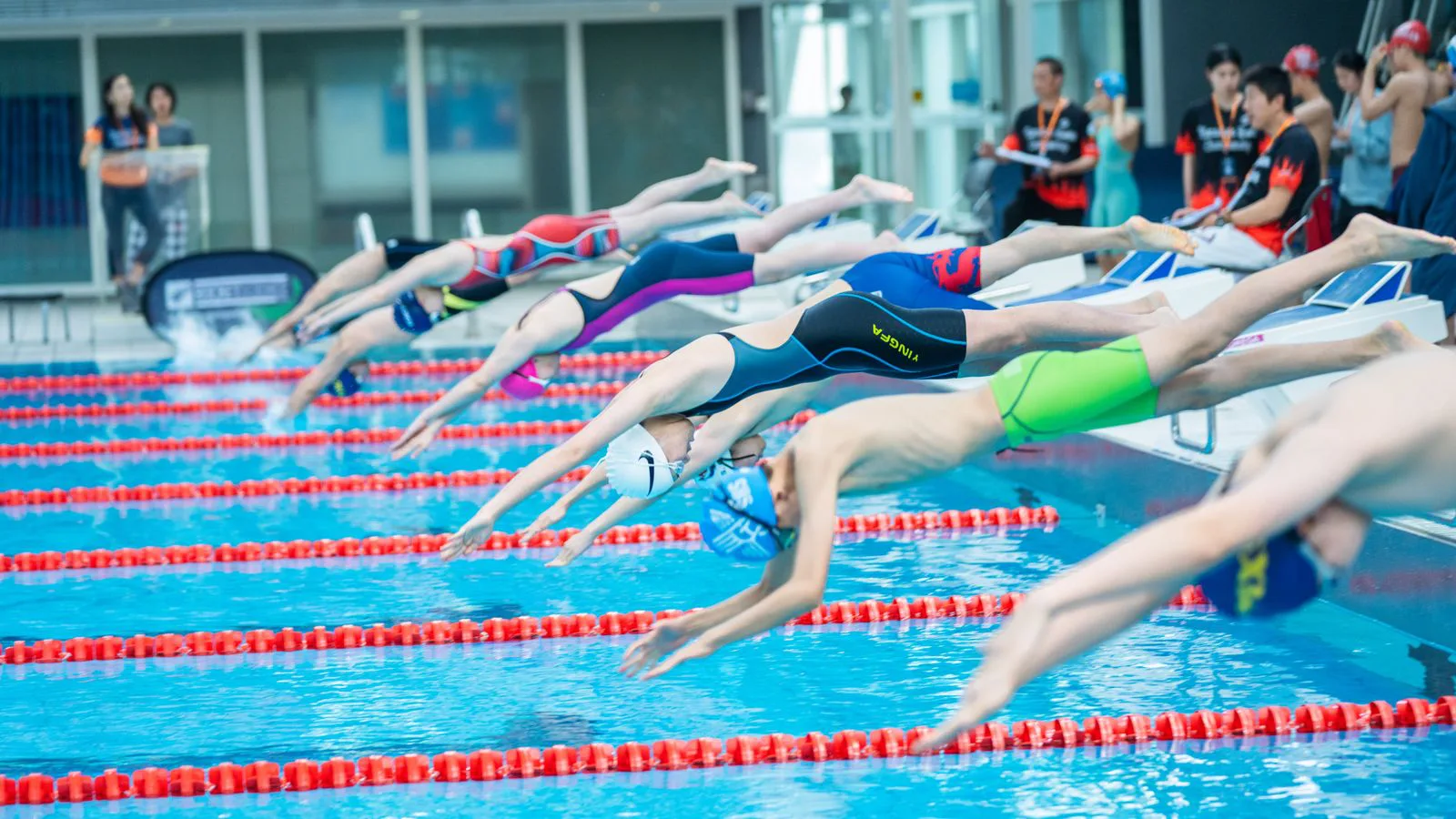
Swimming pace is measured per 100 metres. Here's how to work it out, why even pacing wins, how the pace clock helps, and how to get faster.
Pace per 100 m
Swimmers measure pace over 100 metres, the natural yardstick in a pool. To find yours, divide your total time by the distance expressed in hundreds of metres. Swim 400 m in 8 minutes and that's 8 ÷ 4 = 2:00 per 100 m; swim 1,500 m in 30 minutes and it's 30 ÷ 15 = 2:00 as well. Reducing everything to a per-100 m figure lets you compare efforts over any distance and set a target speed to hold.
Even pacing wins
The most common swimming mistake is charging off fast and fading in a haze of lactic acid halfway through. Water punishes wasted effort more than running does, because drag rises steeply with speed — going out too hard costs disproportionately. Holding a steady, controlled pace, or even finishing slightly faster than you started, almost always produces a better overall time and a far less miserable swim. Discipline early is what buys you a strong finish.
Breathing and the pace clock
Two habits keep your pace honest. First, breathe in a steady rhythm — every three strokes is common for front crawl — so your effort stays smooth rather than lurching between held breaths and gasps. Second, learn to read the big pace clock on the pool wall: note the second hand when you push off, and check it each time you touch, and you can see your per-length and per-100 m splits in real time. Those two together turn a vague swim into a measured one.
Improving your pace
In swimming, technique gives back more than raw fitness. Because water resistance is so punishing, a cleaner, more streamlined stroke lowers your pace far more than simply trying harder — so time spent on drills, body position and an efficient catch pays off directly. On top of that, interval sets swum at your goal per-100 m pace, with short rests, teach your body to hold that speed. Fix the stroke first, then build the engine, and your pace drops on both fronts.
Frequently asked questions
- How is swimming pace measured?
- Usually as time per 100 metres.
- What is a good 100m swim pace?
- For many fit recreational swimmers, around 2:00 per 100 m front crawl; faster with training.
- Should I start fast when swimming?
- No; even pacing almost always gives a better overall time.
Articles you may find interesting
All guides →Related tools
Sources
Spotted a mistake in this article?