What Is Horsepower? Mechanical hp, Metric PS, and kW
Published 1/20/2026 · 4 min read · Everyday calculators

Lena Hoffmann — Science & education writer at OneKitly
Mathematics · Physics
Checked against 2 sources
Horsepower is a unit of power — the rate at which work is done. One mechanical horsepower (hp), the imperial unit, equals 745.7 watts (W). The metric horsepower — written PS in German, CV in Spanish and Italian, and ch in French — is slightly smaller at 735.5 W, so 1 metric horsepower ≈ 0.986 hp. To convert, remember 1 kW ≈ 1.341 hp and 1 hp ≈ 0.746 kW.
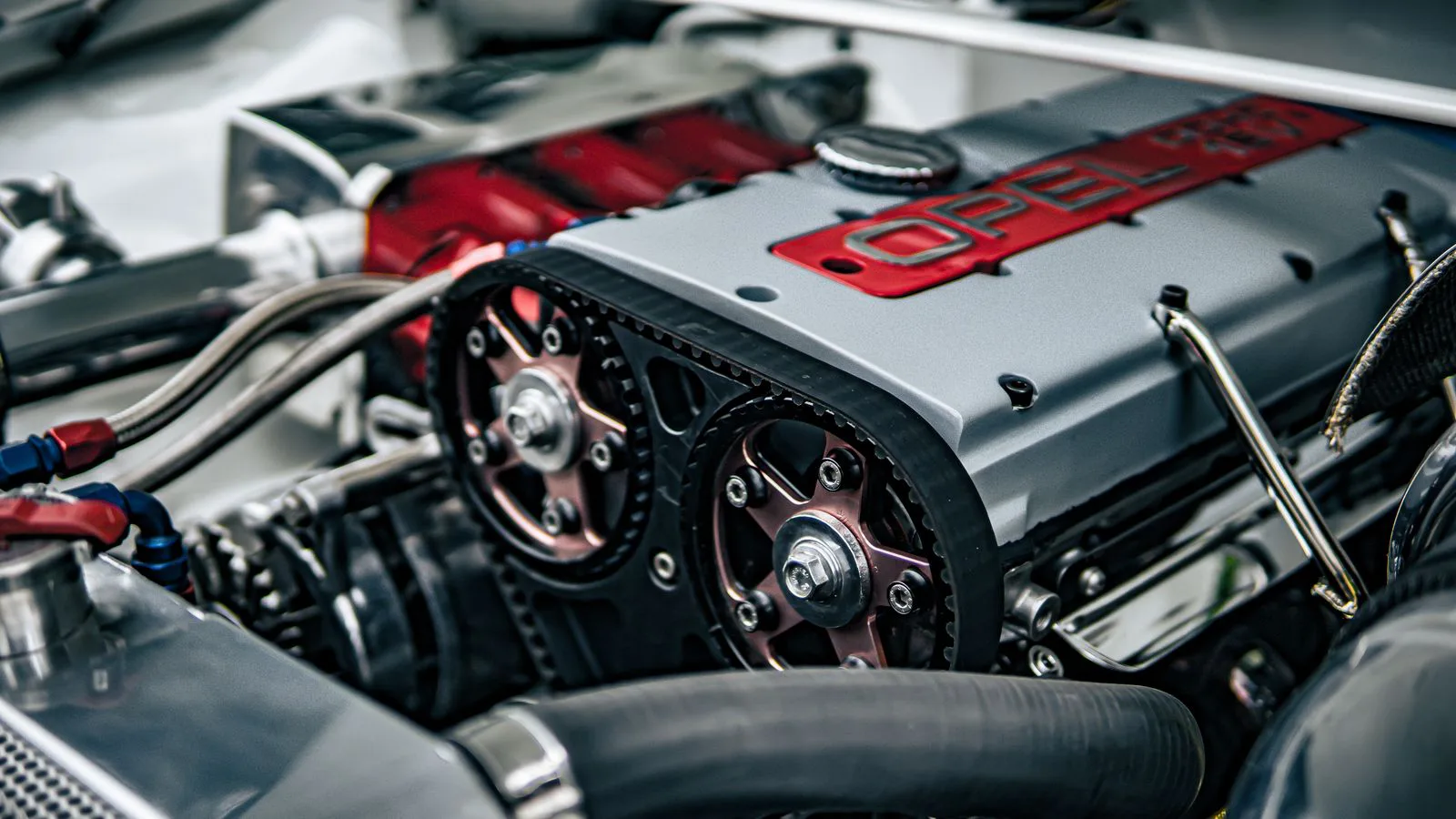
Horsepower measures the rate of doing work. Learn where the unit came from, how mechanical hp differs from metric PS/CV, and how both relate to kilowatts.
From draft horses to engines
The unit dates to the late 1700s, when engineer James Watt needed to sell steam engines to buyers who thought in terms of horses. He measured how much work a horse could do turning a mill and defined one horsepower as 33,000 foot-pounds of work per minute — roughly the sustained output of a strong draft horse. That figure became the mechanical horsepower still used today.
Power is work done per unit of time, so horsepower measures how fast an engine or motor can deliver energy, not how much total energy it holds. An engine rated at 100 hp can sustain that rate of work continuously; the same engine briefly exceeding it does more work in a moment but not more per second. Because it is a rate, horsepower always relates to torque and rotational speed in a rotating machine.
Mechanical hp versus metric PS/CV
Two horsepower standards coexist. The mechanical (imperial) horsepower, common in the US and UK, is defined as 550 foot-pounds per second and equals 745.7 W. The metric horsepower, defined as 75 kilogram-force meters per second, equals 735.5 W and is about 1.4% smaller. Car makers in continental Europe quote this metric figure, so a car listed at 100 PS makes about 98.6 mechanical hp.
The naming varies by country but the value is the same metric horsepower: PS (Pferdestärke) in Germany, CV (cheval-vapeur / cavallo vapore / caballo de vapor) in France, Italy, Spain, and Portugal, and ch (cheval) in French. Whichever badge a car wears, the underlying 735.5 W definition is identical, so a 150 PS engine, a 150 CV engine, and a 150 ch engine all make the same power.
Converting to and from kilowatts
The kilowatt (kW) is the SI unit and appears on most spec sheets alongside horsepower. To convert metric horsepower to kilowatts, multiply by 0.7355; to go back, divide by 0.7355. For mechanical hp, multiply by 0.7457. So a 100 kW engine is about 136 PS or 134 mechanical hp, and a 200 hp engine is about 149 kW.
One more conversion is worth memorizing: 1 kW ≈ 1.36 metric horsepower ≈ 1.34 mechanical hp. Since the two horsepower definitions differ by only about 1.4%, casual comparisons often ignore the gap, but engineering and legal documents specify which standard applies. When comparing a US and a European car, convert both to kilowatts first for an apples-to-apples figure.
Worked with our own calculator
Horsepower calculator
Given
- Torque (Nm)
- 200
- Engine speed (RPM)
- 5,000
Result
- Power (HP)
- 140.436
- Power (kW)
- 104.723
These figures are produced by the calculator below, not typed in by hand — they are recomputed whenever the tool changes.
Run it on your own figures →Frequently asked questions
- Is 1 hp the same as 1 PS?
- Almost, but not exactly. One mechanical hp is 745.7 W while one metric horsepower (PS/CV/ch) is 735.5 W, so 1 PS ≈ 0.986 hp. The metric unit is about 1.4% smaller.
- How do I convert horsepower to kilowatts?
- Multiply mechanical hp by 0.7457, or metric horsepower (PS/CV/ch) by 0.7355. To go from kilowatts, divide by the same factor. For example, 120 metric horsepower × 0.7355 ≈ 88.3 kW.
- Does horsepower measure torque?
- No. Horsepower is power — the rate of doing work — while torque is a twisting force. They are linked: power equals torque times rotational speed, so an engine's horsepower depends on both its torque and how fast it spins.
- Why do European and American power figures differ?
- They often use different horsepower standards. US and UK figures use mechanical hp (745.7 W); continental Europe uses metric horsepower (735.5 W), badged PS, CV, or ch. Converting both to kilowatts removes the ambiguity.
Articles you may find interesting
All guides →Related tools
Sources
Spotted a mistake in this article?