How Many Bricks Do I Need? Calculate Bricks Per Wall
Gepubliceerd op 5-1-2026 · 3 min leestijd · Vastgoedcalculators

Marco Bianchi — Redacteur wonen, klussen en auto bij OneKitly
Verbouwen · Materialen
Getoetst aan 2 bronnen
For a standard modular brick you need roughly 7 bricks per square foot of wall face with a 3/8-inch mortar joint. Multiply the wall area (length × height, minus openings) by 7, then add 5–10% for cuts and breakage. A 200-square-foot wall needs about 200 × 7 = 1,400 bricks, or roughly 1,500 with waste.
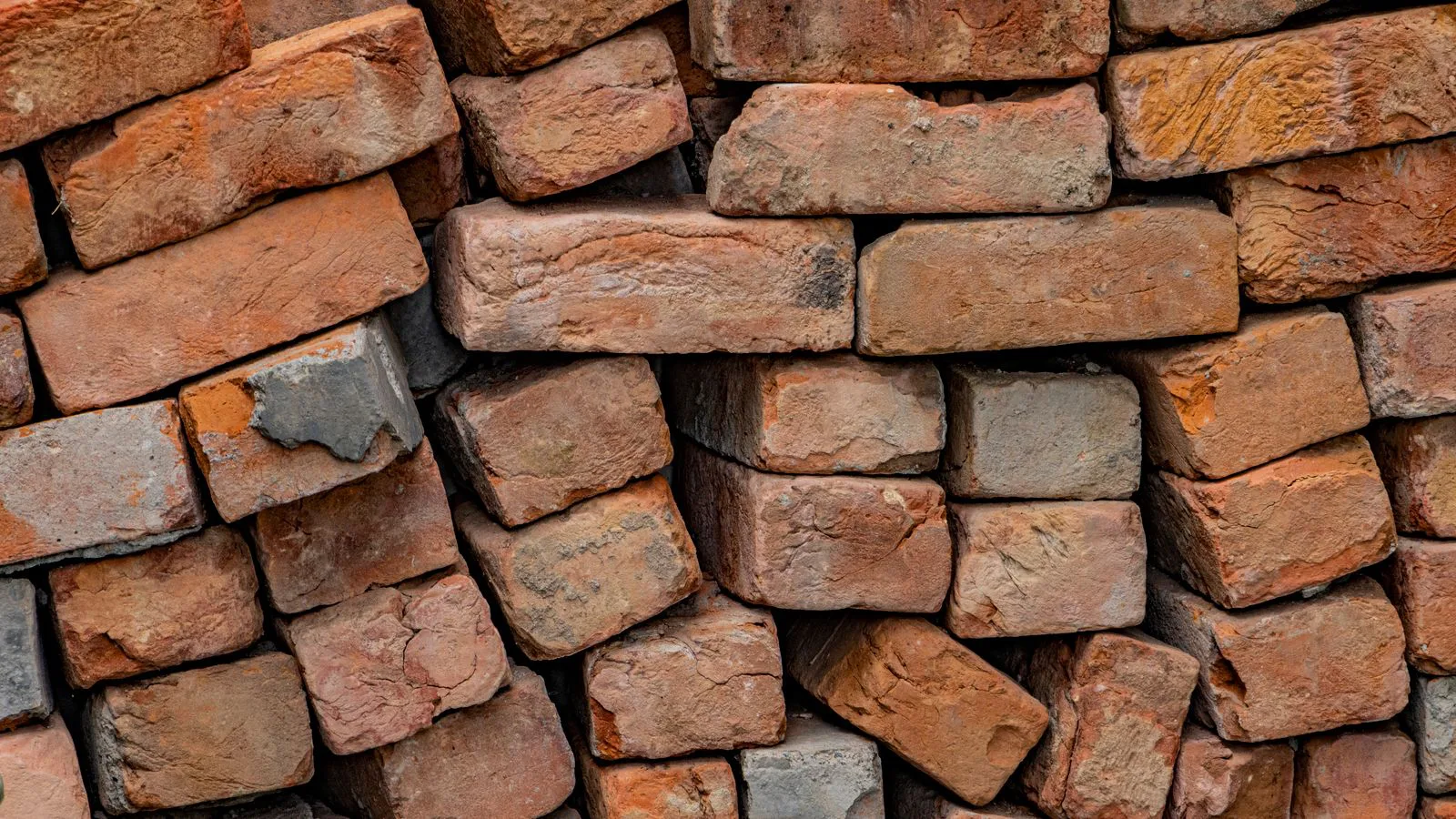
Estimate bricks for any wall from its area, a per-square-foot brick count, and a waste allowance — so you buy once and avoid a second trip.
How many bricks fit in one square foot
A brick's coverage depends on its face size plus the mortar joint around it. A standard modular brick shows a face of about 8 inches long by 2 1/4 inches high, and with a 3/8-inch joint it covers close to one-seventh of a square foot — so about 7 bricks per square foot of single-wythe wall.
If you use a larger utility or engineering brick, the per-area count drops, so always confirm the exact dimensions on the pack before you multiply — a small size difference changes the total by hundreds on a big wall.
Single-wythe versus double-wythe walls
A single-wythe wall is one brick thick and uses the per-square-foot count directly. A double-wythe or cavity wall doubles the visible brick, so a two-brick-thick wall roughly doubles the count — plan for wall ties and a cavity if that is your design.
Mortar volume grows with wall thickness too. As a rough guide, budget one bag of mortar for every 100–125 standard bricks, then confirm against the mix ratio your bricklayer plans to use.
Why a waste allowance matters
Bricks break in transit, corners and openings need cuts, and a few always arrive chipped. A 5% allowance suits a simple rectangular wall, while 10% is safer for walls with many openings, arches, or angled cuts.
Keep a small surplus after the job for future repairs, since brick colors and dimensions vary slightly between production batches and an exact match later can be hard to find.
Uitgewerkt met onze eigen calculator
Steencalculator
Gegeven
- Oppervlak (m²)
- 18
- Lengte van de steen (cm)
- 10,75
- Hoogte van de steen (cm)
- 3,25
- Snijverlies (%)
- 5
Resultaat
- Benodigde stenen
- 3.785
- Stenen per m²
- 200
Deze cijfers komen uit de calculator hieronder, ze zijn niet met de hand ingetypt — ze worden opnieuw berekend telkens als de tool verandert.
Reken het door met je eigen cijfers →Veelgestelde vragen
- How many bricks are in a square meter of wall?
- About 60 bricks per square foot of area is not a standard measure in the US; the usual figure is roughly 7 standard modular bricks per square foot of single-wythe wall with a 3/8-inch joint.
- Should I subtract windows and doors?
- Yes. Subtract each opening's area from the gross wall area before multiplying, but keep a small waste margin because the bricks around each opening still need cutting.
- How much mortar do I need for the bricks?
- As a rough guide, one bag of mortar lays about 100–125 standard bricks, but thicker joints or double-wythe walls use more, so confirm against your mortar mix ratio.
- How much waste should I add to my brick order?
- Add 5% for a simple rectangular wall and up to 10% for walls with many openings, arches, or angled cuts, then keep a few spares for future repairs.
Artikelen die je misschien interesseren
Alle gidsen →Vergelijkbare tools
Bronnen
Een fout in dit artikel gezien?