Buying Costs in France, Spain and Portugal: the Part You Cannot Argue With
Published 7/28/2026 · 12 min read · Real-estate calculators

Marco Bianchi — Home, DIY & motoring writer at OneKitly
Renovation · Materials
Checked against 6 sources
On a 300,000-euro flat the state's share looks like this in 2026. In France the taxe de publicité foncière stacks a departmental duty, a communal tax of 1.20 % and a collection charge of 2.37 % of the departmental duty: at a departmental rate of 4.50 % that is 5.8067 % or 17,420 euros, and at the 5.00 % rate that the 2025 finance act let departments adopt from 1 April 2025 until 30 April 2028 it is 6.3185 % or 18,956 euros — a difference of 1,536 euros decided by which side of a departmental boundary the flat sits on. First-time buyers of a main residence, defined as not having owned one in the two preceding years, are outside the increase. In Spain the rate is set by the autonomous community: 6 % in Madrid, so 18,000 euros; 10 % in Catalonia on properties up to 600,000 euros, so 30,000 euros, though a buyer aged 35 or under acquiring their habitual residence there pays 5 % and a large property holder has paid 20 % since 27 June 2025. In Portugal the IMT scale for a permanent own home charges nothing up to 106,346 euros and rises to 8 %, but article 17(3) of the code computes it by taking the largest bracket ceiling that fits at that bracket's average rate and taxing only the excess at the next marginal rate: on 300,000 euros that is 10,542 euros, plus stamp duty of 0.8 %, giving 12,942 euros. Then there is the change many buyers have still not priced in: Decreto-Lei n.º 97/2026 of 20 May 2026, applying to acquisitions from 25 May 2026, imposes a flat 7.5 % with no exemption or reduction where the buyer is a non-resident, unless they were or become resident within two years or let the property for housing at a capped rent — which on the same flat turns 12,942 euros into 24,900 euros.
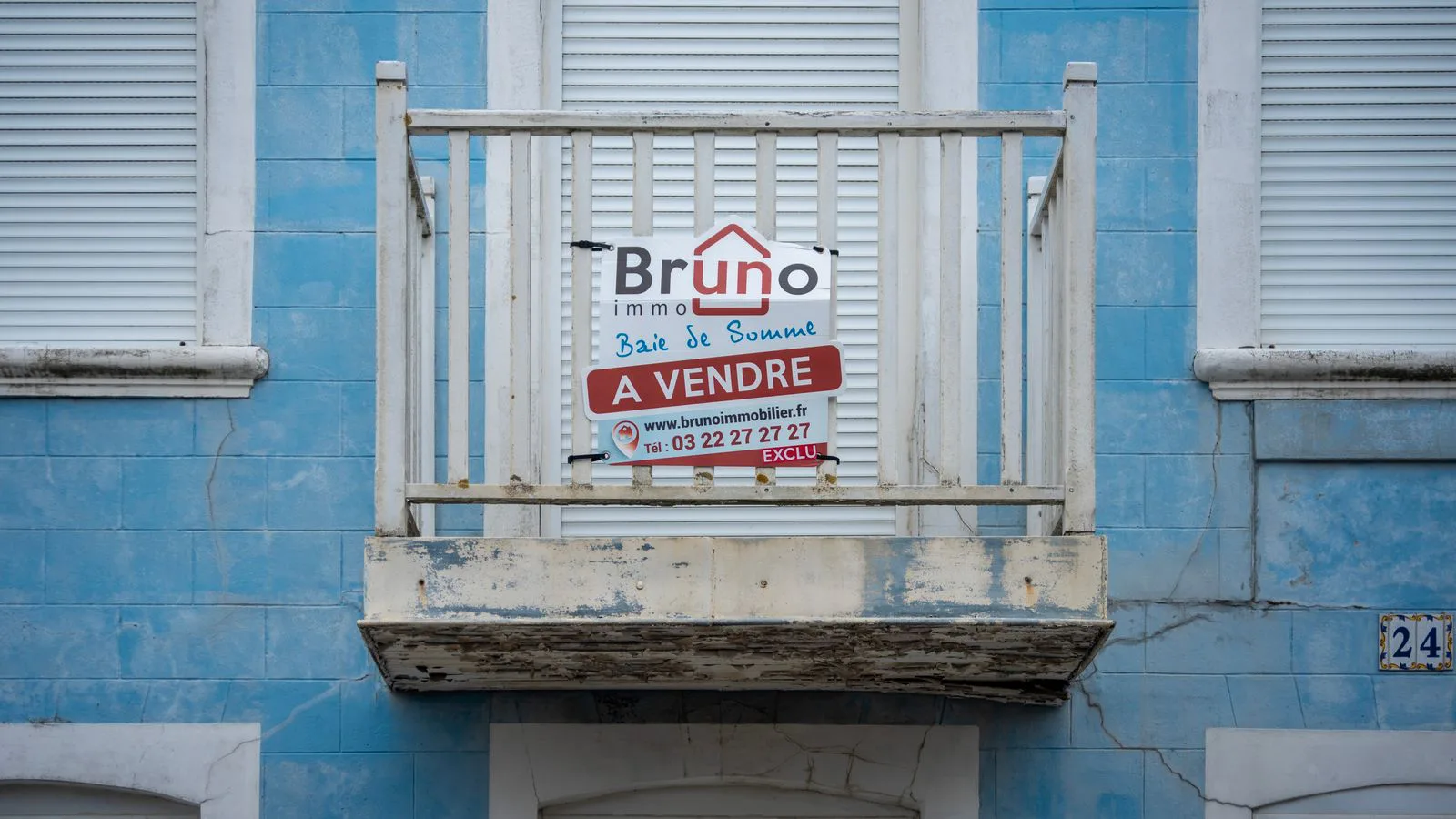
Most of what buyers call the notary's fee is transfer tax, and it is fixed by a department, an autonomous community or a national scale. The genuinely negotiable share is small, and knowing which line it is on is worth more than haggling over the rest. Portugal added a flat 7.5 % rate for non-resident buyers in May 2026.
Most of the «notary's fee» never reaches the notary
The phrase is a tax collector's dream. A buyer hands over a single sum, the notary's office issues one statement, and the buyer walks away believing the profession charged them six per cent of the purchase price. It did not. The overwhelming majority of that money is transfer tax collected on behalf of the state and, in France and Spain, on behalf of a level of government below it. The notary's own remuneration is a comparatively small line, and it is itself set by a public tariff rather than by the firm.
Knowing the split changes what you do about it. There is no point negotiating a transfer tax, and there is no point choosing a notary on price if the price is a public tariff. What is worth doing is checking which rate applies to you — several of the reliefs described below are claimed rather than granted automatically — and understanding which of these costs can be added to the acquisition base and reduce the capital gain when you eventually sell.
France: three taxes stacked, and one of them moved in 2025
The French figure is built in three parts. A departmental duty, historically capped at 4.50 %, is the largest. A communal tax of 1.20 % sits on top. And the state takes a collection charge of 2.37 % calculated on the departmental duty alone, not on the whole price. Multiply out: 4.50 % becomes 4.6067 % once the collection charge is added, plus 1.20 % gives 5.8067 % — the figure usually quoted as «about 5.80 %».
The 2025 finance act, published on 14 February 2025, let departments raise their rate by half a point without exceeding 5 %, from 1 April 2025 to 30 April 2028, and most of them did. At 5 % the same arithmetic gives 6.3185 %, which on a 300,000-euro flat is 1,536 euros more. Deliberations voted after 15 April 2025 took effect from 1 January 2026, so the applicable rate depends on both the department and the date. The increase does not apply to a buyer purchasing a first main residence, understood as not having owned their main residence during the two preceding years.
The notary's own emoluments sit on a separate, regressive scale set by ministerial order and carried in the commercial code's tariff provisions: the first slices of the price are charged at a rate just under four per cent and the rate falls in steps to a fraction of a per cent above sixty thousand euros, with value added tax on top. That order also permits a discount on the portion of the price above a threshold it fixes, which is the only line in the whole statement that is genuinely open to discussion. Finally there are disbursements — sums the notary advances for searches, land-registry entries and documents — which are pass-through costs and vary with the file.
Spain: the rate is a regional decision, and the spread is enormous
For a second-hand home the tax is the impuesto sobre transmisiones patrimoniales, and each autonomous community sets its own rate. Madrid applies 6 % on the transfer of immovable property, with a reduced 4 % for large families acquiring their habitual residence, a 10 % rebate on the quota for a habitual residence valued at 250,000 euros or less since 1 January 2019, and a full rebate for buyers under 35 acquiring a habitual residence at that value in municipalities with fewer than 2,500 inhabitants, in force since 29 November 2024. Catalonia charges 10 % on properties valued up to 600,000 euros with a progressive average rate above, 5 % for a buyer aged 35 or under acquiring their habitual residence, and — since 27 June 2025 — 20 % where the buyer is a large property holder.
New-build housing works differently: the sale is subject to value added tax rather than transfer tax, and stamp duty on documented legal acts is charged on top at a rate the community also sets. Notary and land-registry fees in Spain are themselves set by state tariff regulations rather than by the professional, so the same purchase costs the same in fees anywhere in the country while the tax varies by a factor of three or more.
Portugal: a scale that is not summed band by band
The IMT scale for a permanent own home, as updated for 2026 by the budget act of 30 December 2025, charges nothing up to 106,346 euros, 2 % to 145,470 euros, 5 % to 198,347 euros, 7 % to 330,539 euros and 8 % to 660,982 euros, with single rates of 6 % and then 7.5 % above. The trap is that these are not summed the way a French or German bracket table is summed. Article 17(3) of the code splits the taxable value in two: the ceiling of the largest bracket that fits inside it, charged at that bracket's published average rate, and the excess, charged at the marginal rate of the bracket above.
Applied to 300,000 euros: the largest ceiling that fits is 198,347 euros, whose published average rate is 1.7274 %, giving 3,426.03 euros; the excess of 101,653 euros is taxed at the next marginal rate of 7 %, giving 7,115.71 euros; total IMT 10,541.96 euros. Add stamp duty on the acquisition at 0.8 % under item 1.1 of the general stamp-duty table — 2,400 euros — and the state's share comes to 12,942 euros. A buyer aged 35 or under acquiring a first permanent home pays nothing at all up to 330,539 euros in 2026, which is the single most valuable relief in the Portuguese system.
The change worth flagging loudly is recent. Decreto-Lei n.º 97/2026 of 20 May 2026, which applies to acquisitions from 25 May 2026, added a paragraph to article 17 imposing a flat rate of 7.5 %, with no exemption or reduction of any kind, whenever the buyer of a dwelling is a non-resident. Three escapes are written into the same text: having been resident for tax purposes under article 16 of the income-tax code; becoming resident within two years of the acquisition; or letting the property for housing within six months at a rent within the limits the decree sets, and keeping it let for at least 36 months, consecutive or not, during the first five years. Where the second or third escape is used, the tax authority cancels the difference on application, made within six months of the qualifying event. On a 300,000-euro flat the flat rate produces 22,500 euros of IMT against 10,542 euros on the resident scale.
What is actually negotiable, and what to do instead of haggling
Realistically, three lines move. The notary's proportional emolument can carry a discount on the portion of the price above the threshold the tariff order fixes, which on a large purchase is worth asking about explicitly and in writing. The estate agent's commission is a private contract and is negotiable in all three countries, including which side pays it. And the mortgage arrangement fee is a bank charge, not a tax, so it belongs in the rate negotiation rather than on the completion statement.
The larger savings are elsewhere and they are about eligibility, not bargaining. Check whether you fall inside a first-time-buyer or under-35 relief before the deed is drafted, because several of them are conditions of the deed rather than reclaimable afterwards. Check what the applicable rate is in the specific department, community or municipality rather than the national average. And keep every receipt: in all three countries the purchase costs add to the acquisition base and reduce the taxable gain when you sell, which makes today's paperwork tomorrow's deduction.
| Where and who | The rate the state or region sets | On a 300,000-euro purchase |
|---|---|---|
| France, department still at 4.50 % | 5.8067 % all in | 17,420 euros |
| France, department at the 5.00 % ceiling | 6.3185 % all in | 18,956 euros |
| Spain, Madrid, second-hand home | 6 % | 18,000 euros |
| Spain, Catalonia, second-hand home | 10 % up to 600,000 euros of value | 30,000 euros |
| Portugal, resident buying a permanent home | IMT on the 2026 scale plus 0.8 % stamp duty | 12,942 euros |
| Portugal, non-resident buyer with no exception met | 7.5 % flat plus 0.8 % stamp duty | 24,900 euros |
Worked with our own calculator
Notary fees calculator
Given
- Property price
- $500,000.00
- Property type
- New build
Result
- Notary fees
- $12,500.00
- Total budget
- $512,500.00
These figures are produced by the calculator below, not typed in by hand — they are recomputed whenever the tool changes.
Run it on your own figures →On this site
- Property purchase costs by countryThe country hub carries the rates and the reliefs for each market, kept alongside the instrument that sets them.
- VAT rates by countryNew-build housing is generally taxed under value added tax rather than transfer tax, so the rate that matters for a new home is on the VAT hub, not this page.
Frequently asked questions
- Can I find out my French department's rate before I make an offer?
- Yes, and you should, because a half-point difference on a 300,000-euro purchase is 1,536 euros and the boundary can run between two towns in the same commuting area. The rate is set by a vote of the departmental council, and the notary handling the sale will know it immediately. Ask the question when you ask for the estimate of costs, and ask for the estimate before the offer rather than after, since it is the buyer who pays.
- Is the Portuguese non-resident rate refundable if I move there later?
- The decree provides for the tax authority to cancel the difference between what was paid and what the ordinary scale would have produced, on application by the person concerned, where they become tax-resident within two years of the acquisition or where the property is let for housing on the terms the decree sets. The application is subject to a time limit measured from the qualifying event, so the practical risk is not the eligibility but the missed deadline. Anyone buying in Portugal while resident elsewhere should have this in writing from their lawyer before completion.
- Do these costs count when I later calculate my capital gain?
- In all three countries the costs of acquiring add to the acquisition value, which reduces the gain when you sell — and every euro added is worth its full marginal rate, which is far more than a year of any taper. What counts and what proof is needed differs by country and by cost, so the practical rule is to keep the deed, the tax receipts, the registry invoices and the agency invoice together in one file from day one, and to check locally which of them qualify before you rely on them.
- Are buying costs lower on a new-build?
- Sometimes, and never for the reason people give. New-build is generally taken out of transfer tax and put into value added tax, which is a different tax at a different rate, plus a documented-acts duty in Spain. In France the notary's proportional emolument is reduced for certain new-build sales, which is where the phrase «reduced notary fees» comes from — but the underlying comparison depends on the VAT rate, the price and the reliefs available, so it has to be run on the actual figures rather than assumed.
- Who pays the estate agent in each country?
- It is a contractual matter, not a legal rule, which is exactly why it is negotiable and why local custom differs. What matters for your budget is that the answer must be settled in writing before an offer is accepted, and that where the buyer pays, the commission is typically stated separately from the price — with consequences for the transfer-tax base that depend on how the contract is drafted. Ask the notary or the lawyer how the commission is treated for tax where you are buying; it is not always intuitive.
Articles you may find interesting
All guides →Related tools
This is a general explanation of how a rule works, not tax or legal advice. Every rate, allowance and ceiling carries the year it applied to when it was checked; inheritance, gift and property rules are amended by finance acts and, in Spain, by seventeen autonomous communities separately. Check the instrument named here, or take advice, before acting on a figure.
Sources
- service-public.gouv.fr (DILA) — Frais de notaire : les droits de mutation augmentent dans certains départements (2 avril 2025)
- Légifrance — Code de commerce — tarifs réglementés des notaires (articles A444-53 à A444-186)
- Comunidad de Madrid — Transmisiones Patrimoniales Onerosas — tipos y bonificaciones
- Agència Tributària de Catalunya — Transmissions patrimonials oneroses — tarifes i tipus impositius
- Portal das Finanças (Autoridade Tributária e Aduaneira) — Código do IMT, artigo 17.º — Taxas (redação da Lei n.º 73-A/2025 e do Decreto-Lei n.º 97/2026)
- Portal das Finanças (Autoridade Tributária e Aduaneira) — Tabela Geral do Imposto do Selo — verba 1.1, aquisição onerosa de imóveis
Spotted a mistake in this article?