How Much Storage Space Do You Need?
Published 4/14/2026 · 13 min read · Real-estate calculators

A storage unit is sold to you by its floor area and used by you as a volume, and the two are not interchangeable. A 10 ft by 10 ft unit is 100 square feet; under an 8 ft ceiling that is 800 cubic feet, and under a 10 ft ceiling it is 1,000 — 25 percent more space behind an identical advertisement. Then subtract what you cannot use. Stack no higher than 7 ft, because boxes crush and you have to reach the back, and give up about 15 percent to the gap you need to get at anything. The 10 by 10 delivers 595 usable cubic feet, not 800. Now measure what you own. A one-bedroom home, itemised from its dimensions — mattress, sofa, wardrobe, appliances, 35 boxes — comes to 508.6 cubic feet, or 635.75 once you allow 25 percent for imperfect packing. So the unit the industry advertises as holding a one-bedroom apartment holds it only if you pack it properly: 595 against 635.75 is 6.8 percent short. A two-bedroom home comes to 894.01 cubic feet packed, which is a 10 by 15 almost exactly. And at $160 a month against $4,200 of replaceable contents, storing costs more than replacing after 26.25 months.
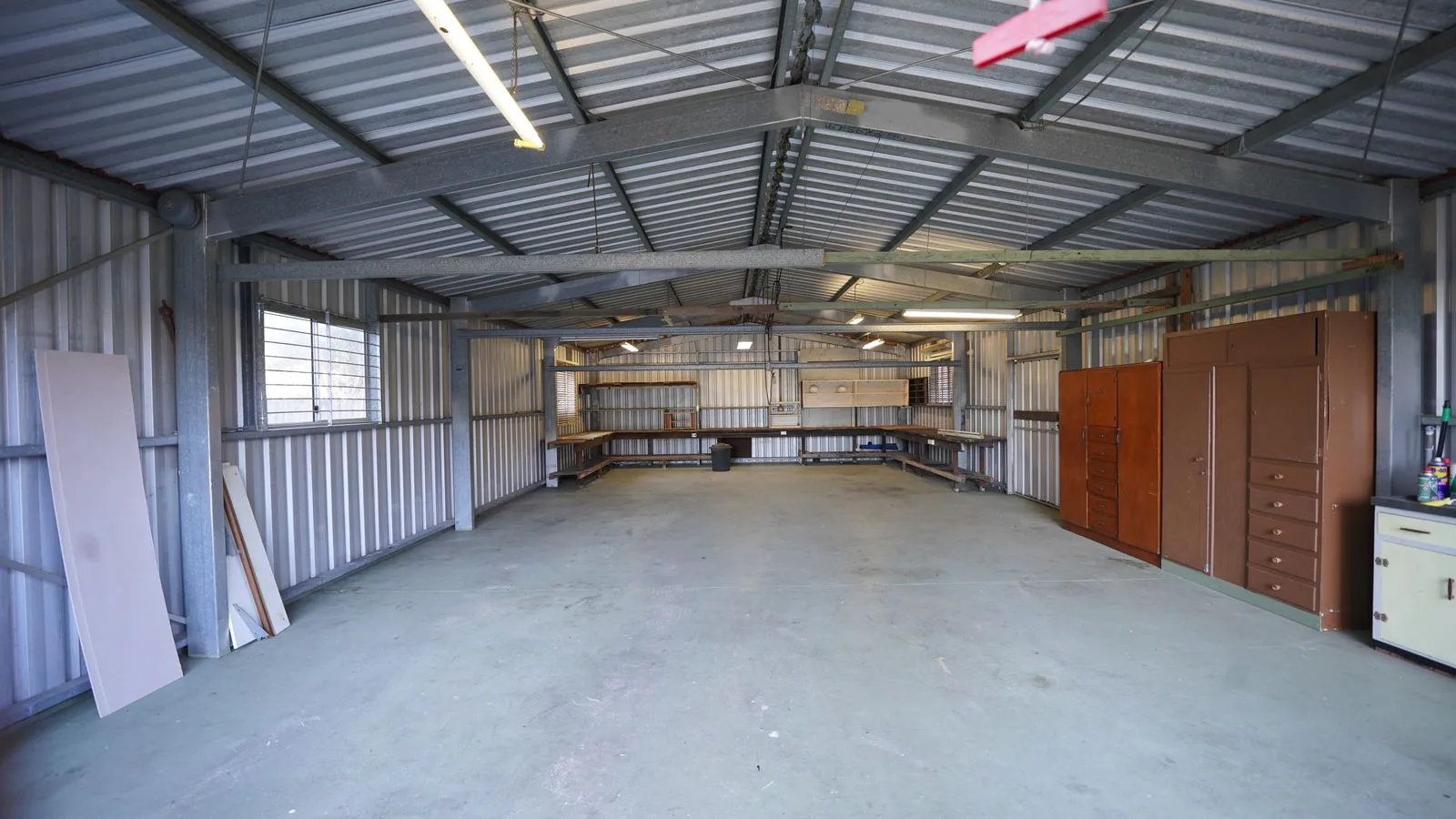
You are sold floor area and you use volume. A 10 by 10 unit is 800 cubic feet gross but 595 usable, and a one-bedroom home itemised piece by piece comes to 635.75 packed — so the unit advertised for it only just holds it.
You are sold an area and you use a volume
Every self-storage price list in the world quotes a footprint. The industry grew out of commercial warehousing, where floor area is the unit of account because a pallet has a standard height, and it kept the convention even though a household's possessions have no standard height at all. The consequence is a systematic mismatch: the number you are quoted is two-dimensional and the problem you are solving is three-dimensional. Two units advertised identically can differ by a quarter in what they hold, and nothing in the advertisement tells you which one you are being offered.
The arithmetic is one multiplication. A 10 ft by 10 ft unit is 100 square feet. Under an 8 ft ceiling that is 800 cubic feet; under a 10 ft ceiling, 1,000. Same price list entry, same advertised size, 25 percent more space. Convert that into what you can actually reach and the gap widens rather than narrows, because a taller unit lets you stack higher: 765 usable cubic feet against 595, which is 28.6 percent more. Ceiling height is the single most valuable thing you can ask about on the phone, and it is almost never printed.
Usable volume is not gross volume, and the difference is about a quarter
Two deductions turn the gross figure into something you can plan against, and both are stated assumptions rather than laws. The first is stacking height. You can physically fill a unit to the ceiling, but cardboard boxes deform under load, anything fragile has to sit near the top, and a stack you cannot see over is a stack you will not unpack safely. Seven feet under an eight-foot ceiling is the working limit; that alone removes 12.5 percent. The second is access. Unless you intend to seal the unit and never open it, you need a path to the back, which costs roughly 15 percent of the floor.
Apply both and the standard sizes resolve cleanly. The 5 by 10 goes from 400 gross to 297.5 usable cubic feet. The 10 by 10 goes from 800 to 595. The 10 by 15 goes from 1,200 to 892.5, and the 10 by 20 from 1,600 to 1,190. If you intend to visit the unit regularly — swapping seasonal things in and out, say — take a further slice off, because a unit you use is a unit with a working aisle rather than a footpath. If you are sealing it for a year, you can push the stacking height back up and recover most of the first deduction.
Measure what you own instead of guessing at it
The only reliable way to size a unit is to itemise, and it takes about twenty minutes. Every object is a box: multiply its three dimensions and divide by 1,728 to get cubic feet. A queen mattress with its base at 60 by 80 by 20 inches is 55.56 cubic feet. A three-seat sofa at 84 by 38 by 34 is 62.81. A wardrobe at 48 by 24 by 72 is 48.00. A fridge at 30 by 30 by 68 is 35.42. A dining table at 60 by 36 by 30 plus four chairs at 18 by 20 by 36 each is 67.50 together. Cartons are easier still, because they come in standard sizes: 3.0 cubic feet for a medium, 4.5 for a large.
Run a whole one-bedroom home through that and the total is 508.6 cubic feet: bed, sofa, armchair, dining set, chest, wardrobe, fridge, washing machine, television and stand, bookcase, twenty-five medium cartons, ten large ones, two bicycles. Nothing exotic, nothing forgotten. Then add a packing allowance, because you cannot tessellate a sofa against a bicycle: 25 percent is realistic for a household with mixed shapes and no professional packer, and it takes the figure to 635.75. A second bedroom's worth of furniture and twenty more cartons brings a two-bedroom home to 715.21 raw and 894.01 packed.
Matching the inventory to a unit, in two different measurement systems
Now the two numbers meet, and the result is mildly uncomfortable. The 10 by 10 is the unit the industry describes as holding a one-bedroom apartment. It delivers 595 usable cubic feet. Our one-bedroom inventory, packed, is 635.75. That is 6.8 percent short — close enough that a well-packed, disciplined household will get it in, and far enough that a household with a sofa it refuses to dismantle will not. Pack tightly with no allowance at all and 508.6 fits inside 595 with 17 percent to spare. The claim is not false; it is conditional, and the condition is the packing.
This is also where the two markets genuinely part company, and not only in the unit of measure. American units are quoted as a pair of feet dimensions — 5 by 10, 10 by 10, 10 by 15, 10 by 20 — which at least tells you the shape of the floor, and shape matters when you are fitting a mattress. European operators quote a single area in square metres, and some quote cubic metres directly, which is more honest about what you are buying but tells you nothing about whether the space is long and narrow or square. Ask for both dimensions and the height wherever you are; three numbers describe the box, one does not.
Price per unit of usable volume, not price per month
Once volume is the quantity, the shopping metric follows. Take three quoted prices — $110 for the 5 by 10, $160 for the 10 by 10, $210 for the 10 by 15 — and divide each by its usable volume. That is $0.370, $0.269 and $0.235 per usable cubic foot per month. The largest unit is 36 percent cheaper per unit of space than the smallest. This is the ordinary result and it has a mundane cause: the operator's cost is dominated by the door, the corridor and the security system rather than by the air behind the door.
The practical consequence runs against instinct. If your inventory sits within about 15 percent of a unit's usable volume, the next size up is usually worth taking, because the marginal cost of the extra space is far below the average cost of the space you are already buying, and because a unit you can walk into is a unit you will actually use. Squeezing into the smaller box saves a little rent and costs you access to everything at the back of it for as long as you rent it.
The break-even against simply replacing the contents
This is the calculation the industry does not put on the pricing page, and it is the one that decides whether renting a unit is sensible at all. Storage is a recurring cost against a stock of value that does not grow. Divide the replacement value of what you are storing by the monthly rent and you get the month at which you have spent more keeping it than buying it again would have cost. At $160 a month against $4,200 of ordinary, replaceable furniture and boxes, that month is 26.25. Three years of storage costs $5,760, or 137.1 percent of the value of everything inside.
The break-even is not the whole decision, and it would be wrong to read it as one. Some contents are not replaceable at any price — papers, photographs, a grandmother's table — and for those the calculation is irrelevant. Some storage is bridging a known gap of three months between two homes, where the alternative is not replacement but homelessness for the sofa. Where the break-even bites is the open-ended case: the unit taken during a move and still paid for four years later, holding items whose combined replacement cost is below what has already been spent. If you cannot say what is inside your unit without opening it, you are probably past the break-even and the honest next step is an inventory, not a renewal.
| Unit as advertised | Gross volume | Usable volume | What it actually holds |
|---|---|---|---|
| 5 ft × 10 ft (50 sq ft), 8 ft ceiling | 400 cu ft | 297.5 cu ft | One room of furniture, or the overflow from a studio — not a whole home |
| 10 ft × 10 ft (100 sq ft), 8 ft ceiling | 800 cu ft | 595 cu ft | Marketed as a one-bedroom home; on our inventory it is 6.8 percent short once packing waste is allowed for |
| 10 ft × 10 ft (100 sq ft), 10 ft ceiling | 1,000 cu ft | 765 cu ft | Identical advertised area, 28.6 percent more usable volume — the ceiling is the variable nobody quotes |
| 10 ft × 15 ft (150 sq ft), 8 ft ceiling | 1,200 cu ft | 892.5 cu ft | A two-bedroom home at 894.01 cu ft packed — this size is the honest answer for it |
| 10 ft × 20 ft (200 sq ft), 8 ft ceiling | 1,600 cu ft | 1,190 cu ft | A three-bedroom home, or a two-bedroom with a comfortable working aisle |
Frequently asked questions
- Why do two units of the same advertised size hold different amounts?
- Ceiling height, and then shape. The advertised figure is a floor area, so a unit with a 10 ft ceiling and one with an 8 ft ceiling appear identical on the price list while differing by 25 percent in gross volume and 28.6 percent in what you can actually stack. Shape matters second: a long, narrow unit of the same area gives you more wall to lean things against but forces a deeper access path, and it will refuse a mattress that a square unit of the same area accepts. Ask for the interior height and both floor dimensions before you sign anything; operators know them and simply do not print them.
- Is it really cheaper to take a bigger unit?
- Cheaper per unit of space, not cheaper in total, and the distinction is the whole answer. On the quoted prices above, the largest unit costs 33 percent less per usable cubic metre than the smallest — but it still costs twice as much every month. Taking a bigger unit is right when your inventory genuinely sits close to the smaller one's limit, because the extra space is cheap at the margin and access is worth paying for. It is wrong when it is bought as insurance against not having measured, because the surplus volume then does nothing except invite you to fill it. Measure first; the calculation only helps once you know your own number.
- Where do the 7 ft stacking height and the 15 percent access loss come from?
- They are stated working assumptions, not standards, and you should adjust both to your own case rather than treating them as given. The stacking limit reflects two physical facts: corrugated cardboard loses compressive strength as it absorbs humidity, so a stack that was stable in June may not be in November, and a person of average height cannot safely place or retrieve a heavy box above shoulder level. The access allowance reflects how you intend to use the unit. Sealing it for a year and never opening the door justifies a smaller allowance, perhaps 5 percent for the door swing alone. Visiting monthly to rotate seasonal equipment justifies more than 15 percent, because you need a real corridor rather than a gap. Change the two inputs, recompute, and the answer moves accordingly — which is the point of doing it as arithmetic rather than as a rule of thumb.
- At what point is storing something worse than replacing it?
- Divide replacement value by monthly rent. On our figures — $4,200 of contents against $160 a month — that is month 26.25, so a little over two years. Two refinements make it sharper. First, subtract from the replacement value anything you would not in fact buy again, which is usually a surprising share of the contents and pulls the break-even much closer. Second, if the alternative to storage is a bigger home, compare the unit's rent against the rent difference between the two homes rather than against the contents, because that is the real substitution: paying $160 a month to store things is cheap next to paying $400 a month for the extra room that would hold them. Both comparisons are worth running, and they frequently disagree.
- Does the same volume calculation work for a removal van?
- Yes, and it is the same inventory, which is the main practical reason to do it once and keep it. Removal firms quote in the same units they always have — cubic metres in most of Europe, cubic feet in North America — and they quote against the raw inventory rather than the packed one, because a professional crew packs a van far more efficiently than you will pack a static unit. So use the 14.40 m³ figure for a van and the 18.00 m³ figure for a self-stored unit, from the same list. The list is also the document your insurer will want if anything is damaged in transit or in store, so writing it down once serves three purposes and takes twenty minutes.
Articles you may find interesting
All guides →Related tools
This article is explanatory. It shows how a calculation works and what changes the answer; it is not financial, tax, legal or investment advice, it knows nothing about your income, your lease, your plot or your builder, and it cannot tell you what to sign. Transfer taxes, deposit ceilings, benefit rates, parking standards and lending rules differ by country and change — often at each annual budget — so every rule described below must be checked against the current text before you rely on it. Every monetary input is a stated assumption, not a forecast or a quotation. Put your own figures into the calculator, and take regulated advice before committing money.
Sources
- FEDESSA — Federation of European Self Storage Associations — European Annual Industry Report 2025 (market conventions, unit mix and how European units are quoted)
- CBRE Research and FEDESSA — European Self Storage Industry Report — unit sizes and pricing conventions across European markets
- Self Storage Association UK — FEDESSA European Industry Report (UK market data and unit-size conventions)
- Public Storage — 10x10 storage unit size guide — published interior dimensions of a standard US unit
Spotted a mistake in this article?