How to Scale a Recipe Up or Down
Published 8/6/2025 · 3 min read · Everyday calculators

Marco Bianchi — Home, DIY & motoring writer at OneKitly
Renovation · Materials
Checked against 2 sources
To scale a recipe, multiply every ingredient by the same factor: to double it, ×2; to make 6 servings from 4, ×1.5. Keep the ratios identical so the dish still works. Cooking times change less than quantities — a bigger batch takes a bit longer but not double — and seasoning, leavening and strong spices often need adjusting by taste, not maths.
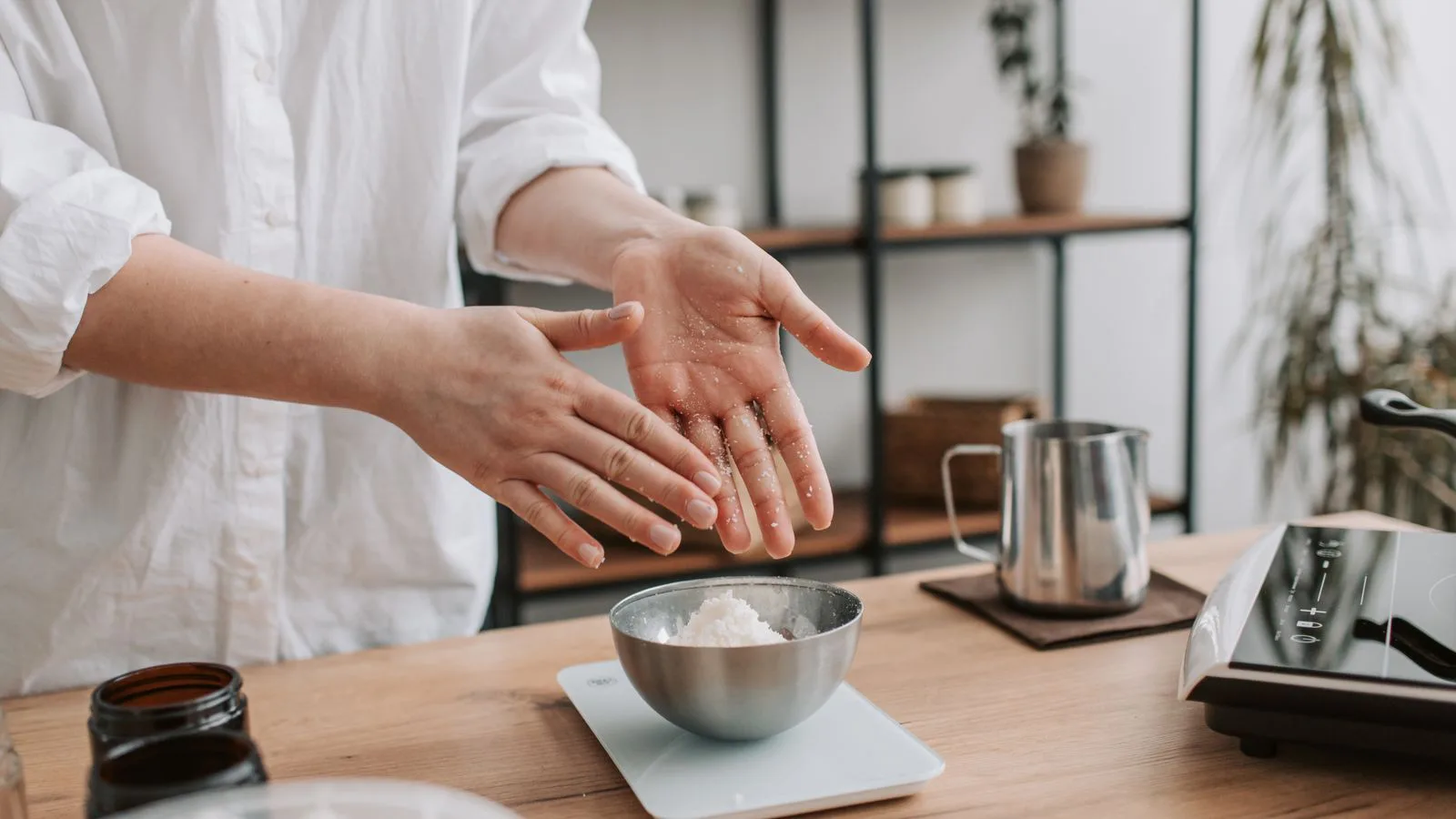
Multiply every ingredient by the same factor. Here's how to find it, why the ratios must stay fixed, what doesn't scale linearly, and how to round sensibly.
The scaling factor
Scaling a recipe starts with one number: how much bigger or smaller you want it. Divide the servings you need by the servings the recipe makes, and that's your factor. Going from 4 to 8 servings is 8 ÷ 4 = 2, so double everything; going from 4 to 6 is 6 ÷ 4 = 1.5. To halve a recipe, the factor is 0.5. Once you have that single multiplier, the rest is just applying it consistently to every ingredient.
Keep the ratios
The golden rule is that everything scales together. A recipe is a set of proportions — so much flour to so much liquid to so much fat — and the dish depends on those staying fixed. Multiply the flour by two but forget the liquid and you get a stiff, dry mess. Apply your factor to every single ingredient, without exception, and the balance that makes the recipe work is preserved at any size. That consistency is the whole trick of scaling.
What doesn't scale linearly
Some things don't follow the multiplier. Cooking time is the big one: a double batch in a bigger dish takes somewhat longer, but nowhere near twice as long — check for doneness rather than trusting a scaled time. Pan size matters too, since a doubled cake in the same tin will overflow or bake unevenly. And strong flavours — salt, spices, chilli, garlic, and leavening like baking soda — often don't want the full multiple; scale them cautiously and adjust to taste.
Practical rounding
Scaling often produces awkward numbers, and here judgement beats arithmetic. You can't use 1.5 eggs cleanly, so beat one and add half, or round to a whole one and nudge the liquid. 'A pinch' scaled by 1.5 is still just a slightly bigger pinch. For anything where precision matters — baking especially — working in grams rather than cups or spoons makes scaled amounts far easier to weigh out accurately. Round with common sense, taste as you go, and trust the dish over the decimal.
Worked with our own calculator
Recipe scaler
Given
- Original servings
- 8
- Desired servings
- 12
- Ingredient amount
- 400
Result
- Scaled amount
- 600
- Scaling factor
- 1.5
These figures are produced by the calculator below, not typed in by hand — they are recomputed whenever the tool changes.
Run it on your own figures →Frequently asked questions
- How do I double a recipe?
- Multiply every ingredient by 2, and adjust the pan size and cooking time.
- Do cooking times double when I scale up?
- No; they increase a little, but not in proportion to quantity.
- How do I make 6 servings from a 4-serving recipe?
- Multiply each ingredient by 1.5 (6 ÷ 4).
Articles you may find interesting
All guides →Related tools
Sources
Spotted a mistake in this article?