What Is a Normal Menstrual Cycle Length? The Numbers, by Life Stage
Published 7/14/2026 · 6 min read · Health calculators

There are two ranges in circulation and both are defensible. The 2018 FIGO criteria, now the international reference, define normal cycle frequency as 24 to 38 days, and normal regularity as a gap of no more than 7 to 9 days between your shortest and your longest cycle over a year — no more than 9 days between 18 and 25, no more than 7 days between 26 and 41, and no more than 9 days again between 42 and 45. ACOG's older and still widely quoted range is 21 to 35 days for adults, and 21 to 45 days in the first years after menarche, when cycles are longer and far more variable because ovulation is not yet regular. Measure the length from the first day of bleeding to the day before the next bleeding starts. Bleeding itself lasting more than 8 days, cycles outside your range, or any bleeding after 12 consecutive months without a period all deserve a consultation.
FIGO puts a normal cycle at 24 to 38 days; ACOG's older range is 21 to 35. Here is why two respected bodies give different numbers, how much variation is normal, and how cycles change after menarche and before menopause.
Measure it the way the criteria were written
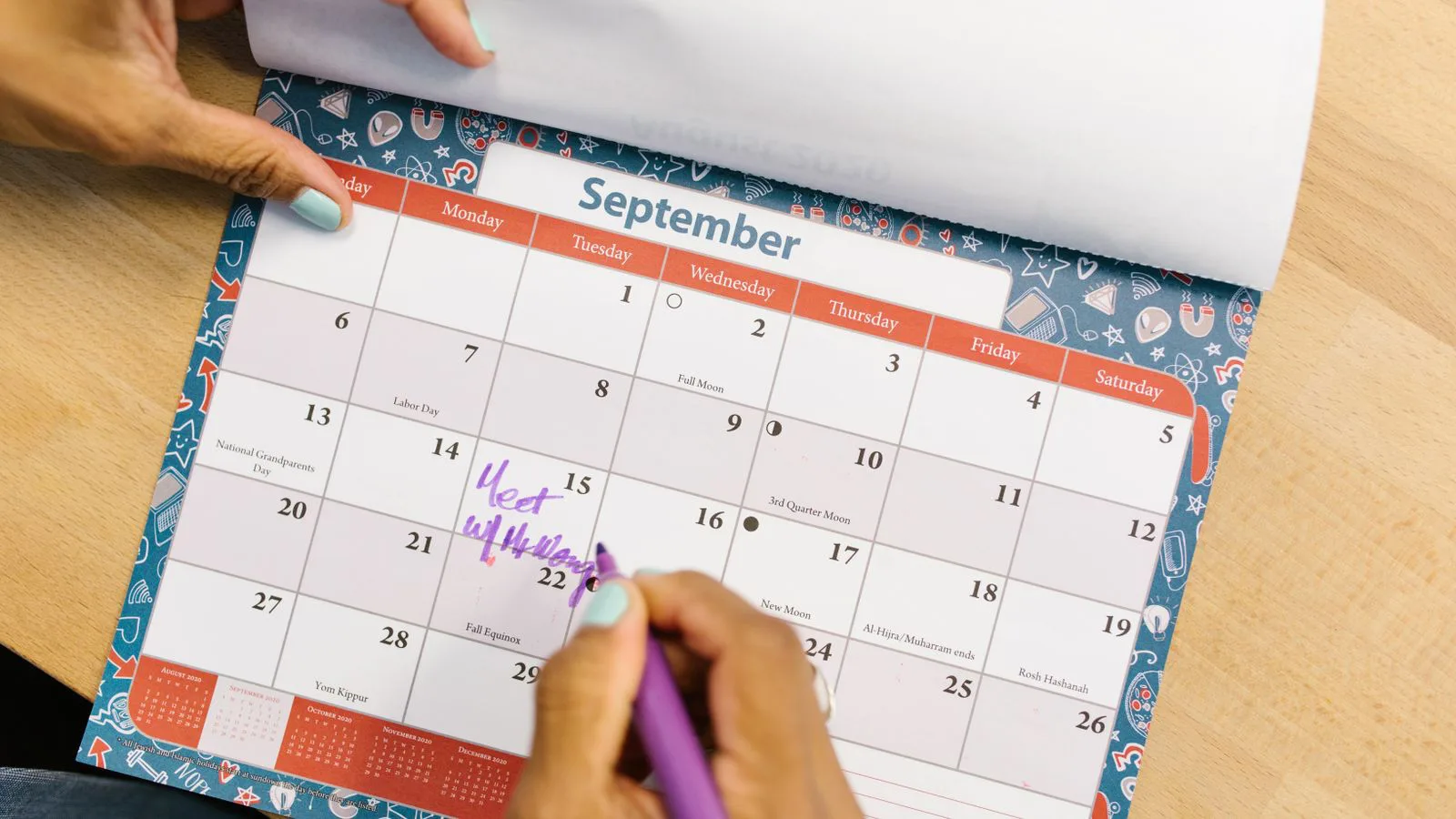
Cycle length runs from the first day of full bleeding to the day before the next bleeding begins. It does not run from the end of one period, and the number of bleeding days is a separate measurement with its own threshold — more than 8 days is the point at which FIGO calls the duration prolonged. Getting the start point wrong shifts every cycle in your record by the same few days and can move a perfectly ordinary 27-day cycle into apparent trouble.
Regularity, in the FIGO sense, is not a standard deviation. It is simply the gap between your shortest and your longest cycle across a twelve-month reference period. Six cycles is the practical minimum for a useful average, twelve is what the criteria are actually written around, and a single odd month inside an otherwise tight record does not make you irregular.
Why FIGO and ACOG give different numbers
The 21-to-35-day range is the older textbook figure, and ACOG still uses it, including a wider 21-to-45-day range for adolescents in the first years after menarche. The 24-to-38-day range comes from FIGO's 2018 revision, which set the boundaries at population percentiles observed in women with no bleeding complaint. Neither body is wrong; they drew the line at different places on the same distribution.
In practice this matters for a narrow band of people. A steady 22-day cycle is inside ACOG's range and outside FIGO's; a steady 37-day cycle is the reverse. If your cycle has always sat there and nothing has changed, it is very likely your normal. What carries far more weight than either boundary is a change: a cycle that used to be 30 days and is now 24, or a spread that used to be three days and is now twelve.
The two ends of reproductive life behave differently
In the first two to three years after menarche the axis linking brain and ovaries is still maturing, so many cycles pass without ovulation. That is why ACOG widens the range to 21 to 45 days for this group rather than treating a 40-day cycle as a disorder. The reassuring markers here are that periods have started by 15 and that gaps stay under 90 days; either of those failing is a reason to see someone, not to wait it out.
The approach to menopause runs the other way. Cycles often shorten first, because the follicular phase contracts, and then the spread widens: a persistent difference of seven days or more between consecutive cycles is one of the recognised markers of the early transition, and gaps of 60 days or more mark the late one. Twelve consecutive months with no bleeding is the definition of menopause itself — and after that point, any bleeding at all, however light, needs to be looked at rather than explained away.
| Life stage | Usual cycle length | Usual variation | Worth a consultation |
|---|---|---|---|
| First year after menarche | 21 to 45 days (ACOG) | Wide; many cycles have no ovulation yet | No period by age 15, or gaps longer than 90 days |
| Two to five years after menarche | Settling towards 21 to 34 days | Narrowing as ovulation becomes regular | Cycles still under 21 or over 45 days |
| Roughly 20 to 40 years old | 24 to 38 days (FIGO) | Up to 7 days between shortest and longest, ages 26 to 41 | Under 24 or over 38 days, or more than 7 days of spread |
| Roughly 40 up to the last period | Often shorter at first, then increasingly irregular | Up to 9 days between 42 and 45; a persistent gap of 7 days or more marks the early transition | New gaps of 60 days or more, or bleeding heavy enough to disrupt daily life |
| After 12 months with no period | No cycle — this is menopause | Not applicable | Any bleeding at all, however light, needs assessment |
Frequently asked questions
- Is a 21-day cycle normal?
- It sits exactly on ACOG's lower boundary and just below FIGO's 24-day one, which is the clearest illustration of why the two ranges are worth quoting together. A 21-day cycle you have had for years, with a small spread between your shortest and longest, is very likely your own baseline. A 21-day cycle that used to be 29 is a change, and a change is what merits the appointment.
- Does hormonal contraception change what normal means?
- It replaces the question. A combined pill produces a withdrawal bleed on the schedule set by the packet, so its timing describes the regimen rather than your ovaries, and the FIGO ranges do not apply. Implants, injections, hormonal coils and progestogen-only pills often make bleeding lighter, unpredictable or absent, and none of that is abnormal on those methods. What normal looks like for you only becomes visible again a few months after stopping.
- How many cycles should I track before deciding anything?
- Six is the practical minimum and twelve is the reference period the FIGO regularity criterion is written around. Record only the first day of each period; that single date is enough to produce your average, your shortest, your longest and the spread between them. A written list of twelve first days is more useful in a consultation than any app summary, because a clinician can read the pattern directly.
Articles you may find interesting
All guides →Related tools
This article is general information, not medical advice. Cycles, pregnancies and bodies vary; only a midwife or doctor who knows your history can tell you what is normal for you. Contact them about any symptom that worries you.
Sources
Spotted a mistake in this article?