What Is MPG (and How to Improve It)?
Published 8/12/2025 · 3 min read · Car calculators

Marco Bianchi — Home, DIY & motoring writer at OneKitly
Renovation · Materials
Checked against 2 sources
MPG (miles per gallon) is how far a car travels on one gallon of fuel — higher is better. A car doing 40 mpg goes twice as far per gallon as one doing 20. Europe usually quotes the inverse, litres per 100 km, where lower is better. You improve real-world mpg by driving smoothly, keeping speeds moderate, inflating tyres and shedding excess weight.
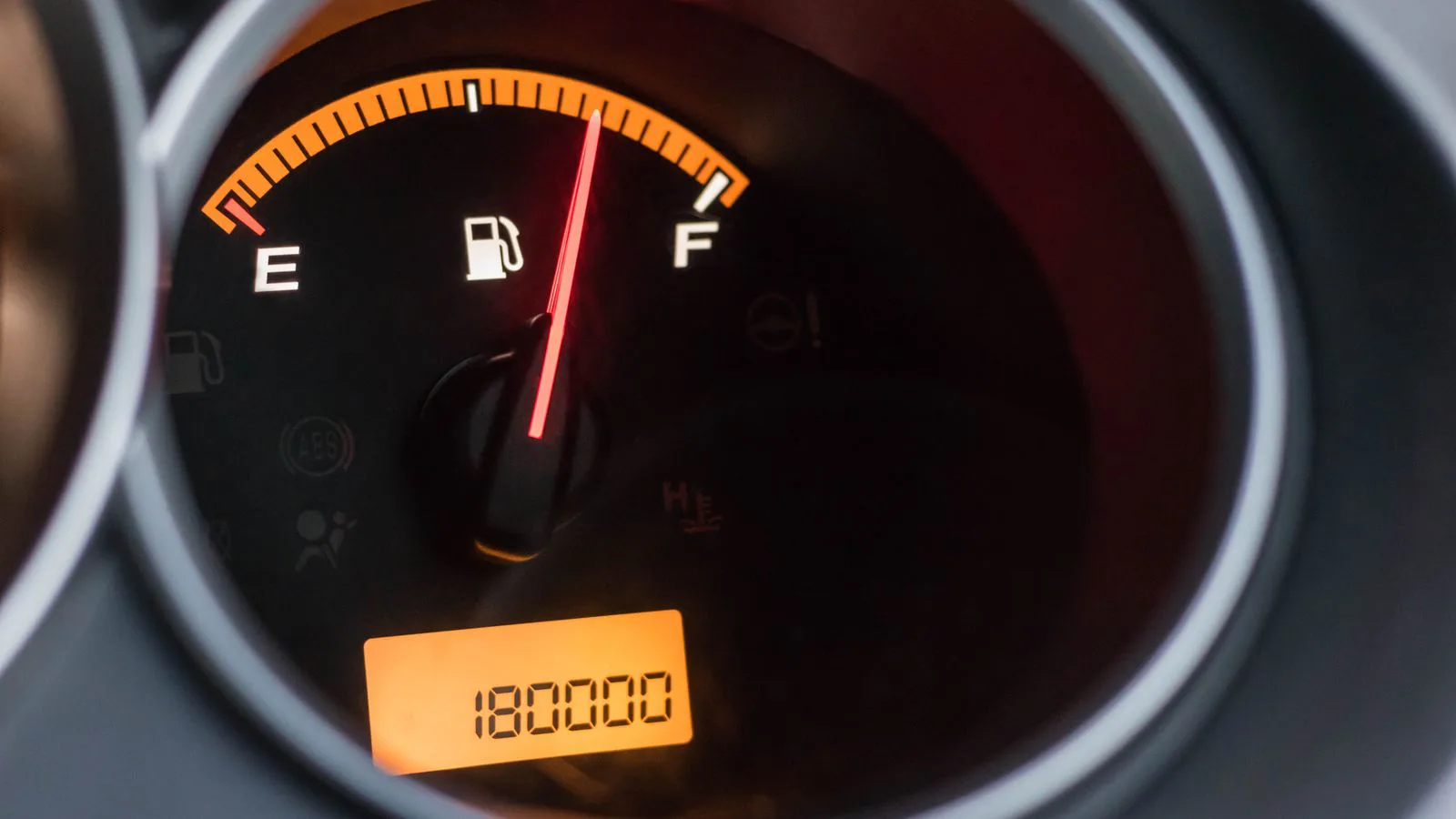
MPG is how far a car goes on a gallon — higher is better. Here's what it means, how it relates to L/100 km, why your real figure is lower, and how to improve it.
What MPG means
MPG stands for miles per gallon — the distance a car covers on a single gallon of fuel. A higher number means the car goes further on the same fuel, so 40 mpg is more efficient than 20. One catch for travellers: the gallon isn't universal. A UK (imperial) gallon is about 20% larger than a US gallon, so the same car reads higher in UK mpg than US mpg — always check which gallon a figure uses before comparing.
MPG vs L/100 km
Much of the world measures the same thing the opposite way round, in litres per 100 km. The two are inverses: mpg is distance per fuel (more is better), while L/100 km is fuel per distance (less is better). That flip trips people up — a low L/100 km and a high mpg both mean an efficient car. As a rough bridge, 40 mpg (US) is around 6 L/100 km, and 30 mpg around 8. When comparing cars across regions, convert both to the same measure first.
Why your real mpg is lower than the sticker
The official mpg on a car's paperwork comes from a standardised lab test with gentle acceleration and no real-world extras, so most drivers never match it. Your actual figure drops with fast motorway speeds, city stop-start, cold weather, air conditioning, a roof rack, a full load and short trips that never let the engine warm up. It's normal to see real economy 10–25% below the sticker. Track your own by dividing the distance since a fill-up by the fuel you put in.
How to improve it
Most fuel savings come from how you drive and how you maintain the car. Accelerate and brake gently, look ahead to keep a steady speed, and ease off the motorway pace — air resistance climbs sharply above about 100 km/h. Keep tyres at the right pressure, since soft tyres drag; strip out heavy junk from the boot and remove roof racks when unused; and stay on top of servicing. None of these are dramatic on their own, but together they can lift real economy by a noticeable margin.
Worked with our own calculator
MPG calculator (fuel economy)
Given
- Distance (miles)
- 300
- Fuel used (US gallons)
- 10
Result
- Fuel economy (MPG)
- 30
- Equivalent (L/100 km)
- 7.841
These figures are produced by the calculator below, not typed in by hand — they are recomputed whenever the tool changes.
Run it on your own figures →Frequently asked questions
- What is a good MPG?
- It depends on the car, but 40+ mpg (under ~6 L/100 km) is efficient for a petrol car.
- Is higher or lower MPG better?
- Higher; it means more distance per gallon of fuel.
- How can I improve my fuel economy?
- Drive smoothly, keep to moderate speeds, check tyre pressures and reduce weight.
Articles you may find interesting
All guides →Related tools
Sources
Spotted a mistake in this article?