How Much Does an Appliance Cost to Run? A Simple Method
Published 2/26/2026 · 3 min read · Real-estate calculators

Marco Bianchi — Home, DIY & motoring writer at OneKitly
Renovation · Materials
Checked against 2 sources
Running cost is power times hours times your electricity price. Take the wattage, divide by 1,000 to get kilowatts, multiply by the hours you use it, and multiply by your price per kWh. A 1,500-watt heater run 4 hours a day at $0.17 per kWh costs about $1.02 a day, or roughly $370 a year.
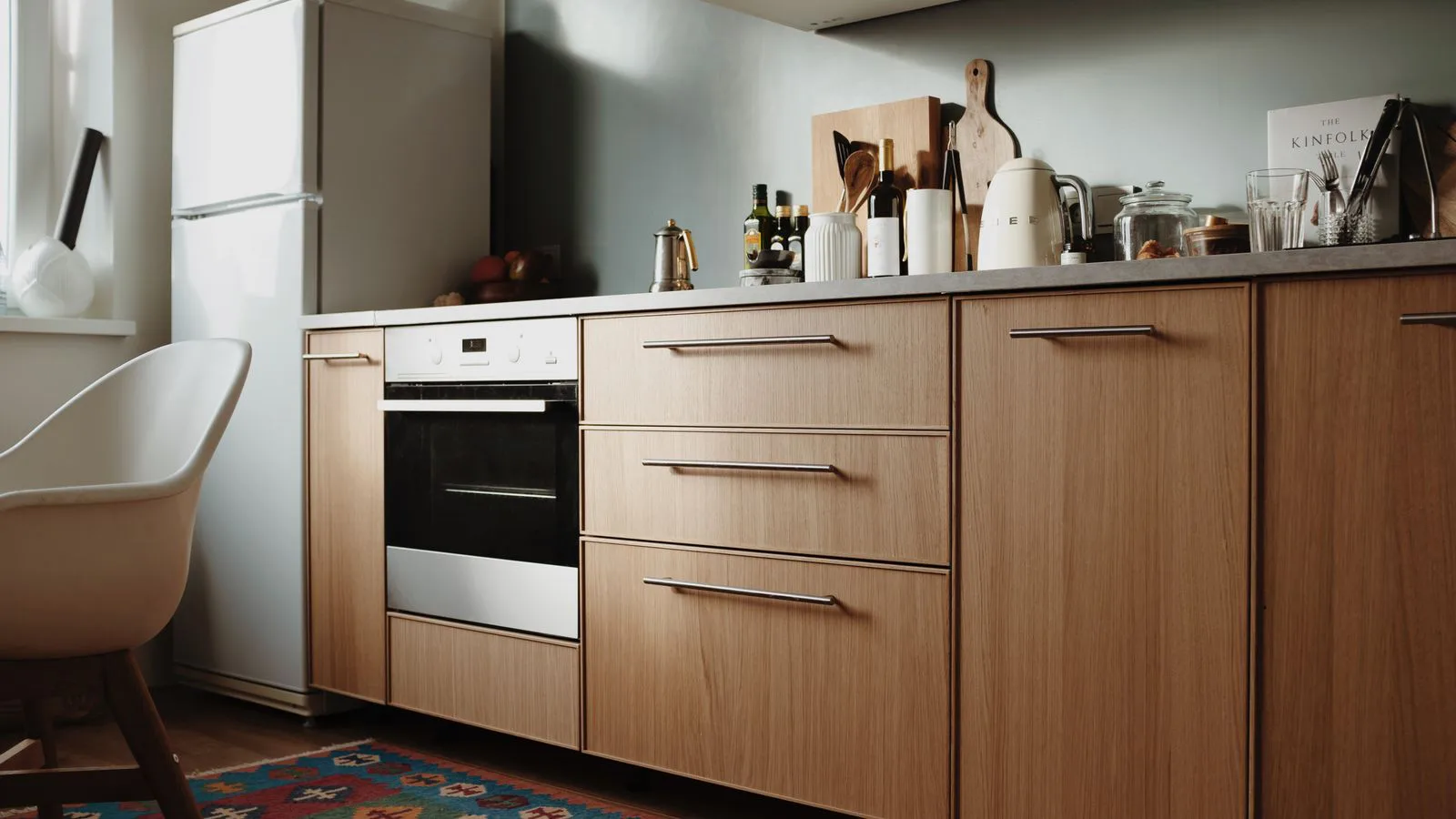
Turn an appliance's wattage and daily hours into an annual running cost using one formula: power times hours times your price per kWh.
The one formula that covers everything
Every running-cost question reduces to the same chain: watts to kilowatts, kilowatts to kilowatt-hours, kilowatt-hours to money. The kilowatt-hour is the unit your utility bills you in, so once you express usage in kWh, multiplying by your price gives a cost directly.
Because the formula is linear, the two levers you control are hours and price. Halving how long a device runs halves its cost, and switching to a cheaper tariff scales every appliance's cost together. The wattage on the label sets the ceiling; how you use it sets the bill.
Watch out for standby and cycling
The label wattage is the draw at full power, but many appliances rarely run flat out. A fridge cycles its compressor on and off, so it might average a quarter of its rated power over a day. A heater or kettle, by contrast, pulls close to its full rating whenever it is on.
Standby power adds up too. A single device sipping a few watts on standby is trivial, but a house full of them running around the clock can quietly cost more per year than you would guess. When in doubt, a plug-in meter tells you the real average draw.
Turning cost into decisions
Once you can price running an appliance, upgrade choices get concrete. If an old fridge costs a lot more per year than an efficient replacement, the yearly saving tells you how fast the new one pays for itself. The same math flags the handful of high-draw devices worth using less.
The calculator does the arithmetic for you: enter the wattage, daily hours and your price per kWh, and it returns daily, monthly and yearly figures side by side so you can compare devices on the same basis.
Worked with our own calculator
Appliance running cost calculator
Given
- Power (W)
- 4,000
- Hours per day
- 6
- Price per kWh
- $0.40
Result
- Daily cost
- $9.60
- Monthly cost
- $288.00
- Yearly cost
- $3,504.00
These figures are produced by the calculator below, not typed in by hand — they are recomputed whenever the tool changes.
Run it on your own figures →Frequently asked questions
- How do I turn watts into a cost?
- Divide watts by 1,000 for kilowatts, multiply by hours used to get kWh, then multiply kWh by your price per kWh. At $0.17 per kWh, 1 kWh costs about 17 cents.
- What electricity price should I use?
- Use your own rate from a recent bill for accuracy. As a rough national placeholder, about $0.17 per kWh is a reasonable starting point.
- Does a higher wattage always cost more?
- Only per hour of use. A high-wattage kettle used for two minutes can cost far less than a low-wattage device left on all day. Hours matter as much as watts.
- How do I measure real usage?
- A cheap plug-in energy meter sits between the socket and the appliance and logs kWh over time, capturing cycling and standby the label wattage misses.
Articles you may find interesting
All guides →Related tools
Sources
Spotted a mistake in this article?