How Much Sugar Per Day Is Healthy?
Published 5/6/2026 · 3 min read · Health calculators

The World Health Organization advises keeping free sugars below 10% of your daily energy, and ideally below 5%. On a 2,000-calorie day, 10% is about 50 grams of sugar and 5% is about 25 grams. Free sugars are those added to foods plus the sugars in honey, syrups and fruit juice — not the sugar naturally inside whole fruit, vegetables or milk.
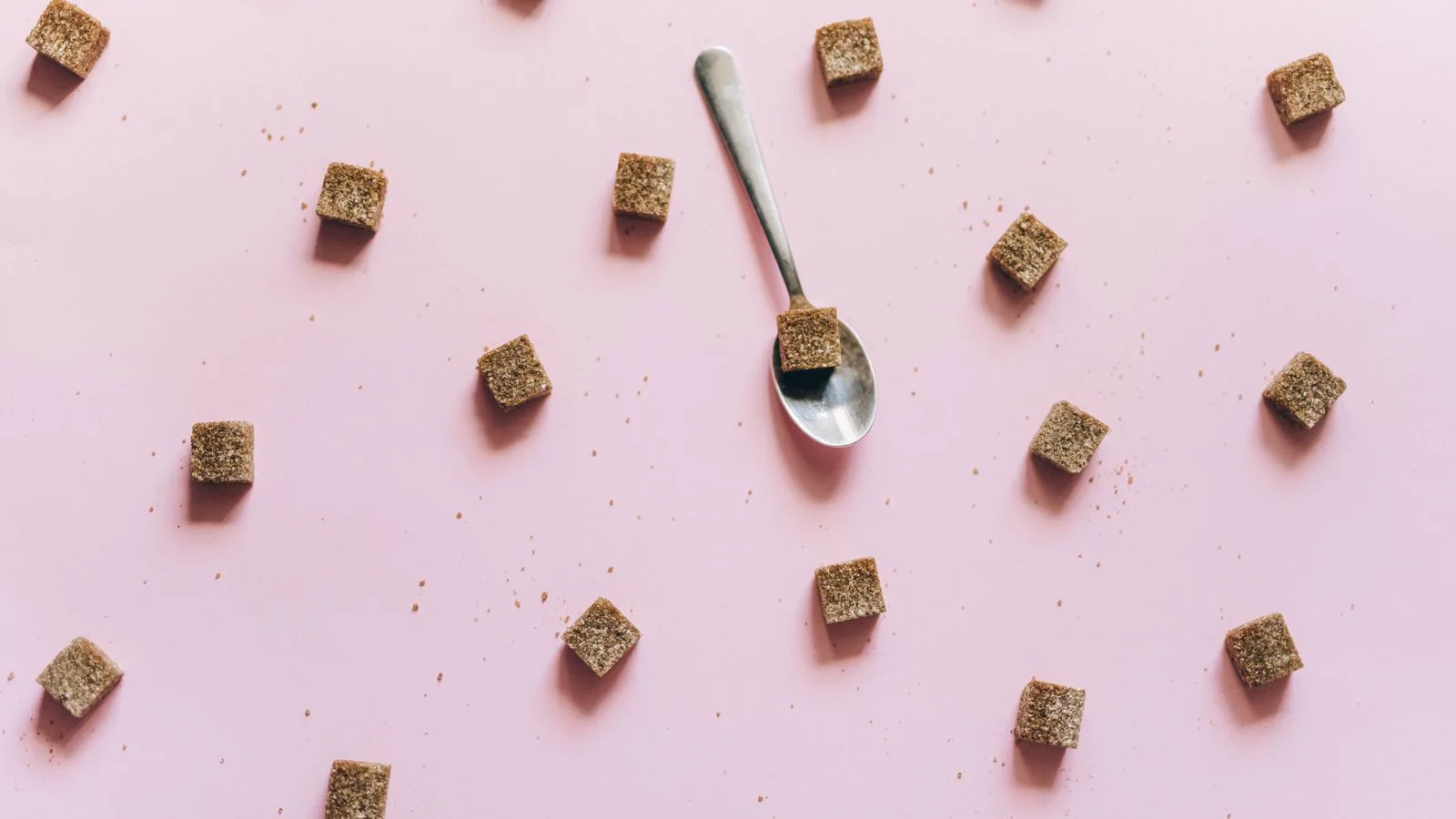
The WHO limit on free sugars, how to turn a percentage of calories into grams, and where hidden sugar comes from — with practical daily targets.
The WHO recommendation
The WHO recommends that free sugars make up less than 10% of your total daily energy for both adults and children, with a further reduction below 5% offering additional health benefits. "Free sugars" is a specific term: it covers all sugars added by manufacturers, cooks or consumers, plus the sugars naturally present in honey, syrups, fruit juices and juice concentrates.
Crucially, the target does not include the sugars naturally locked inside whole fruit and vegetables or the lactose in plain milk and yogurt. These come packaged with fiber, water and nutrients, so they behave very differently in the body from the sugar stirred into a soft drink.
Turning percentages into grams
Each gram of sugar provides about 4 calories. To find your 10% limit, take your daily calorie target, multiply by 0.10 and divide by 4. On a 2,000-calorie diet: 2,000 × 0.10 = 200 calories, and 200 ÷ 4 = 50 grams. The stricter 5% goal works out to about 25 grams — roughly the amount in a single 330 ml can of regular cola.
Because your ideal calorie intake depends on your age, sex, size and activity, the gram target shifts from person to person. A calculator lets you plug in your own daily energy and see your 10% and 5% limits side by side, which is easier than doing the arithmetic each time you read a label.
Where hidden sugar hides
Sugary drinks are the biggest single source for many people, but a lot of free sugar arrives in foods that do not taste especially sweet: pasta sauces, breakfast cereals, flavored yogurts, bread, granola bars and ketchup all commonly contain added sugar. Reading the ingredient list helps — sugar hides under names like glucose syrup, dextrose, maltose, fruit juice concentrate and molasses.
You do not need to eliminate sugar entirely. The aim is to keep free sugars within the limit while enjoying whole foods freely. Swapping sweetened drinks for water, choosing plain yogurt and adding your own fruit, and treating desserts as occasional rather than daily are simple ways to stay under target without feeling deprived.
Worked with our own calculator
Daily sugar intake calculator
Given
- Daily calories (kcal)
- 4,000
Result
- Maximum sugar (10% of energy)
- 100 g
- Ideal sugar (5% of energy)
- 50 g
These figures are produced by the calculator below, not typed in by hand — they are recomputed whenever the tool changes.
Run it on your own figures →Frequently asked questions
- Does fruit count toward the sugar limit?
- Whole fruit does not count as free sugar, because the sugar is bound within the fruit's structure alongside fiber and water. Fruit juice and smoothies do count, since blending or juicing releases the sugars.
- Are natural sweeteners like honey healthier?
- Honey, maple syrup and agave are still classed as free sugars and count toward the limit. They offer only trace nutrients, so treat them like any other added sugar rather than a health food.
- Is 50 grams the same for children?
- No. Children generally need fewer calories than adults, so 10% of their energy is a smaller number of grams. The percentage guideline stays the same, but the gram target scales down with their lower calorie needs.
- Where can I find the sugar content of a food?
- The nutrition label lists total sugars in grams per serving, and many labels now break out "added sugars" separately. Compare that figure with your personal daily target from the calculator.
Articles you may find interesting
All guides →Related tools
For general information only — not medical advice; consult a professional.
Sources
Spotted a mistake in this article?