How to Read an NPK Fertilizer Label (Two of the Three Numbers Are in Disguise)
Published 7/1/2026 · 6 min read · Everyday calculators

Marco Bianchi — Home, DIY & motoring writer at OneKitly
Renovation · Materials
Checked against 2 sources
The three numbers are percentages by weight of the bag, in a fixed order: total nitrogen as N, available phosphate reported as P2O5, and soluble potash reported as K2O. Only the first is the element itself. Phosphate is 43.6 percent phosphorus by weight and potash is 83.0 percent potassium, so a 50 lb bag of 10-20-10 contains 5 lb of nitrogen, 10 lb of phosphate that is really 4.4 lb of phosphorus, and 5 lb of potash that is really 4.2 lb of potassium. The remaining 60 percent of the bag is carrier, filler and whatever secondary nutrients the guaranteed analysis lists separately. To turn a grade into an amount, divide the nutrient you want by its percentage: 1 lb of nitrogen per 1,000 sq ft from a 10 percent product means 1 ÷ 0.10 = 10 lb of product per 1,000 sq ft, so a 50 lb bag covers 5,000 sq ft.
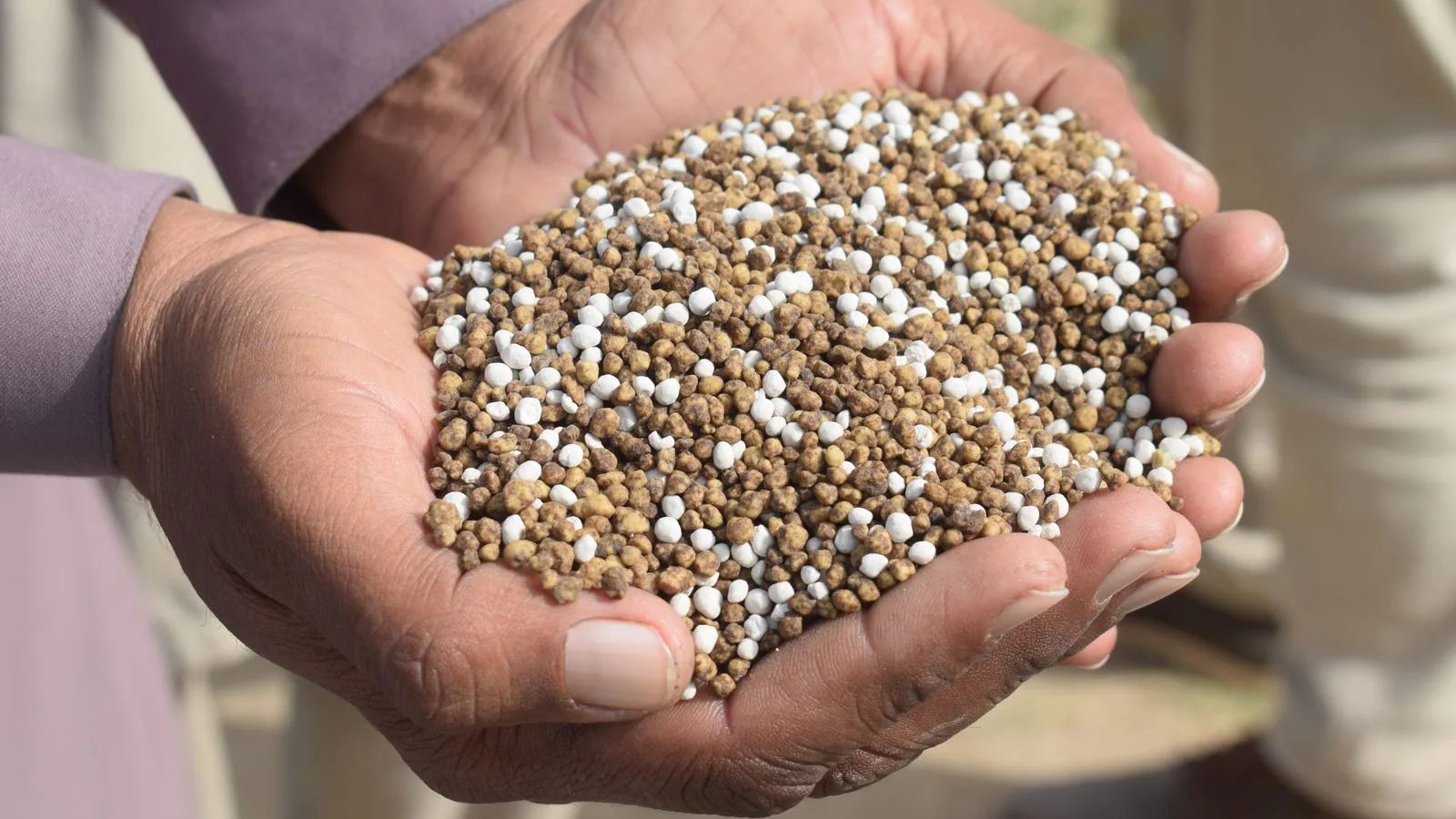
10-20-10 does not mean 10 percent phosphorus. The second and third numbers are oxides, so a 50 lb bag holds 4.4 lb of actual phosphorus, not 10. Here is what each number really measures and how to turn it into a rate.
Three percentages, two of them in disguise
The convention dates from an era of chemical analysis that burned a sample and weighed the oxides left behind, and it never went away. Nitrogen survived as the element, but phosphorus and potassium are still reported the way they came out of the furnace: as phosphorus pentoxide and as potassium oxide. Nobody puts P2O5 in a bag — the actual compound is a phosphate salt — but the number on the front is still calibrated to that oxide.
The two conversion factors are worth memorising because they are constants: multiply the phosphate figure by 0.436 to get phosphorus, and the potash figure by 0.830 to get potassium. This is also why a so-called balanced 10-10-10 is not balanced at all in element terms — its 10 percent phosphate is 4.4 percent phosphorus while its 10 percent potash is 8.3 percent potassium, so it delivers nearly twice as much potassium as phosphorus. Soil tests and crop-removal figures are usually published in the oxide convention too, which is the one mercy here: as long as you never mix the two systems in the same calculation, you rarely need the factors at all.
You buy a rate, not a bag
The grade on the front is meaningless until it meets an area and a target rate. The arithmetic is one division: product = nutrient wanted ÷ percentage. Aiming for 1 lb of nitrogen per 1,000 sq ft with a 10 percent product gives 1 ÷ 0.10 = 10 lb of product per 1,000 sq ft, and a 50 lb bag therefore covers 5,000 sq ft. The same target from urea at 46-0-0 needs 1 ÷ 0.46 = 2.2 lb — less than a quarter of the weight for identical nitrogen.
This is why the ratio matters more than the grade. A 5-10-5 and a 20-40-20 are the same 1-2-1 fertiliser at different concentrations, and the only thing that changes is how much of the bag you spread: to deliver a pound of nitrogen you need 20 lb of the 5 percent product or 5 lb of the 20 percent one. Match the ratio to what a soil test says the ground is short of, then let the concentration decide how heavy the bag is and how carefully you have to spread it — the more concentrated the product, the less forgiving a spreader setting becomes.
What the three numbers cannot tell you
The grade says nothing about the form the nutrient is in, and form decides almost everything about how a fertiliser behaves. Two products can both read 20-0-0 and be completely different in the ground: quick-release urea that is available within days and gone with the first heavy rain, or a coated or organic nitrogen that releases over weeks. The grade is equally silent on burn risk, which follows the salt index rather than the percentage, and on secondary nutrients like sulphur, calcium and magnesium, which appear only further down in the guaranteed analysis if they appear at all.
The bigger omission is whether you need any of it. Established garden soils are frequently already high in phosphorus, and applying more of it does nothing for the plants while running off into watercourses — which is why several US states restrict phosphorus in lawn fertiliser unless a soil test justifies it. A soil test costs less than a couple of bags and is the only way to know which of the three numbers should be high and which should be zero. Reading the label correctly tells you what is in the bag; it cannot tell you whether the bag is the right one.
| Number on the bag | What it actually measures | In one bag |
|---|---|---|
| First: 10 | Total nitrogen, as the element N | 5 lb of nitrogen |
| Second: 20 | Available phosphate, reported as P2O5 — not elemental phosphorus | 10 lb of phosphate = 4.4 lb of phosphorus |
| Third: 10 | Soluble potash, reported as K2O — not elemental potassium | 5 lb of potash = 4.2 lb of potassium |
| The other 60 % | Carrier, filler and any secondary or micronutrients | 30 lb, listed separately if it feeds anything |
| The 1-2-1 ratio | The only part of the label that survives a change of grade | Identical in 5-10-5 and 20-40-20 |
Frequently asked questions
- Is 10-10-10 a balanced fertilizer?
- Balanced on the label, not in the soil. The three tens are equal percentages of three different things: 10 percent nitrogen as the element, 10 percent phosphate that is 4.4 percent phosphorus, and 10 percent potash that is 8.3 percent potassium. In element terms it delivers roughly twice as much potassium as phosphorus. Balanced is a marketing word, not an agronomic one — the ratio a plot needs is whatever its soil test is short of.
- Can I swap one grade for another?
- Yes, as long as the ratio matches and you rescale the quantity by the percentage. Ten pounds of 10-10-10 and five pounds of 20-20-20 both deliver one pound of nitrogen and the same amounts of the other two. Where the swap fails is when the ratios differ: substituting a 20-5-10 for a 10-10-10 gives you the nitrogen you wanted and half the phosphate, which may be fine or may be the whole point of the application.
- Do organic fertilizers use the same numbers?
- They use the same convention, but the numbers are much lower and mean something slightly different in practice. A blood meal at 12-0-0 and a compost at 1-1-1 are both stating available nutrient as a percentage of weight, yet much of the nitrogen in an organic product is released by soil microbes over a season rather than being immediately available. The label percentage is still the right basis for the rate calculation; the timing is what changes.
Articles you may find interesting
All guides →Related tools
Sources
Spotted a mistake in this article?