How to Train With Percentages of Your 1RM
Published 3/2/2026 · 4 min read · Sport calculators

Percentage-based training sets each set's weight as a percentage of your one-rep max (1RM) — the most you can lift once with good form. This scales the load to your current strength: 80% of 1RM is heavy and low-rep, while 65% is lighter and lets you do more reps. As a rough map, strength work uses about 85-100% of 1RM for 1-5 reps, hypertrophy uses 65-80% for 8-12 reps, and endurance uses under 65% for higher reps. If your 1RM squat is 220 lb, an 80% set is 176 lb.
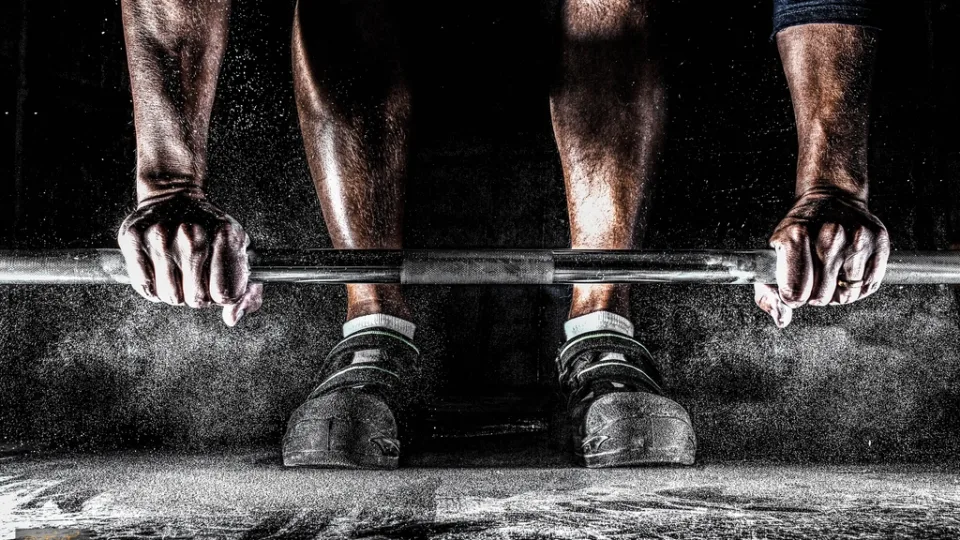
Percentage-based training scales every lift to your one-rep max. Learn the strength and hypertrophy zones and how to set your working weights.
Why percentages work
The load you use decides the training effect. Heavy loads recruit the most muscle fibers and drive maximal strength, while moderate loads for more reps drive muscle growth. Percentages tie every set to your own 1RM, so a beginner and an advanced lifter both get the right relative challenge from the same 80% instruction.
Programs from coaches and studies are often written in percentages precisely because they travel across lifters of any level. When a plan says 5 sets of 3 at 85%, you don't need the coach to know your numbers — you plug in your own 1RM and the weights come out scaled to you.
Strength versus hypertrophy zones
Strength training lives at 85-100% of 1RM for 1-5 reps, with long rests, teaching your nervous system to move heavy loads. Hypertrophy training sits at 65-80% for 8-12 reps, accumulating the volume that grows muscle. Muscular endurance uses under 65% for 15 or more reps. These ranges overlap and blend — most programs mix them across a week.
Your 1RM is an estimate, not a fixed truth, and it changes as you get stronger. Retest or recalculate it every few weeks, and don't chase a percentage so rigidly that your form breaks down. If a prescribed weight feels wrong on the day, adjust it — the percentage is a target, not a command.
Putting a session together
Start with your best current 1RM for the lift, whether tested directly or estimated from a set you took close to failure. Pick the zone that matches your goal, then read off the working weight — for a 220 lb 1RM, an 80% hypertrophy set is 176 lb, and a 90% strength set is 198 lb. Round to the nearest weight your plates allow.
Warm up with progressively heavier sets before your working weight, add reps or a little load over the weeks, and keep a log so you can see progress and know when to retest your max. Consistency across weeks beats any single perfect session.
Worked with our own calculator
Lift percentage of 1RM calculator
Given
- One-rep max (kg)
- 110 kg
- Target percentage (%)
- 88%
Result
- Weight to load (kg)
- 96.8 kg
These figures are produced by the calculator below, not typed in by hand — they are recomputed whenever the tool changes.
Run it on your own figures →Frequently asked questions
- Do I have to test a true 1RM?
- No. Maximal testing carries injury risk, especially for beginners. You can estimate your 1RM from a set of, say, 5 reps taken close to failure using a standard formula, which our calculator does for you.
- How often should I retest my max?
- Every four to eight weeks is common. If your working weights start feeling easy well before that, your strength has moved on and it is worth recalculating so your percentages stay honest.
- Can I use percentages for every exercise?
- They work best on big barbell lifts like the squat, bench press and deadlift, where a 1RM is meaningful. For small isolation moves or bodyweight work, training by reps and effort is usually more practical.
- What if I can't finish the prescribed reps?
- It usually means your estimated 1RM is too high or you are fatigued. Lower the weight a little for that session and consider retesting your max; there is no benefit in grinding out reps with failing form.
Articles you may find interesting
All guides →Related tools
Sources
Spotted a mistake in this article?