VO2 Max Norms by Age: What Your Number Means
Published 5/19/2026 · 3 min read · Sport calculators

VO2max is the maximum volume of oxygen your body can use per minute during hard exercise, measured in milliliters per kilogram of bodyweight per minute (ml/kg/min). It reflects aerobic fitness and is a strong predictor of health and endurance. Typical values fall with age: a fit man in his 20s might reach 48–55 ml/kg/min and a fit woman 42–48, while both decline roughly 10% per decade after 30. Sex differences are largely explained by hemoglobin and body composition. Interval training and consistent aerobic volume raise it most.
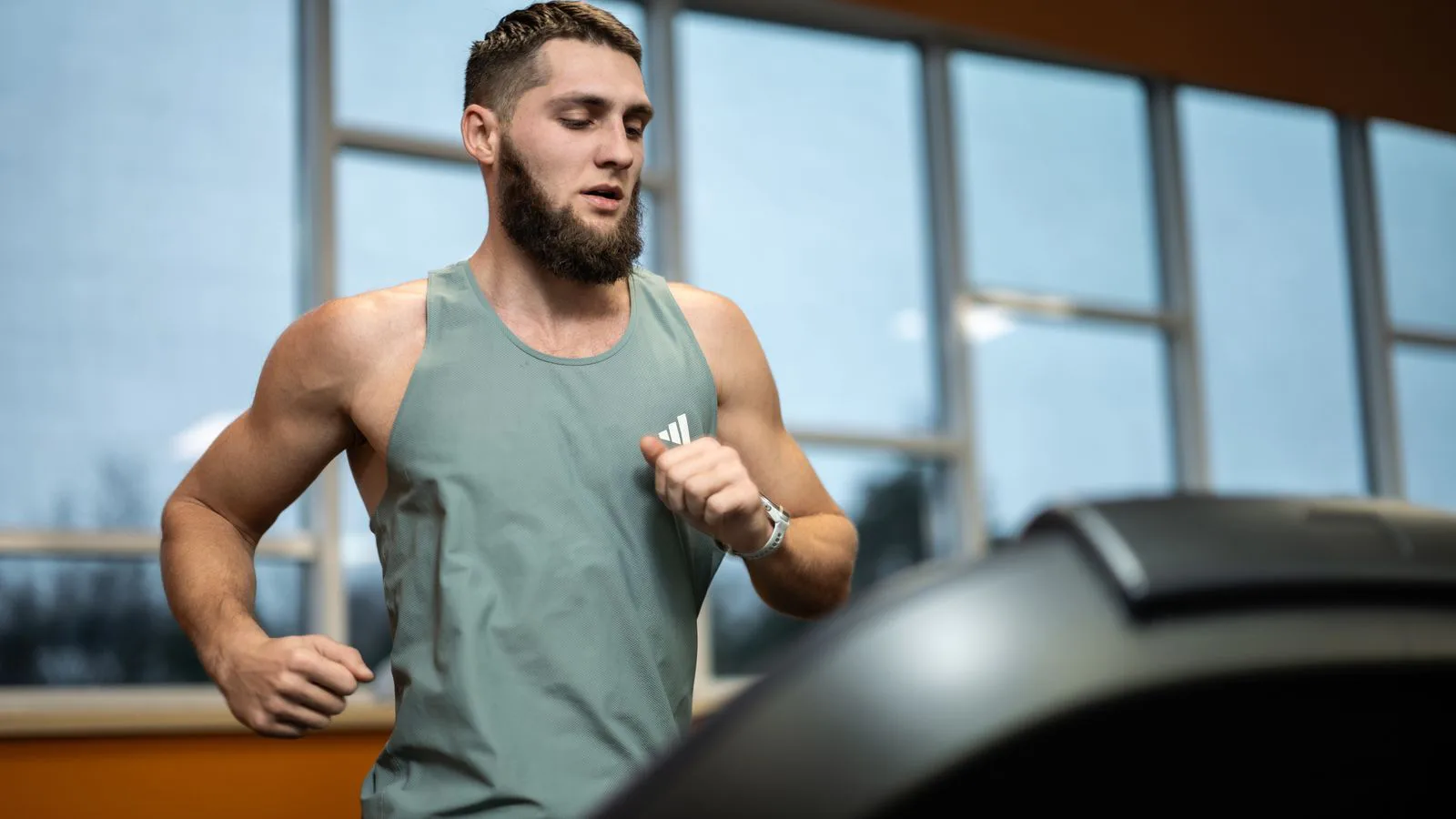
What VO2max measures, how it ranges by age and sex in ml/kg/min, and the training that raises it.
What VO2max actually measures
VO2max is the ceiling on how much oxygen your muscles can extract and burn per minute at maximal effort. It depends on how much blood your heart pumps, how much oxygen your blood carries, and how well your muscles use it. Expressed relative to bodyweight in ml/kg/min, it lets you compare athletes of different sizes on a level footing.
The lab standard measures it directly from expired gases during a maximal treadmill or bike test. Field estimates from a Cooper 12-minute run, a beep test or a resting heart-rate formula are less exact but practical. Any single number carries a margin of error, so treat it as a band and watch how it trends over months.
How norms shift with age and sex
VO2max peaks in the late teens to late twenties and then declines. As a broad guide, a good value for a man aged 20–29 sits around 43–52 ml/kg/min and for a woman around 37–44, with excellent athletes well above. By age 50–59 those good bands drift down to roughly 34–42 for men and 29–35 for women.
On average, women's VO2max runs about 10 to 15 percent below men's at the same fitness level. This is mostly physiology — men tend to carry more hemoglobin and muscle and less fat mass per kilo — not effort or training quality. That is why norm tables are always split by sex, and why comparing your number only against your own sex-and-age band is meaningful.
How to raise your VO2max
The strongest driver is high-intensity interval training near your VO2max power or pace — efforts of three to five minutes at around 90 to 100 percent of max heart rate, repeated with recovery. These sessions push the heart to fill and pump more blood, the central adaptation behind a higher ceiling.
But intervals rest on a base. A large volume of easy Zone 2 aerobic work builds the capillaries, mitochondria and heart size that let the hard sessions pay off. Beginners can gain 15 to 20 percent in a few months; trained athletes improve slowly and mostly defend against the age-related decline. Consistency over months, not any single workout, moves the number.
Frequently asked questions
- What is a good VO2max for my age?
- It depends on age and sex. A rough good band is 43–52 ml/kg/min for men and 37–44 for women in their twenties, drifting down about 10% per decade. Compare against your own age-and-sex table rather than a single universal target.
- Why does VO2max fall with age?
- Maximum heart rate declines, the heart pumps slightly less blood per beat, and muscle mass tends to fall. Together these lower how much oxygen you can deliver and use. Staying active dramatically slows the decline compared with a sedentary trajectory.
- How is VO2max measured or estimated?
- The gold standard is a lab test analyzing your expired air during a maximal effort. Field estimates use a 12-minute Cooper run, a shuttle beep test, or formulas from resting heart rate, and smartwatches approximate it from pace and heart-rate data.
- How quickly can I improve my VO2max?
- Untrained people often gain 15 to 20 percent within two to three months of regular training that mixes easy volume with interval work. Well-trained athletes improve much more slowly, since they are already near their genetic ceiling.
Articles you may find interesting
All guides →Related tools
Sources
Spotted a mistake in this article?