What Is Voltage Drop? Why Long Wires Lose Voltage
Published 2/4/2026 · 4 min read · Everyday calculators

Lena Hoffmann — Science & education writer at OneKitly
Mathematics · Physics
Checked against 2 sources
Voltage drop is the reduction in voltage as current flows through the resistance of a wire or cable. Every conductor has a small resistance, and by Ohm's law the drop equals current times that resistance: Vdrop = I × R. The longer the wire and the higher the current, the bigger the drop; a thicker wire (lower gauge number) has less resistance and drops less. Engineers usually keep the drop under about 3% of the supply voltage.
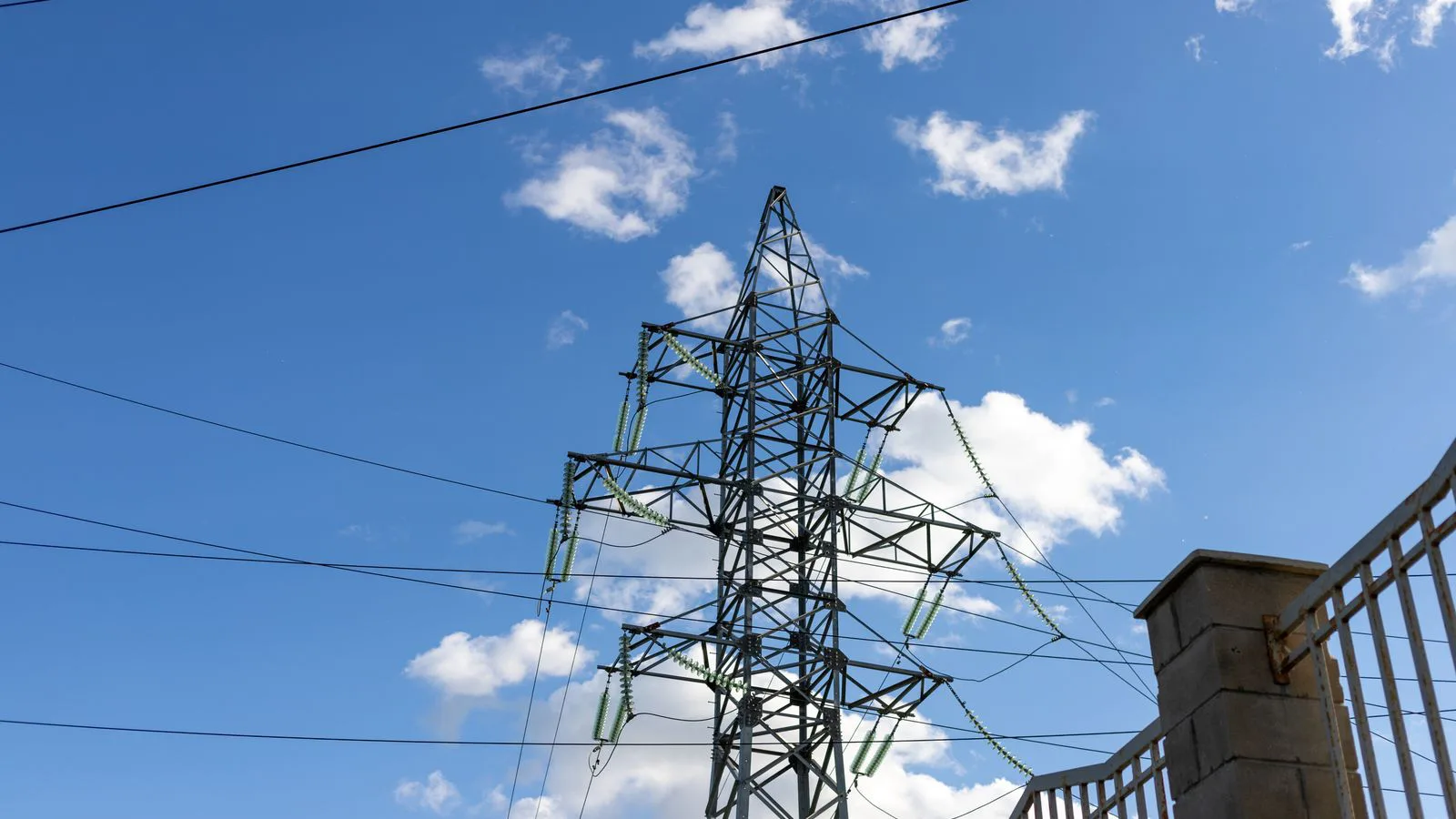
Voltage drop is the voltage lost along a wire due to its resistance. Learn how length, gauge, and current affect it, and why it matters for your circuits.
Where the voltage goes
No wire is a perfect conductor. Copper and aluminum have a small but real resistance that increases with length and decreases with cross-sectional area. When current flows through this resistance, some of the supply voltage is consumed heating the wire rather than reaching the load. That consumed portion is the voltage drop, and it is governed by Ohm's law: Vdrop = I × Rwire.
Because current usually travels out along one conductor and back along another, the drop happens over the full round-trip length of the circuit, not just the one-way distance. A load 20 meters away sees resistance from roughly 40 meters of wire. This is why a low-voltage run — a 12 V lighting circuit, a doorbell, a solar panel lead — can lose a noticeable fraction of its voltage over a surprisingly short physical distance.
Length, gauge, and current
Three factors set the drop. Length: resistance is proportional to length, so doubling the run doubles the drop. Cross-section (gauge): resistance is inversely proportional to area, so a thicker wire drops less — in AWG, a lower number means a thicker wire, and each step of three AWG numbers roughly halves or doubles the resistance. Current: the drop is proportional to current, so a heavier load worsens it. Combine them with Vdrop = I × (ρ × L / A), where ρ is the material's resistivity.
A concrete example: run 15 A through 30 meters (one way) of copper wire with a resistance of about 0.02 Ω per meter for that gauge. The round-trip length is 60 meters, giving 60 × 0.02 = 1.2 Ω. The drop is Vdrop = I × R = 15 × 1.2 = 18 V. On a 230 V circuit that is a 7.8% loss — too much; the fix is a thicker conductor to cut the resistance.
Why voltage drop matters
Excessive drop makes equipment underperform. Lights dim, motors run hot and lose torque, and sensitive electronics may reset or misbehave when the voltage at their terminals sags. The wasted voltage also becomes heat in the wire, lowering efficiency and, in extreme cases, creating a fire risk. Electrical codes therefore set limits — commonly a maximum drop of about 3% on a branch circuit and 5% overall from source to load.
The remedies are straightforward: use a thicker conductor, shorten the run, reduce the current, or raise the system voltage so the same power flows as less current. Long-distance power transmission uses very high voltages for exactly this reason — at higher voltage the current is lower, so the I × R drop and the heating losses shrink dramatically. A voltage-drop calculator lets you test wire gauges before you buy cable.
Worked with our own calculator
Voltage drop calculator
Given
- Current (A)
- 20
- Cable length (m, one way)
- 40
- Cross-section (mm²)
- 5
- System voltage (V)
- 460
Result
- Voltage drop (V)
- 5.6
- Voltage drop (%)
- 1.22%
These figures are produced by the calculator below, not typed in by hand — they are recomputed whenever the tool changes.
Run it on your own figures →Frequently asked questions
- What is an acceptable voltage drop?
- A common guideline keeps the drop under about 3% on a single branch circuit and 5% total from source to load. Sensitive or long low-voltage runs may need tighter limits, so always check the applicable wiring code.
- Does a thicker wire reduce voltage drop?
- Yes. Resistance is inversely proportional to a wire's cross-sectional area, so a thicker conductor has lower resistance and drops less voltage. In AWG a lower number means a thicker wire, and dropping three AWG sizes roughly halves the resistance.
- Why do power lines use very high voltage?
- To minimize losses. At higher voltage the same power flows as less current, and since voltage drop and heating both depend on current, raising voltage sharply cuts the I × R drop and the I²R heat loss over long distances.
- Do I count one-way or round-trip wire length?
- Round-trip. Current flows out on one conductor and back on another, so the total resistance covers both directions. For a load 20 meters away, use 40 meters of wire in the voltage-drop calculation.
Articles you may find interesting
All guides →Related tools
Sources
Spotted a mistake in this article?