What Wire Gauge Do I Need?
Published 5/8/2026 · 5 min read · Real-estate calculators

Marco Bianchi — Home, DIY & motoring writer at OneKitly
Renovation · Materials
Checked against 2 sources
Choose wire size from three inputs: the current the circuit will carry, the length of the run, and the voltage drop you can accept. Current sets the minimum cross-section — a 16-amp circuit typically needs at least 1.5 mm² (about 14 AWG) and a 20-amp circuit 2.5 mm² (about 12 AWG). Long runs then force you thicker, because resistance over distance drops voltage: past roughly 20–30 metres you often step up one size to keep the drop under 3%. Always match the wire to the breaker protecting it, and never let a thin wire sit behind a large breaker.
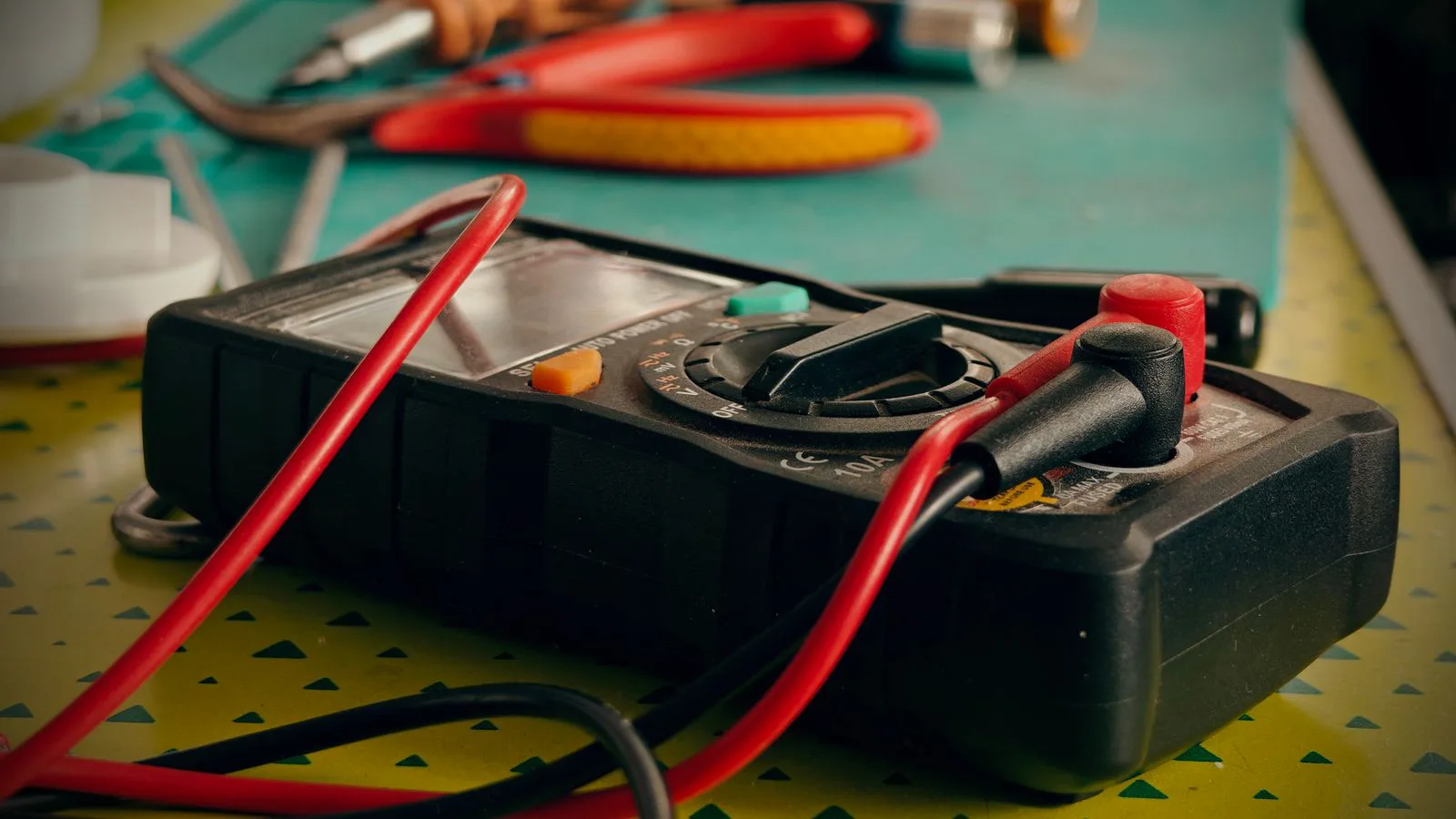
Pick wire size from the load current, run length, and allowed voltage drop — the amps decide the minimum cross-section, distance forces you thicker.
Current sets the floor, not the finish
Every conductor has a safe current-carrying capacity, and the first job of sizing is to make sure the wire can carry the load without overheating. That is why a 16-amp lighting-and-socket circuit is commonly run in 1.5 mm² (roughly 14 AWG) and a 20-amp socket circuit in 2.5 mm² (roughly 12 AWG). Push more current through a wire than it is rated for and the insulation cooks over time — a slow-building fire risk that no breaker will catch if the breaker itself is oversized for the wire.
This is the golden rule that beginners most often break: the breaker protects the wire, so the wire must be sized for the breaker, never the other way round. If you find a 2.5 mm² cable behind a 32-amp breaker, that is a fault to fix, not a shortcut to copy. The ampacity table gives you the floor; everything else in this article only ever pushes you thicker.
Distance and voltage drop push you thicker
Copper is not a perfect conductor, so a long run behaves like a small resistor in series with your load. The further the current travels, the more voltage it loses on the way, and by the time it reaches a distant socket, motor, or light, the appliance sees less than the full supply. A common design limit is to keep this drop under about 3% of the nominal voltage, and the fix is always the same: a thicker wire has less resistance per metre, so it delivers more of the voltage to the far end.
In practice this means the same load can need different wire on different runs. A 20-amp circuit that is fine in 2.5 mm² across a short room may need 4 mm² if it has to reach a shed 40 metres down the garden. Low-voltage systems feel this hardest — at 12 or 24 volts the same drop is a much bigger fraction of the supply, which is why solar, boat, and caravan wiring is often surprisingly thick. Feed the length and current into the calculator and let it tell you when to step up.
Installation, temperature, and safety margins
The rated ampacity in a table assumes a reference condition, and real installations rarely match it. Bundling several cables together, running them through insulation, or enclosing them in conduit all trap heat, so the wire cannot shed the warmth it makes and its safe capacity falls. Codes handle this with derating factors: the more crowded or hotter the route, the more you multiply the rating down, and sometimes that alone pushes you to the next size.
None of this replaces a professional. A calculator turns your load, length, and conditions into a sensible minimum, and that is genuinely useful for planning and for sanity-checking a quote. But local codes, earthing arrangements, and protection coordination are decisions for a qualified electrician, who signs off that the finished circuit is safe. Use the numbers to understand the choice, not to skip the inspection.
Frequently asked questions
- What wire size for a 20-amp circuit?
- A 20-amp circuit typically uses 2.5 mm² (about 12 AWG) copper on a short-to-medium run. On long runs, voltage drop can force 4 mm² to keep the drop under about 3%. Always match the wire to the breaker and confirm against your local code.
- Does wire length affect the gauge I need?
- Yes. Longer runs lose more voltage to resistance, so past roughly 20–30 metres you often need a thicker wire than the current alone would require. Low-voltage systems (12–24 V) feel this most. Enter the one-way length into the calculator to see when to step up.
- What happens if the wire is too thin for the breaker?
- It is dangerous. The breaker only trips at its own rating, so a thin wire behind a large breaker can carry more current than it is rated for without tripping, overheating the insulation and creating a fire risk. The wire must always be sized for the breaker, never the reverse. Have any such mismatch corrected by an electrician.
- What is the difference between mm² and AWG?
- Both describe wire thickness. mm² is the metric cross-sectional area of the copper, used across most of the world. AWG (American Wire Gauge) is a numbered scale where a smaller number means a thicker wire. Roughly, 1.5 mm² ≈ 14 AWG, 2.5 mm² ≈ 12 AWG, 4 mm² ≈ 10 AWG. Use whichever your local products and code specify.
Articles you may find interesting
All guides →Related tools
This article is general guidance only. Wiring rules and cable ratings vary by country and installation. Always consult a qualified electrician and follow your local electrical code before doing any wiring work.
Sources
Spotted a mistake in this article?