What Size Heater Do I Need? Sizing BTUs by Room and Climate
Published 4/27/2026 · 4 min read · Real-estate calculators

Marco Bianchi — Home, DIY & motoring writer at OneKitly
Renovation · Materials
Checked against 2 sources
As a rule of thumb, a room needs about 10 to 40 BTU per square foot per hour depending on climate and insulation. In a mild climate, use around 20 BTU/sq ft; in a cold one, 30–40. A 300 sq ft room in a cold climate needs roughly 300 × 35 = 10,500 BTU/hr, which is about 3,100 watts, or 3.1 kW.
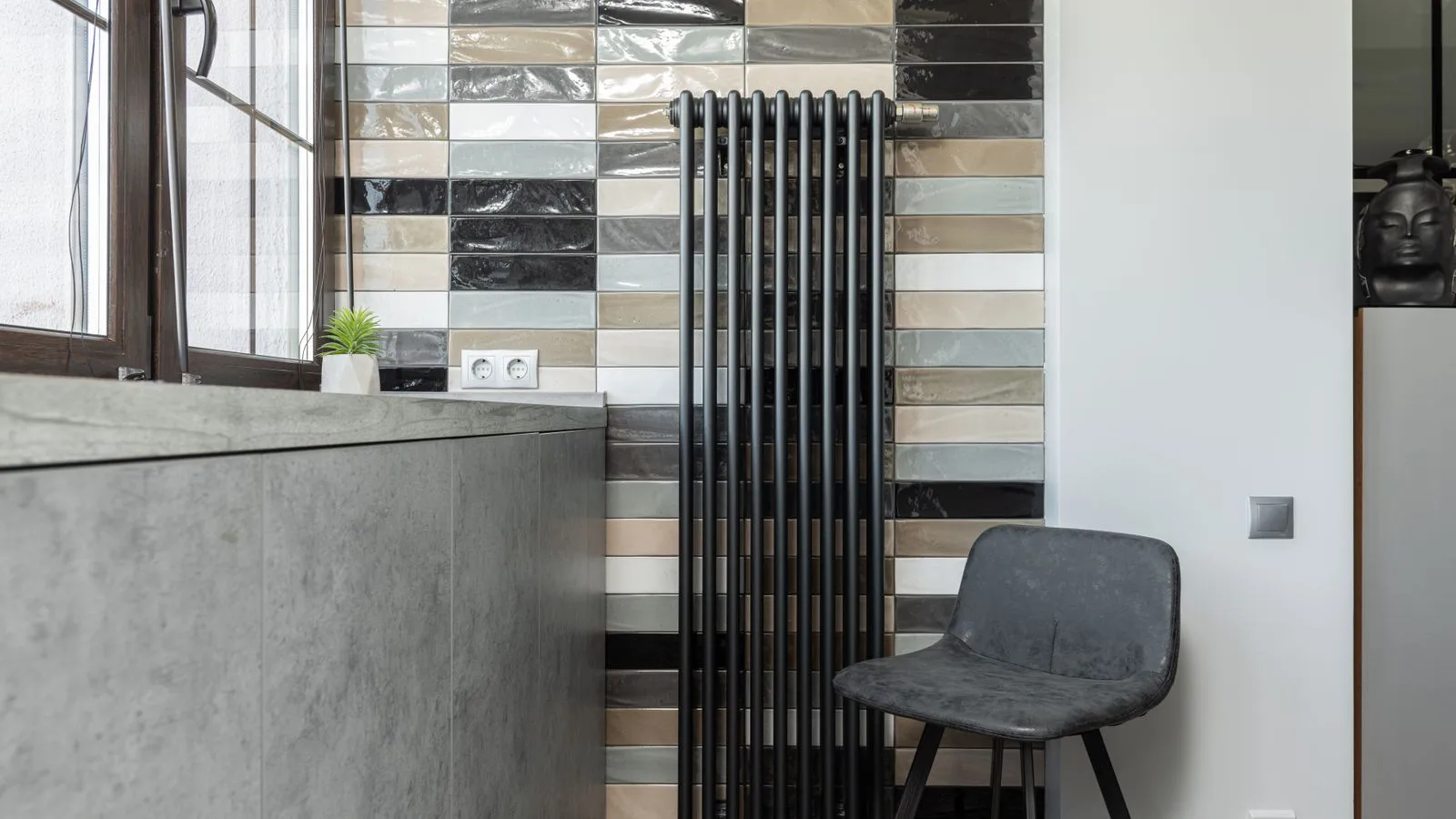
Size a heater from room area and your climate: a BTU-per-square-foot rule gives the heat output, with watts and kW for electric units.
Start with area, then adjust for climate
Heating capacity is measured in BTU per hour — British Thermal Units, the standard unit for heat output even outside the US. The starting point is the floor area of the room in square feet: length times width, added up across rooms if you are heating an open-plan space.
Then apply a BTU-per-square-foot figure that reflects your climate. A mild region needs around 20 BTU per square foot; a moderate one around 25–30; a cold region 35–40 or more. This single rule of thumb covers most rooms, but it assumes standard ceiling height and average insulation.
Adjust for insulation, ceilings and use
The area rule gets you close, but real rooms vary. Add roughly 10–20% for high ceilings, large or single-glazed windows, or poor insulation, since more heat escapes. Trim it for a well-insulated, south-facing room. A kitchen with its own heat-producing appliances can be sized a little lower.
For electric heaters, convert BTU to watts by dividing by 3.412 — 10,500 BTU/hr is about 3,076 watts, or 3.1 kW. That number tells you the circuit you need: a 3 kW plug-in unit runs on a standard outlet in many places, but larger loads need a dedicated circuit, which matters before you buy.
Do not oversize the heater
Bigger is not automatically better. An oversized heater heats the room fast, then cycles on and off, which wastes energy, wears the unit and leaves temperatures uneven. Matching output to the room's actual load gives steadier warmth and lower running costs than simply buying the largest unit on the shelf.
Treat the calculation as a starting estimate, not a final spec. For a whole-home system, a heating engineer should run a proper heat-loss survey that accounts for walls, glazing, air changes and orientation. The rule-of-thumb figure is ideal for a portable heater or a single room, and for a sanity check on a quote.
Worked with our own calculator
Heating BTU Calculator
Given
- Area (m²)
- 18
- Climate
- Mild
Result
- Power needed
- 1,440 W
- Power needed
- 4,913 BTU/h
These figures are produced by the calculator below, not typed in by hand — they are recomputed whenever the tool changes.
Run it on your own figures →Frequently asked questions
- How many BTU do I need per square foot?
- Roughly 20 BTU per square foot in a mild climate, 25–30 in a moderate one and 35–40 in a cold climate. Adjust up for high ceilings, big windows or weak insulation. Multiply the figure by your room area for the total BTU/hr you need.
- How do I convert BTU to watts or kW?
- Divide BTU per hour by 3.412 to get watts, then divide by 1,000 for kilowatts. So 10,000 BTU/hr is about 2,930 watts, or 2.9 kW. This matters for electric heaters, where the kW rating tells you the circuit and the running cost.
- Is a bigger heater always better?
- No. An oversized heater short-cycles: it reaches temperature fast, switches off, cools, and restarts, wasting energy and creating uneven warmth. Sizing output to the room's real load gives steadier comfort and lower bills than buying the biggest unit available.
- Does insulation change the heater size?
- Significantly. Good insulation and modern double glazing cut heat loss, so a well-sealed room can use the lower end of the BTU range. An older, draughty room with single glazing loses heat faster and needs 10–20% more. Insulate first where you can — it shrinks the heater you need and the running cost.
Articles you may find interesting
All guides →Related tools
Sources
Spotted a mistake in this article?