Your Flight's Carbon Footprint, Explained
Published 2/2/2026 · 2 min read · Car calculators

Marco Bianchi — Home, DIY & motoring writer at OneKitly
Renovation · Materials
Checked against 2 sources
A flight emits very roughly 90-250 grams of CO₂ per passenger-kilometre, depending on aircraft, distance and how full the plane is. A short domestic hop is worst per kilometre because take-off burns a lot of fuel, while long-haul spreads that over more distance. As a rough guide, a 1,000-mile round trip is on the order of 300-500 kg of CO₂ per passenger.
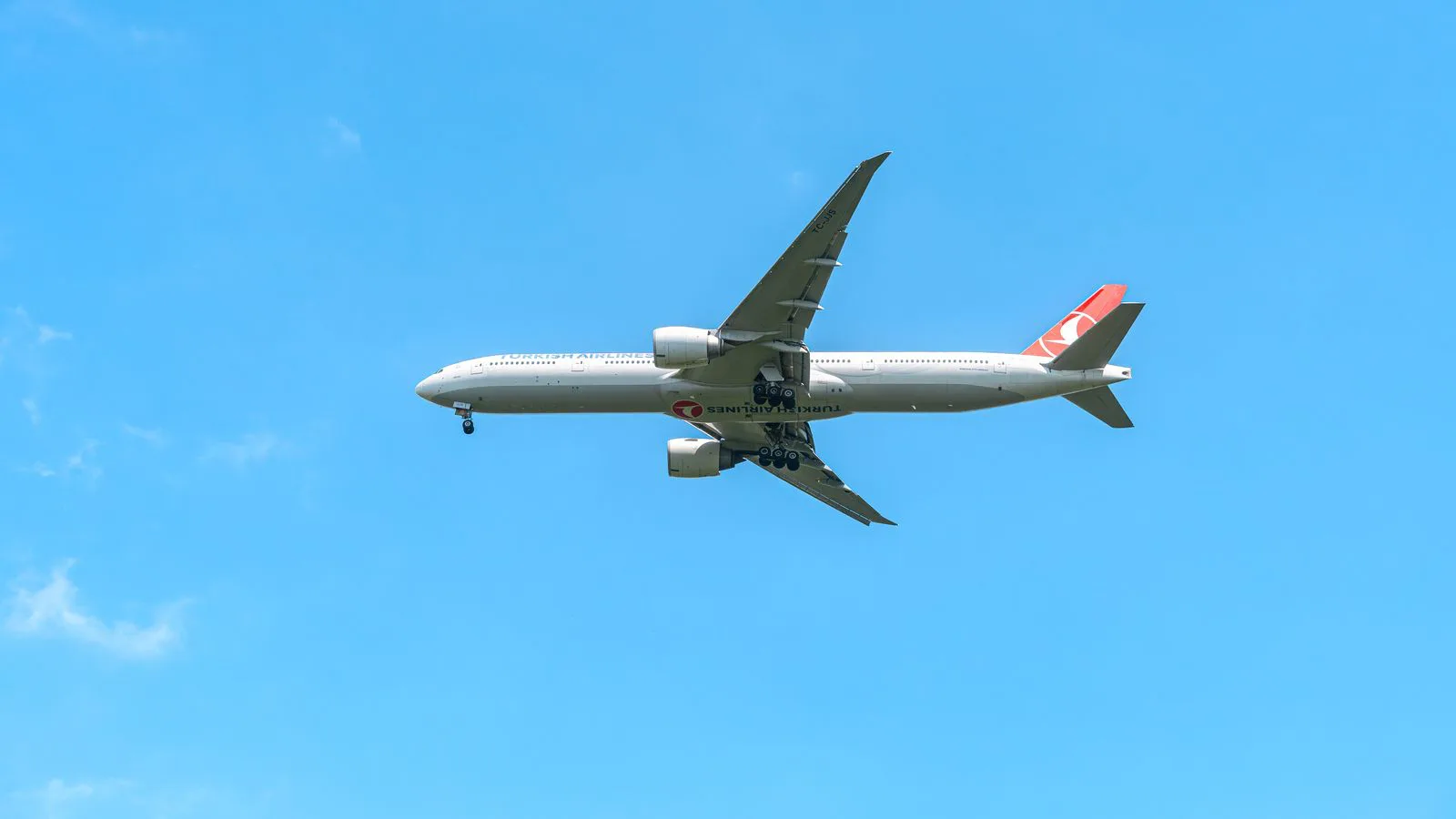
How much CO₂ does a flight emit? Learn the per-passenger-kilometre figures, why short hops are worst per mile, and what the numbers really mean.
It's measured per passenger, per kilometre
A plane's total emissions are split across everyone on board, so a fuller flight is cleaner per person. The standard unit is grams of CO₂ per passenger-kilometre. Multiply that by your distance to get your share. Business and first class count for more, because they take up more space that could carry other passengers.
Why short flights are worst per mile
Take-off and climb burn a disproportionate amount of fuel. On a short hop, that costly phase is a big fraction of the whole flight, so emissions per kilometre are high. On long-haul the cruise phase dominates and dilutes it — though the absolute total is still large because the distance is huge. This is why a short flight can be worse per mile than driving.
What to do with the number
Use the estimate to compare options: a train often emits a fraction of a short flight, and combining trips or flying less frequently helps more than any single choice. If you offset, pick verified projects, and treat the figure as a rough guide — real emissions vary with aircraft, load factor and routing, and high-altitude effects add further warming beyond the CO₂ alone.
Worked with our own calculator
Flight carbon footprint calculator
Given
- Distance (km)
- 5,000
- Passengers
- 1
Result
- CO₂ per person (kg)
- 750
- Total CO₂ (kg)
- 750
These figures are produced by the calculator below, not typed in by hand — they are recomputed whenever the tool changes.
Run it on your own figures →Frequently asked questions
- Is flying really worse than driving?
- Per passenger-kilometre, a short flight is often worse than one person driving, but a full car with several people can beat flying. Distance, occupancy and the vehicle all matter, so compare the specific trip rather than assuming.
- Do these figures include non-CO₂ effects?
- Basic calculators usually count only CO₂. Aviation also warms the climate through contrails and other high-altitude effects; some tools apply a multiplier (often ~1.7-3×) to reflect this. Check what your calculator includes.
- Does flying economy really help?
- Yes, a bit: economy seats pack more people into the same plane, so your personal share of the emissions is smaller than in business or first class, which use much more space per passenger.
- Are carbon offsets a real solution?
- Offsets can fund useful projects but vary a lot in quality and don't erase the emissions. Reducing or avoiding flights, and choosing lower-carbon transport where possible, has a more reliable effect than offsetting alone.
Articles you may find interesting
All guides →Related tools
Sources
Spotted a mistake in this article?