How Long Does It Take to Charge an EV?
Published 1/21/2026 · 3 min read · Car calculators

Marco Bianchi — Home, DIY & motoring writer at OneKitly
Renovation · Materials
Checked against 2 sources
Charging time ≈ energy you need to add (kWh) ÷ charger power (kW). Adding 40 kWh on a 7 kW home charger takes about 5-6 hours; the same on a 150 kW DC fast charger takes roughly 20 minutes for the bulk of it. Fast charging deliberately slows above 80% to protect the battery, so trip charging usually targets 10-80%.
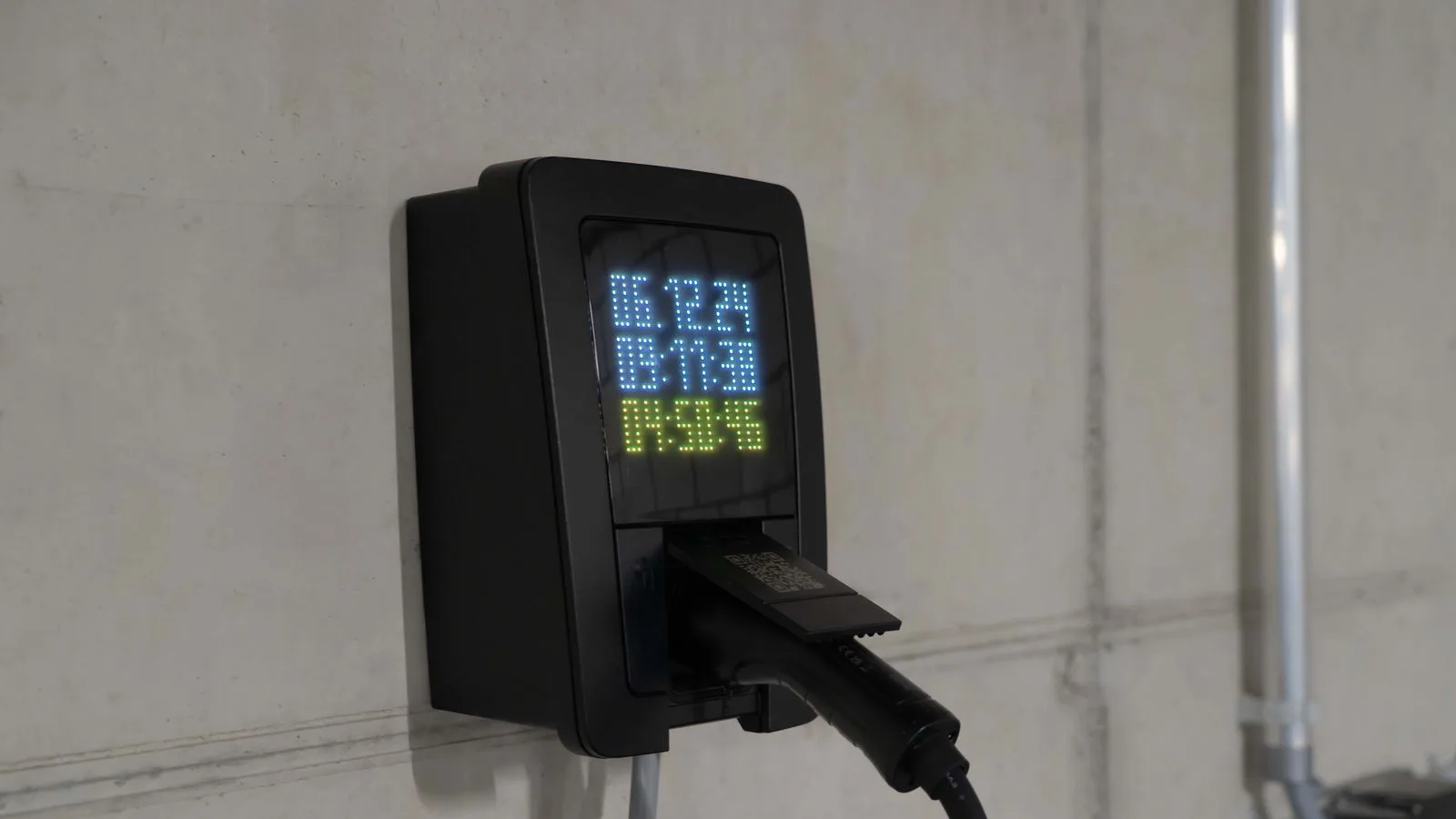
Charging time is battery energy needed divided by charger power. See how home AC and public DC compare, and why fast charging slows past 80%.
The basic formula
Charging time is the energy you add divided by the power delivered: hours ≈ kWh ÷ kW. If you need 40 kWh and the charger gives 7 kW, that's about 5.7 hours before losses. Real charging is a bit slower because some energy becomes heat, so add roughly 10-20%.
Home AC vs public DC
Home charging on AC (around 7 kW) is slow but perfect overnight — you wake to a full battery and never think about it. Public DC fast chargers (50-350 kW) exist for trips, adding a couple hundred miles in the time of a coffee. Most drivers do the vast majority of charging cheaply at home and only fast-charge on longer journeys.
Why the last 20% is slow
DC fast charging tapers as the battery fills: the car reduces power above roughly 80% to avoid stressing the cells. That's why the 10-80% window is the sweet spot on a trip — it grabs most of the range in the least time. Charging to 100% is best saved for slow home charging before a long departure.
Worked with our own calculator
EV charging time calculator
Given
- Battery capacity (kWh)
- 60 kWh
- Charger power (kW)
- 7.4 kW
- Current charge (%)
- 20%
- Target charge (%)
- 80%
Result
- Charging time (hours)
- 5.405
These figures are produced by the calculator below, not typed in by hand — they are recomputed whenever the tool changes.
Run it on your own figures →Frequently asked questions
- Why won't my car charge at the charger's full power?
- The slower of the two limits wins — the car's onboard charger (for AC) or its DC curve, the battery temperature, and the state of charge all cap the rate. A 150 kW charger only helps if the car can accept 150 kW at that moment.
- How long to charge overnight at home?
- A typical 7 kW home charger adds roughly 25-30 miles of range per hour, so a near-empty battery is usually full in 8-10 hours — comfortably within an overnight charge.
- Is it faster to charge when the battery is warm?
- Yes. A cold battery accepts less power, so fast charging in winter is slower. Many cars precondition the battery on the way to a planned fast charger to speed things up.
- What does 'miles of range per hour' mean?
- It converts charging power into distance: power in kW divided by the car's consumption gives range added per hour. It's an intuitive way to see how much driving a given charging session buys you.
Articles you may find interesting
All guides →Related tools
Sources
Spotted a mistake in this article?