Furnished or Unfurnished in France: the Real Gap Once Tax Is Paid
Published 7/27/2026 · 10 min read · Real-estate calculators

Marco Bianchi — Home, DIY & motoring writer at OneKitly
Renovation · Materials
Checked against 6 sources
Unfurnished rent is property income; furnished rent is business income, because French tax law treats furnished letting as a commercial activity. Under the simplified regimes that most small landlords use, that produces a flat-rate deduction of 30 % for unfurnished letting, with the micro-foncier available while gross rents stay at or below 15,000 euros a year, against 50 % for ordinary long-term furnished letting, with the micro-BIC available up to 77,700 euros excluding tax. On 12,000 euros of annual rent, a landlord facing a 30 % marginal income-tax rate plus 17.2 % social levies keeps 8,035 euros unfurnished and 9,168 euros furnished — a gap of 1,133 euros a year, or 11,328 euros over a decade, for the same flat and the same tenant. The full regime widens it further because furnished letting alone allows depreciation of the building and the furniture. But the 2025 finance act closed the exit: for sales made from 15 February 2025, depreciation deducted while on the full regime is subtracted from the purchase price when the capital gain is computed, with an exception for certain managed residences. On a flat bought for 250,000 euros, depreciated by 100,000 euros over fifteen years and sold for 350,000 euros, that turns a taxable gain of 100,000 euros into one of 200,000 euros, and a tax bill of 21,962 euros into 43,924 euros before any surtax. Short-term holiday letting is a third regime again, and it was cut hard for 2025 income: an unclassified tourist let now gets 30 % up to 15,000 euros, where in 2024 it got 50 % up to 77,700 euros.
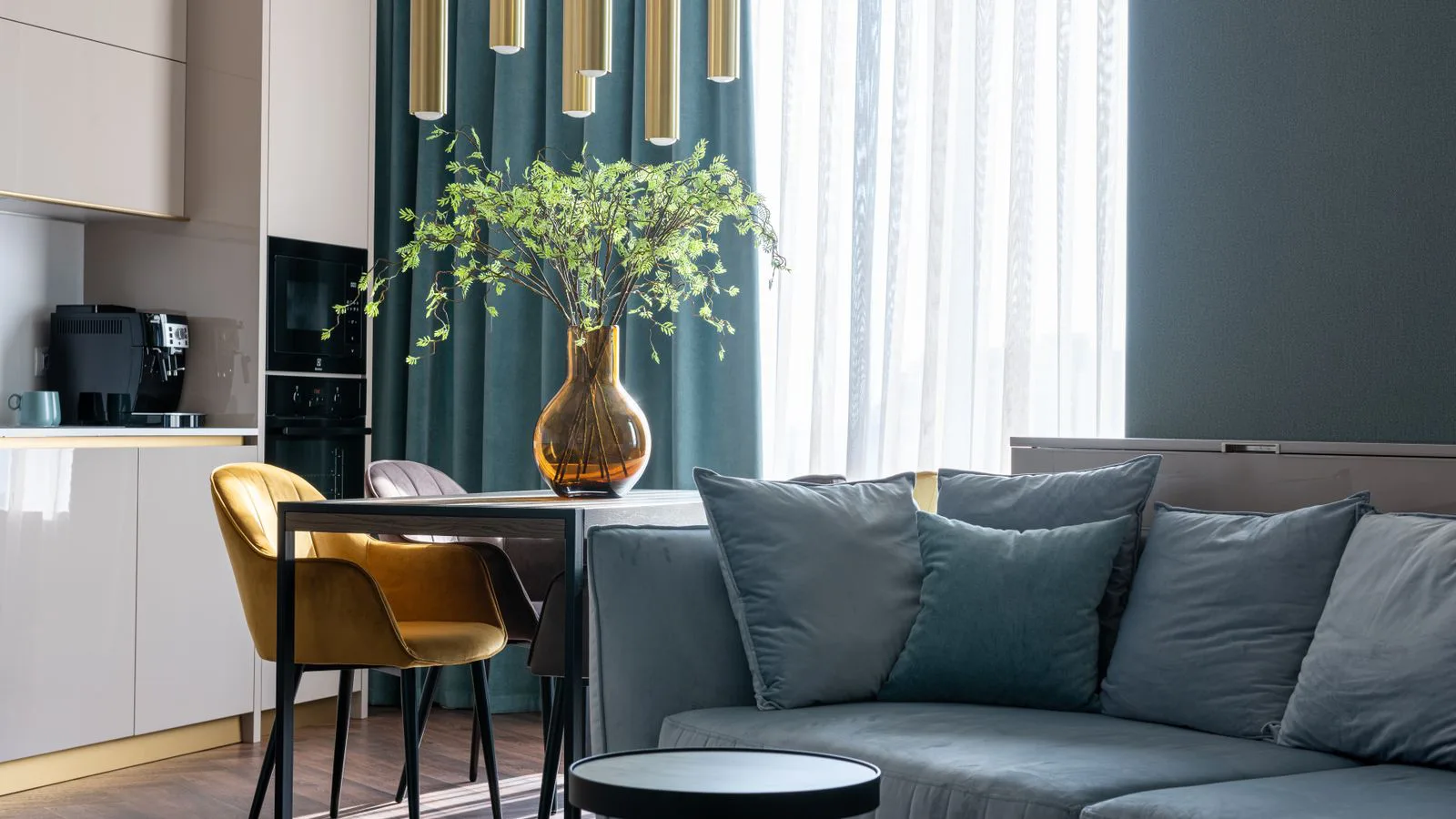
Furnishing a flat moves it from one tax code to another: 50 % of the rent is written off instead of 30 %, and a landlord on the full regime can depreciate the building. Since 15 February 2025 that depreciation is clawed back on sale, which changes the whole calculation.
Two lettings, two tax codes, and the furniture decides which
Nothing about the building changes when a landlord puts a bed and a table in it, but the tax category does. Unfurnished rent falls under revenus fonciers, the schedule for property income. Furnished rent falls under bénéfices industriels et commerciaux, the schedule for trading profits, because letting a furnished dwelling is classified as a commercial activity. Everything downstream follows from that single classification: the deduction rate, the ability to depreciate, the losses rules, the local business tax, even which form you file.
The simplified regimes make the difference legible without an accountant. Micro-foncier applies 30 % and is open while the household's gross rents across all unfurnished properties stay at or below 15,000 euros a year. Micro-BIC applies 50 % for an ordinary long-term furnished let and is open up to 77,700 euros excluding tax, measured across all of the landlord's furnished lettings together rather than per flat. Both are optional in the sense that you can elect the full regime instead, but neither can be claimed above its threshold.
The gap on 12,000 euros of rent, worked through
Take a landlord in the 30 % income-tax band letting a flat for 1,000 euros a month. Social levies of 17.2 % apply on top in both cases, giving a combined rate of 47.2 % on whatever is taxable. Unfurnished, the micro-foncier leaves 8,400 euros taxable, so 3,965 euros goes in tax and 8,035 euros stays. Furnished, the micro-BIC leaves 6,000 euros taxable, so 2,832 euros goes in tax and 9,168 euros stays. The gap is 1,133 euros a year on identical rent — a 14 % improvement in net income for the cost of a bed, a table, and a slightly different lease.
The catch is that the two regimes are not offered for the same product. An unfurnished lease of a main residence runs for three years and renews; a furnished one runs for a year, or nine months for a student. The furnished landlord therefore trades tax efficiency for turnover, void periods, wear on the furniture and the administrative work of re-letting. Whether 1,133 euros covers that depends entirely on the local market, and in a town with a university it usually does while in a quiet suburb it usually does not.
The full regime, depreciation, and the door that shut on 15 February 2025
The real attraction of furnished letting was never the 50 % flat deduction; it was the full regime, where the landlord deducts actual expenses and, uniquely, depreciates the building and the furniture. Depreciation is a paper charge — no cash leaves the account — so for many years a furnished landlord could show a taxable result of zero on a flat that was generating real cash, indefinitely.
That arrangement had a quiet exit: on sale, the gain was computed on the original purchase price as if the depreciation had never been taken, so the deductions were never recaptured. The 2025 finance act closed it. For sales made from 15 February 2025, depreciation deducted under the full regime is subtracted from the acquisition price when the private capital gain is computed, with an exception for certain managed residences such as student and senior housing. The tax authority's own landlord guidance states this in exactly those terms.
Put numbers on it. A flat bought for 250,000 euros, depreciated by 100,000 euros over fifteen years of letting and sold for 350,000 euros: under the old treatment the gain is 100,000 euros and, with fifteen years of holding-period allowances, the bill is 21,962 euros. Under the new treatment the acquisition price is restated at 150,000 euros, the gain becomes 200,000 euros and the bill becomes 43,924 euros — before the additional surtax, which the larger figure may now trigger. The annual saving of roughly 1,100 euros is real; so is the fact that fifteen years of it can be handed back on completion day.
The costs of being a commercial letting business
Furnished letting is a business in the eyes of the law, and it comes with a business's obligations. The landlord must register through the single business window within fifteen days of the letting starting and obtain a company identification number. The local business tax applies, at an amount that depends on the commune. On the full regime, proper accounts are compulsory and the results are filed on a business return through a professional account, whether the landlord lives in France or not.
Three details catch people out often enough to be worth naming. Losses in non-professional furnished letting can only be carried forward for ten years against income of the same kind, whereas a professional furnished landlord — meaning receipts above 23,000 euros including tax and above the household's other activity income — deducts losses against total income without limit. A property held in undivided co-ownership is excluded from micro-BIC and taxed on the full regime, save in particular cases. And a société civile immobilière that lets furnished on a regular basis becomes liable to corporation tax automatically, which is rarely what its owners intended when they set it up.
The third regime nobody planned for: short-term holiday lets
For income earned in 2025 and declared in 2026, the flat-rate deduction for an unclassified tourist let fell from 50 % to 30 % and its ceiling fell from 77,700 euros to 15,000 euros. Classified tourist lets and bed-and-breakfast accommodation went from 71 % and 188,700 euros down to 50 % and 77,700 euros. Ordinary long-term furnished letting was left untouched at 50 % and 77,700 euros. That is not a tweak: for a landlord turning over 40,000 euros on short lets, the taxable base more than doubled and the full regime became compulsory.
One procedural point matters as much as the rates. Exceeding a micro threshold in a single year does not end the simplified regime; the move to the full regime becomes compulsory only after two consecutive years above the limit. And a gîte or country cottage only gets the classified figures if it has actually obtained the official tourist classification — a label of quality issued by a network is not the same thing, and the tax office says so explicitly.
| Type of letting | 2024 ceiling | 2024 deduction | 2025 ceiling | 2025 deduction |
|---|---|---|---|---|
| Classified tourist let and bed and breakfast | 188,700 euros | 71 % | 77,700 euros | 50 % |
| Unclassified tourist let | 77,700 euros | 50 % | 15,000 euros | 30 % |
| Other furnished letting (ordinary long term) | 77,700 euros | 50 % | 77,700 euros | 50 % |
| Unfurnished letting (micro-foncier) | 15,000 euros of gross rent | 30 % | 15,000 euros of gross rent | 30 % |
Worked with our own calculator
Rental yield calculator
Given
- Property price
- $100,000.00
- Acquisition costs (% of price)
- 4
- Works before letting
- $1.00
- Monthly rent
- $425.00
- Vacancy and unpaid rent (% of the year)
- 2
- Property tax (yr)
- $1,080.00
- Landlord insurance (yr)
- $125.00
- Non-recoverable service charges (yr)
- $300.00
- Letting management (% of rent collected)
- 3.5
- Maintenance provision (% of rent)
- 2.5
Result
- Gross yield
- 5.1%
- Net yield
- 3.07%
- Net operating income (yr)
- $3,190.57
- Capital invested
- $104,001.00
These figures are produced by the calculator below, not typed in by hand — they are recomputed whenever the tool changes.
Run it on your own figures →On this site
Frequently asked questions
- Can I switch a flat from unfurnished to furnished mid-lease?
- Not unilaterally. The two are different lease types with different notice periods and different tenant protections, so the change happens at the end of a tenancy rather than during one, and it requires a new contract and a proper inventory of the furniture supplied. Treat the switch as a change of business, not a change of decoration: the registration, the business tax and the accounting obligations all start with it.
- Do I pay social levies twice if I already contribute abroad?
- French rental income from a French property is subject to social levies whichever schedule it falls into. If you are affiliated to the social-security scheme of another European Economic Area country or of Switzerland, the tax authority's non-resident guidance states you are still liable for the solidarity levy at 7.5 %, rather than the full 17.2 % that includes the general social contributions. That is a large difference on a long horizon, and it depends on a certificate of affiliation you have to be able to produce.
- Does the amortisation clawback apply to a flat I have already been letting for years?
- The rule attaches to the date of sale, not to the date the letting began. Sales made from 15 February 2025 fall under it whatever depreciation history precedes them, which is why long-standing landlords were the ones most affected. There are exceptions for certain managed residences, so the honest answer for any particular flat is to have the position confirmed against the specific type of residence before the sale is signed, not after.
- Is the unfurnished loss relief still worth anything?
- Yes, and it is the one structural advantage unfurnished letting keeps. On the full regime, the part of a rental loss that comes from charges other than loan interest is deductible from the landlord's total income, within an annual ceiling of 10,700 euros, with the balance carried forward against future rental income. For an owner facing a heavy renovation, that relief lands against salary in the year the work is paid for, which is worth more than a depreciation charge that only ever shelters rent.
- Which regime is better if I am in a low income-tax band?
- The gap narrows with your marginal rate, because both deductions are worth the rate you would otherwise have paid. A landlord at an 11 % marginal rate plus 17.2 % social levies faces a combined 28.2 %, so on 12,000 euros of rent the same 2,400-euro difference in taxable base is worth about 677 euros a year rather than 1,133. That may not justify the shorter lease, the business registration and the local business tax. Run your own marginal rate through the arithmetic before assuming the furnished answer is the right one.
Articles you may find interesting
All guides →Related tools
This is a general explanation of how a rule works, not tax or legal advice. Every rate, allowance and ceiling carries the year it applied to when it was checked; inheritance, gift and property rules are amended by finance acts and, in Spain, by seventeen autonomous communities separately. Check the instrument named here, or take advice, before acting on a figure.
Sources
- impots.gouv.fr — Direction des impôts des non-résidents — Régime des locations meublées — foire aux questions (mars 2026)
- impots.gouv.fr — Je suis propriétaire d'une location meublée de tourisme : quel est le nouveau régime fiscal applicable ?
- BOFiP — bofip.impots.gouv.fr — BOI-RFPI-DECLA-10 — Revenus fonciers, régime micro-foncier
- BOFiP — bofip.impots.gouv.fr — BOI-RFPI-BASE-30-20 — Modalités d'imputation des déficits fonciers
- service-public.gouv.fr (DILA) — Impôt sur le revenu — revenus d'une location meublée
- service-public.gouv.fr (DILA) — Impôt sur le revenu — revenus locatifs (location non meublée)
Spotted a mistake in this article?