How Much Concrete Do You Need?
Published 9/24/2025 · 3 min read · Everyday calculators

Marco Bianchi — Home, DIY & motoring writer at OneKitly
Renovation · Materials
Checked against 2 sources
Concrete is measured by volume: length × width × depth, in metres, gives cubic metres. A slab 4 m × 3 m × 0.1 m needs 4 × 3 × 0.1 = 1.2 m³. Add about 10% for spillage and uneven ground, and convert to bags if mixing by hand (a 25 kg bag makes roughly 0.011 m³). For anything large, ready-mix delivery is easier.
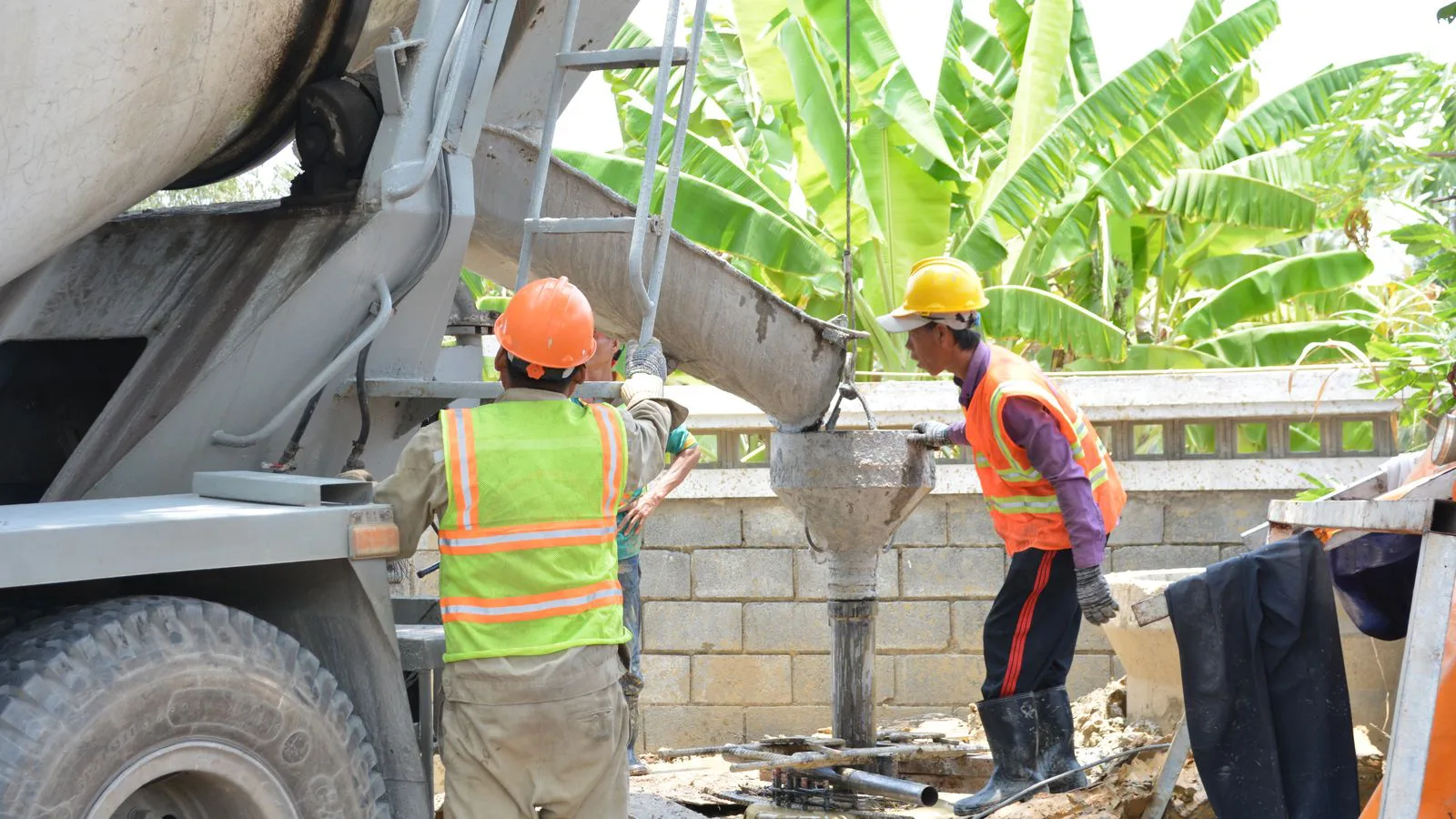
Concrete is measured by volume: length × width × depth. Here's how to work out cubic metres, add for waste, and choose bags or ready-mix.
Concrete is a volume
Unlike paint or tiles, which cover an area, concrete fills a space, so you work in cubic metres. Multiply length by width by depth, all in the same unit. Keep everything in metres and convert thickness early — 100 mm is 0.1 m — because mixing centimetres and metres is the most common way these sums go wrong.
A worked example
For a slab 4 m long, 3 m wide and 100 mm thick, the volume is 4 × 3 × 0.1 = 1.2 cubic metres. A strip footing is the same idea in a long thin shape: a 10 m run, 0.3 m wide and 0.5 m deep is 10 × 0.3 × 0.5 = 1.5 m³. Break any awkward shape into rectangular blocks, find each volume, and add them up.
Add for waste, then choose bags or ready-mix
Ground is never perfectly level and some concrete is always lost, so add about 10% to the calculated volume. Then decide how to supply it: bagged concrete suits small jobs — divide your volume by the bag's yield, roughly 0.011 m³ for a 25 kg bag, so 1.2 m³ needs around 110 bags. Above a cubic metre or so, ordering ready-mix by the cubic metre is faster and more consistent.
Depth matters most
Because volume multiplies all three dimensions, a small change in thickness moves a lot of concrete. Going from 100 mm to 150 mm on that 12 m² slab lifts the volume from 1.2 to 1.8 m³ — half as much again. Use the right depth for the job: around 100 mm for a domestic slab, less for a light path, more for foundations that carry load.
Worked with our own calculator
Concrete calculator
Given
- Length (m)
- 5
- Width (m)
- 4
- Thickness (cm)
- 12
Result
- Concrete volume (m³)
- 2.4
- Approx. weight (kg)
- 5,760
- 25 kg premix bags
- 209
These figures are produced by the calculator below, not typed in by hand — they are recomputed whenever the tool changes.
Run it on your own figures →Frequently asked questions
- How many bags of concrete in a cubic metre?
- Roughly 90 bags of 25 kg per cubic metre, since each makes about 0.011 m³ — always check your product's stated yield.
- How much extra should I order?
- About 10% over the calculated volume, to cover spillage, uneven ground and slightly deeper spots.
- When should I use ready-mix instead of bags?
- For anything above roughly a cubic metre — mixing that much by hand is slow and gives inconsistent strength.
Articles you may find interesting
All guides →Related tools
Sources
Spotted a mistake in this article?