How to Measure Roof Pitch
Published 7/22/2025 · 3 min read · Everyday calculators

Marco Bianchi — Home, DIY & motoring writer at OneKitly
Renovation · Materials
Checked against 2 sources
Roof pitch is how steep a roof is, given as a ratio of vertical rise to horizontal run — often 'rise over 12', like 6:12. To measure it, hold a level horizontally against the roof, mark 12 inches along it, and measure straight down to the roof at that point: that drop in inches is the rise. A 6-inch drop over 12 is a 6:12 pitch, roughly a 26.6° angle.
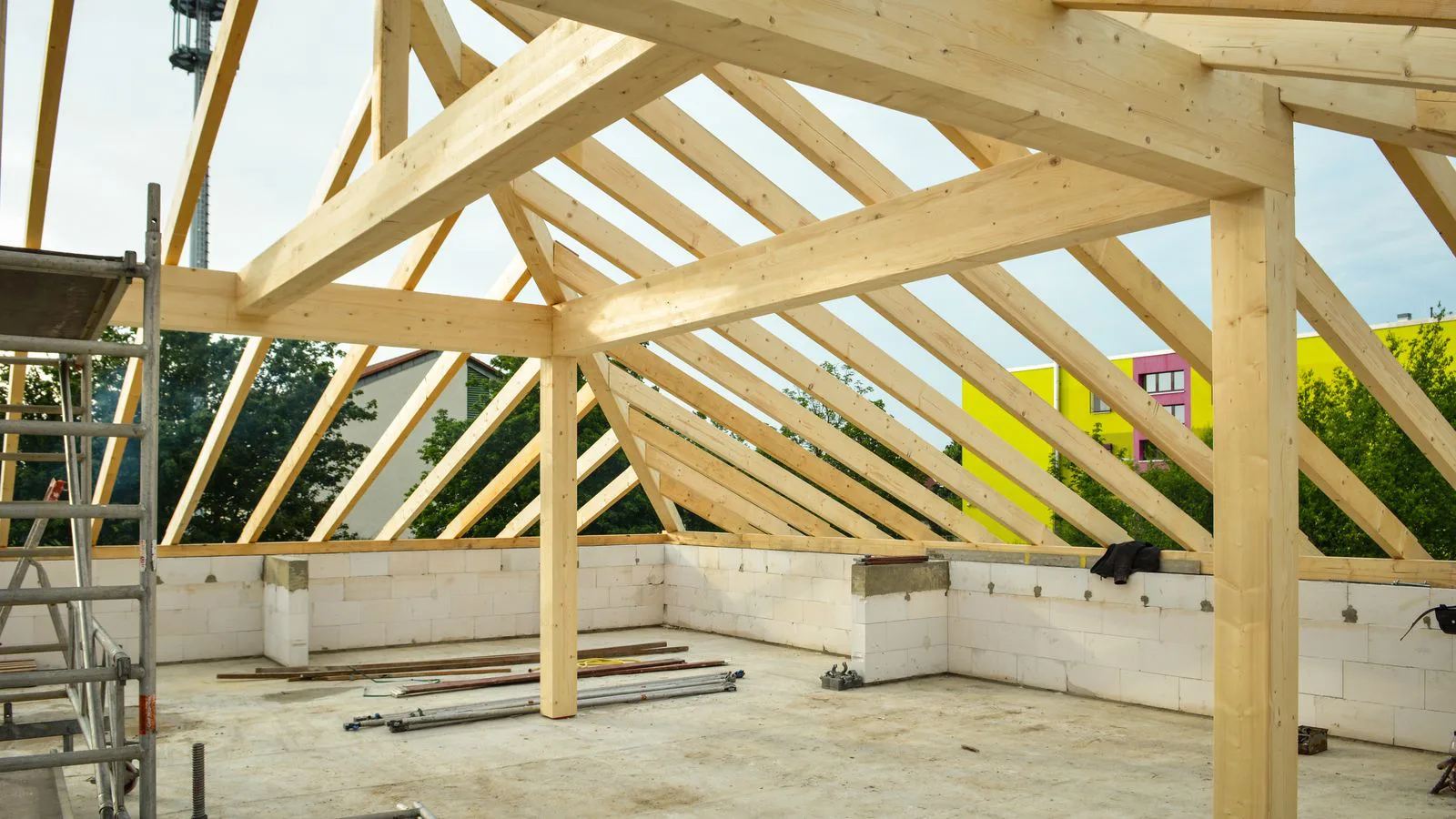
Roof pitch is rise over run, like 6:12. Here's how to measure it with a level, how to convert it to an angle or percentage, and why it matters.
What roof pitch is
Roof pitch describes how steeply a roof slopes, and it's usually written as a ratio of rise to run: how many units the roof climbs vertically for a fixed horizontal distance. That fixed distance is conventionally 12, so a '6:12' pitch rises 6 for every 12 across. A low number like 2:12 is a nearly flat, shallow roof; a high one like 12:12 is a steep 45-degree slope. The convention lets builders describe any roof's steepness with a single, comparable pair of numbers.
Measuring it with a level
You can measure pitch with just a spirit level and a tape measure — often from inside the loft, against a rafter, which is safer than climbing on the roof. Hold the level dead horizontal with one end touching the roof surface, measure 12 inches along it, and from that 12-inch mark measure straight down to the roof. That vertical distance is the rise. If it's 6 inches, the pitch is 6:12; if it's 4 inches, it's 4:12. The horizontal 12 is fixed, so only the drop changes.
Pitch as an angle or percentage
The rise:run ratio can be turned into other units. For an angle in degrees, take the inverse tangent (arctan) of rise divided by run: a 6:12 pitch is arctan(6/12) = arctan(0.5) ≈ 26.6°, and 12:12 is arctan(1) = 45°. For a percentage, divide rise by run and multiply by 100, so 6:12 is 50%. Roofers tend to use rise:12, engineers often prefer degrees, and road-style signs use percent — same slope, three ways of saying it.
Why it matters
Pitch isn't just a number — it drives real decisions. Steeper roofs shed rain and snow faster, which is why snowy regions favour them, and some coverings only work above a minimum pitch. It affects whether the roof is safe to walk on and how it's built. And it changes the surface area: a steep roof has considerably more slope area than its footprint, so getting the pitch right is essential when estimating materials like tiles, felt or the underlay you need to buy.
Worked with our own calculator
Roof pitch calculator
Given
- Rise (cm)
- 30
- Run (cm)
- 100
Result
- Angle (°)
- 16.699
- Slope (%)
- 30%
- Pitch (x-in-12)
- 3.6
These figures are produced by the calculator below, not typed in by hand — they are recomputed whenever the tool changes.
Run it on your own figures →Frequently asked questions
- How do I measure roof pitch?
- Measure the vertical rise over a 12-inch horizontal run; that's the x:12 pitch.
- What does a 6:12 roof pitch mean?
- The roof rises 6 inches for every 12 inches across, about 26.6°.
- How do I convert roof pitch to degrees?
- Take the inverse tangent (arctan) of the rise divided by the run.
Articles you may find interesting
All guides →Related tools
Sources
Spotted a mistake in this article?