How Much Wine for a Wedding: Work From Bottles, Not From a Rule of Thumb
Published 7/10/2026 · 7 min read · Everyday calculators

Marco Bianchi — Home, DIY & motoring writer at OneKitly
Renovation · Materials
Checked against 2 sources
Count servings, then divide by five. A 750 ml bottle holds 25.4 fl oz, which is five 5 fl oz pours — the standard-drink size that the NIAAA uses for wine at 12 percent alcohol. The planning figure that has survived decades of catering is one drink per guest in the first hour and one per hour after that, which is simply one drink per guest per hour. Take off the guests who will not drink — 15 percent is a reasonable default — and the formula is bottles = guests × 0.85 × hours ÷ 5. For 100 guests over a five-hour reception where wine is the only drink, that is 85 drinkers × 5 hours = 425 glasses, which is 85 bottles, or about seven cases. Serve wine, beer and spirits together in a 50/30/20 split instead, and the same evening needs 43 bottles of wine, 128 beers and 6 bottles of spirits — plus 17 bottles of sparkling if there is a toast, at six flutes per bottle. Treat all of these as the centre of a range, not as an answer.
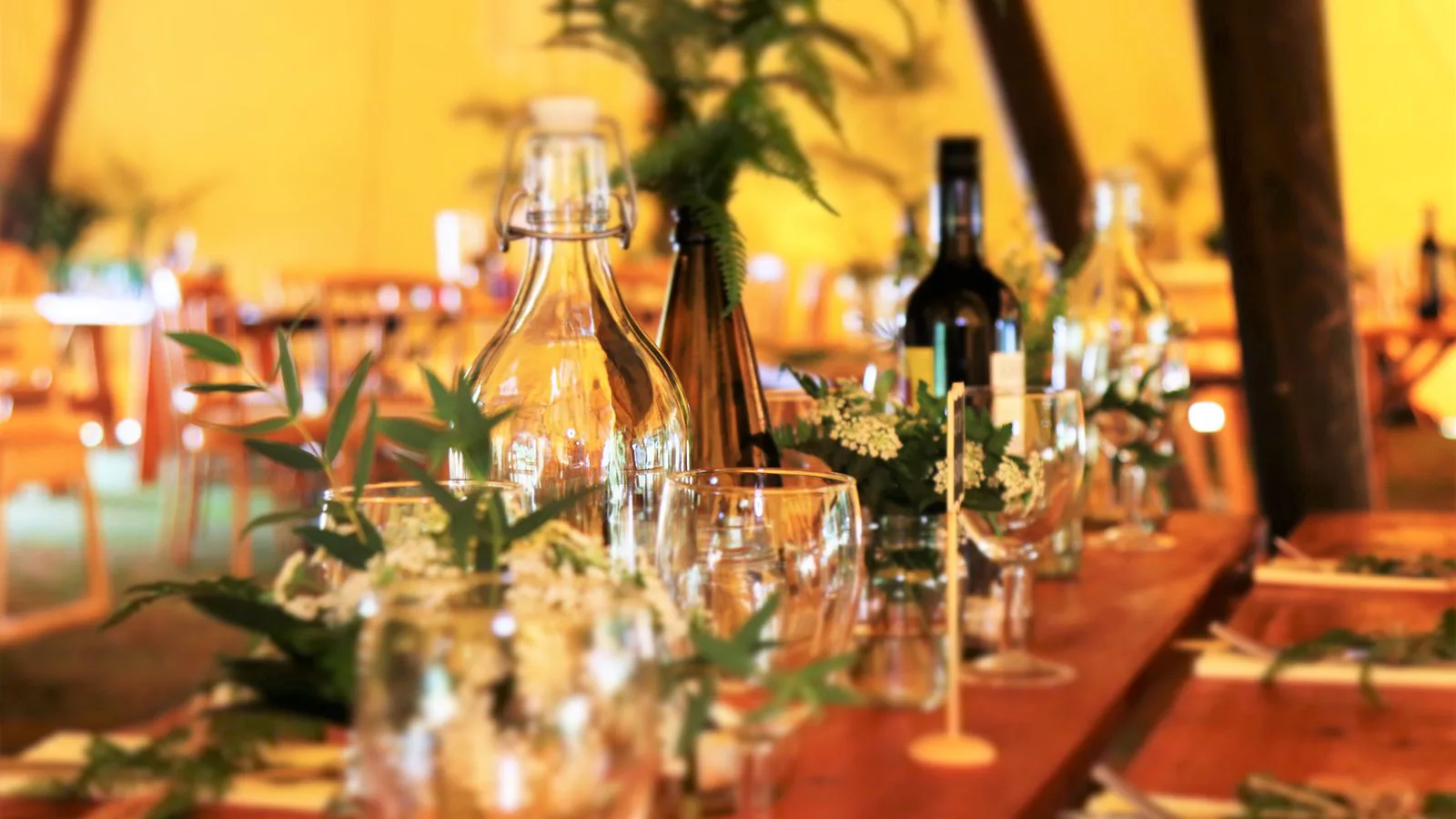
A 750 ml bottle pours five glasses, and guests average about one drink per hour. Everything else is arithmetic — here it is for 50 to 250 guests over three, four and five hours, with an honest range rather than a single number.
The honest answer is a range, and it is a wide one
Every page that answers this question with a single number is hiding the variance. Consumption depends on who is invited, what time the reception starts, whether there is dancing, how hot it is, whether guests are driving home, and whether the bar is free. Run the same 100-guest, five-hour, wine-only wedding at three plausible rates and you get: 64 bottles at a light 0.75 drinks per hour, 85 bottles at a moderate one per hour, and 128 bottles at a heavy 1.5. That is a factor of two between the low and high estimate for the same guest list, and no formula can close that gap for you.
This is where the single most useful piece of planning advice lives, and it has nothing to do with arithmetic: buy on a sale-or-return basis. Most wine merchants will take back unopened, undamaged bottles in their original cases, and many will supply glassware and chill the wine as part of the deal. Ask about it before you order, get the terms in writing, and then order towards the top of your range rather than the middle. Over-ordering under a return agreement costs you nothing but the delivery; under-ordering costs you a bar that closes at nine.
Where the arithmetic actually comes from
Two constants carry the whole estimate. The first is the pour: a standard drink of table wine is 5 fl oz at about 12 percent alcohol, and a 750 ml bottle holds 25.4 fl oz, so a bottle is five servings. If your caterer pours a generous 6 oz glass, that drops to four servings and every number in the table rises by a quarter — worth confirming, because it is the difference between 85 bottles and 107 for a 100-guest evening. The second is the rate: one drink per guest in the first hour, then one per hour, which most catering guidance has converged on and which simply means one drink per guest per hour.
The rest is bookkeeping, and the two adjustments that matter most are the non-drinkers and the drink split. Fifteen percent non-drinkers is a defensible default but a bad assumption for some guest lists — a wedding with many children, many drivers, or a community that does not drink shifts the number a long way, and it is worth actually counting rather than defaulting. The split matters because the units differ: wine at five servings a bottle, beer at one serving a bottle, and spirits at roughly sixteen shots per 750 ml. That last one surprises people every time — a hundred-guest evening with 20 percent spirits needs 85 shots, which is six bottles, and six bottles looks absurdly small standing next to 128 beers — even though each of those bottles pours sixteen times what a beer does.
Order in cases, and remember the things the formula does not count
Wine is sold twelve to a case, and the return policy usually applies to full unopened cases rather than to loose bottles, so round up to the case in every direction. Fifty-one bottles becomes five cases, sixty-eight becomes six, eighty-five becomes eight. That rounding is doing exactly the job you want it to do: it pushes you above the estimate by a handful of bottles at close to zero risk. Split the case count between red, white and something sparkling roughly in line with the season — a summer afternoon reception tilts hard towards white, rosé and sparkling, a winter dinner towards red — and buy one style you know rather than three you are guessing at.
Three things sit outside the formula and are forgotten with impressive regularity. The toast, first: at six flutes to a bottle, 100 guests need 17 bottles of sparkling for a single glass each, and that is on top of the wine count, not part of it. Ice, second: a rough working figure is one to one and a half pounds per guest for a full evening, and running out of ice closes a bar as effectively as running out of wine. And non-alcoholic drinks, third — plan the same number of servings per hour for the guests you took out as non-drinkers, because the 15 percent you subtracted are still standing at the bar wanting something to hold.
| Guests | Drinkers | 3-hour reception | 4 hours | 5 hours |
|---|---|---|---|---|
| 50 | 42.5 | 26 bottles | 34 bottles | 43 bottles |
| 75 | 63.75 | 39 bottles | 51 bottles | 64 bottles |
| 100 | 85 | 51 bottles | 68 bottles | 85 bottles |
| 150 | 127.5 | 77 bottles | 102 bottles | 128 bottles |
| 200 | 170 | 102 bottles | 136 bottles | 170 bottles |
| 250 | 212.5 | 128 bottles | 170 bottles | 213 bottles |
Worked with our own calculator
Wedding alcohol calculator
Given
- Number of guests
- 100
- Hours the bar is open
- 5
- Drinking level
- Light
- Non-drinkers (%)
- 15
- Wine share (%)
- 50
- Beer share (%)
- 30
- Spirits share (%)
- 20
- Champagne toast?
- Yes
Result
- Total drinks
- 319
- Wine bottles (750 ml)
- 32
- Beers
- 96
- Spirit bottles (750 ml)
- 4
- Champagne bottles (toast)
- 17
These figures are produced by the calculator below, not typed in by hand — they are recomputed whenever the tool changes.
Run it on your own figures →Frequently asked questions
- How many bottles for 100 guests?
- If wine is the only drink: 51 bottles for a three-hour reception, 68 for four hours and 85 for five, assuming 15 percent of the guests do not drink and one glass per drinker per hour. Round up to the case and that is five, six and eight cases. If you are also serving beer and spirits in a 50/30/20 split, the five-hour version drops to 43 bottles of wine alongside 128 beers and 6 bottles of spirits. Add 17 bottles of sparkling if there is a toast.
- How much champagne do I need for the toast alone?
- One bottle per six guests, because a toast pour is smaller than a wine pour — six flutes of about 4 fl oz from a 750 ml bottle. That is 17 bottles for 100 guests, 25 for 150 and 34 for 200. Two things to hold in mind: not everyone drinks the toast, so ordering exactly to the count is safe rather than tight; and sparkling wine has to be genuinely cold to be poured quickly, which means telling the venue how much fridge or ice space you will need an hour before the speeches, not five minutes before.
- Is it cheaper to bring my own wine than to use the venue's bar?
- Often, but the corkage fee decides it and you have to do the subtraction before you commit. Venues that allow outside wine typically charge per bottle opened, and once that fee approaches what you paid for the bottle the saving evaporates. Get three numbers in writing before signing: the corkage per bottle, whether it applies to sparkling as well, and whether unopened bottles you brought can be taken home. That last one interacts directly with the sale-or-return advice above — a venue that will not let you leave with your own unopened cases quietly converts your safety margin into a cost.
Articles you may find interesting
All guides →Related tools
Sources
Spotted a mistake in this article?