How Much Ground Coffee Per Cup? The Golden Ratio
Published 5/6/2026 · 4 min read · Everyday calculators

Marco Bianchi — Home, DIY & motoring writer at OneKitly
Renovation · Materials
Checked against 2 sources
The widely used golden ratio for filter coffee is about 1 gram of ground coffee for every 16 grams of water — roughly 1 to 2 tablespoons of grounds per 6 oz cup. For a stronger cup move toward 1:15, for a milder one toward 1:17. Weighing your coffee on a small scale is the most reliable way to hit the same taste every time.
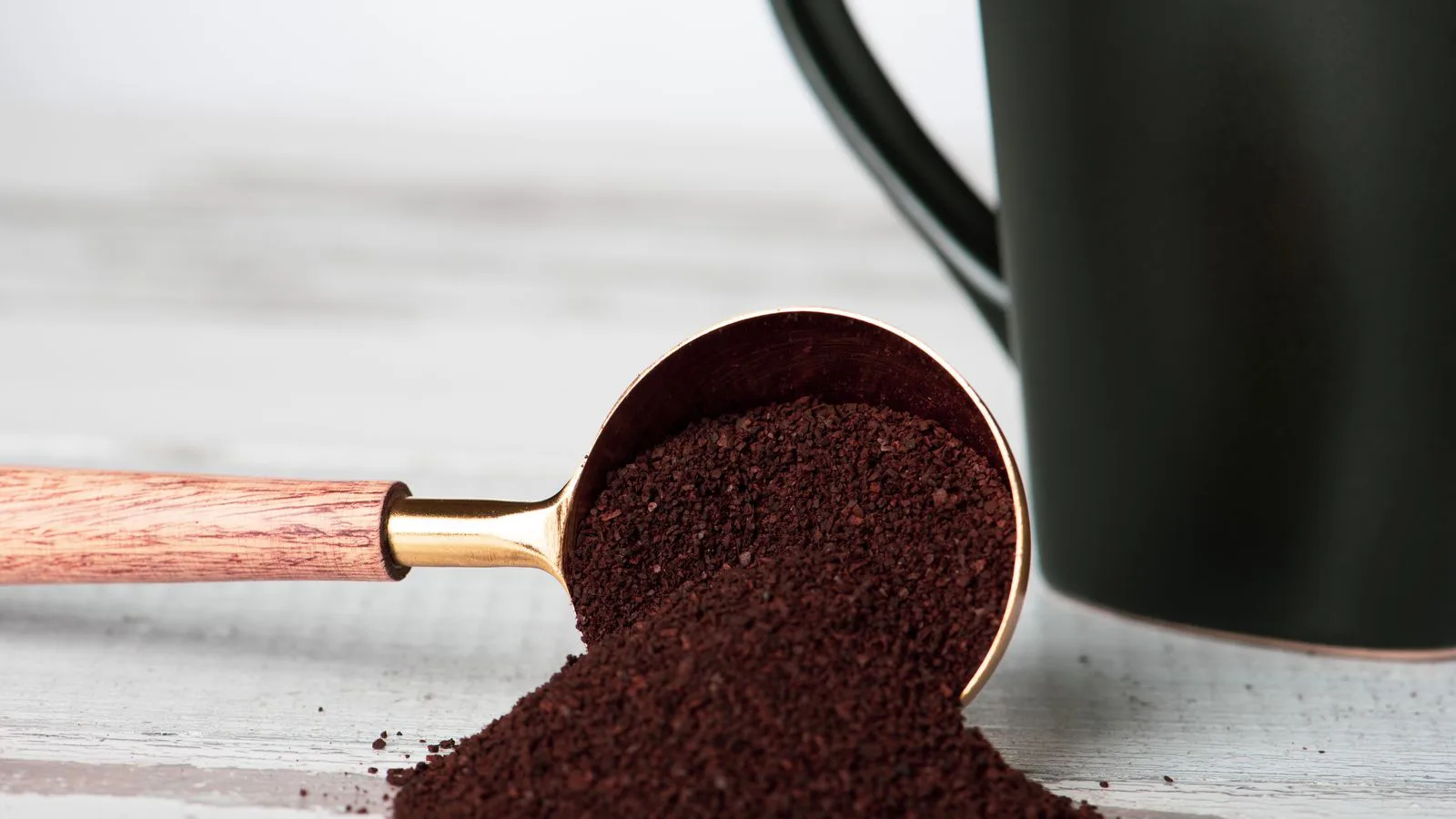
The golden ratio for coffee is about 1:16 by weight — roughly 1 tablespoon of grounds per 6 oz cup. Learn how to measure coffee in grams and tablespoons for a balanced brew.
What the golden ratio means
The golden ratio is the weight of coffee relative to the weight of water. A 1:16 ratio means one part coffee to sixteen parts water. Because water weighs almost exactly 1 gram per milliliter, you can treat volume and weight as the same for water: 320 mL of water weighs 320 grams, calling for 20 grams of coffee at 1:16.
This ratio produces a balanced cup for most filter, pour-over and drip methods. Espresso is a different world, using far less water and a much tighter ratio near 1:2. But for the coffee most people make at home in a machine or pour-over, 1:16 is the reliable starting point that professionals recommend.
Grams versus tablespoons
A kitchen scale is the gold standard because ground coffee varies in density with the roast and grind. Light roasts are denser, dark roasts fluffier, so the same tablespoon can hold different amounts. Weighing removes that guesswork: 15 g of grounds is 15 g whether it looks like a lot or a little in the scoop.
If you have no scale, tablespoons still work as a good approximation. One level tablespoon of ground coffee weighs roughly 5 grams, so a 1:16 cup of about 240 mL water wants around 15 g, or three level tablespoons. Keep the same spoon and level it the same way each time and your results will stay consistent.
Dialing in your taste
The golden ratio is a starting line, not a rule. If your coffee tastes weak and watery, add more grounds or move to 1:15. If it tastes harsh or too intense, use less coffee or move to 1:17. Change one thing at a time and note it down, so you can repeat the version you liked.
Grind size, water temperature and freshness matter too. Use water just off the boil, around 200°F, grind just before brewing, and keep beans in an airtight container away from light. Nail the ratio first, then fine-tune these details, and a plain home setup will beat many cafés.
Worked with our own calculator
Coffee brew ratio calculator
Given
- Coffee (g)
- 36
- Ratio 1 : X
- 32
Result
- Water (g / ml)
- 1,152
- Approx. brewed volume (ml)
- 1,080
These figures are produced by the calculator below, not typed in by hand — they are recomputed whenever the tool changes.
Run it on your own figures →Frequently asked questions
- How many tablespoons of coffee per cup?
- For a standard 6 oz cup at the golden ratio, use about 1 to 2 level tablespoons of ground coffee, since one tablespoon weighs roughly 5 g. A larger 12 oz mug wants closer to 3 to 4 tablespoons.
- Is the golden ratio the same for espresso?
- No. Espresso uses far less water and a much tighter ratio, typically around 1:2 — for example 18 g of coffee to 36 g of liquid espresso. The 1:16 golden ratio is for filter and pour-over brewing, not espresso machines.
- How do I make my coffee stronger without it turning bitter?
- Add more coffee rather than brewing longer. Moving from 1:16 to 1:15 raises strength while keeping the same extraction. Over-brewing or grinding too fine is what usually causes bitterness, so change the ratio first.
- Does the ratio change for cold brew?
- Yes. Cold brew concentrate uses a much stronger ratio, often 1:5 to 1:8, then gets diluted with water or milk before drinking. It is steeped for 12 to 24 hours, so the whole method differs from hot filter coffee.
Articles you may find interesting
All guides →Related tools
Sources
Spotted a mistake in this article?