How Much Rice Per Person? Portions and Water
Published 5/22/2026 · 4 min read · Everyday calculators

Marco Bianchi — Home, DIY & motoring writer at OneKitly
Renovation · Materials
Checked against 2 sources
As a practical guide, allow about 75 g of dry rice per person as a side dish and around 90 g when rice is the main event. Dry rice roughly triples in volume once cooked, so 75 g becomes a generous cooked portion. For most long-grain white rice, cook with about a 1:2 rice-to-water ratio by volume, adjusting for the variety.
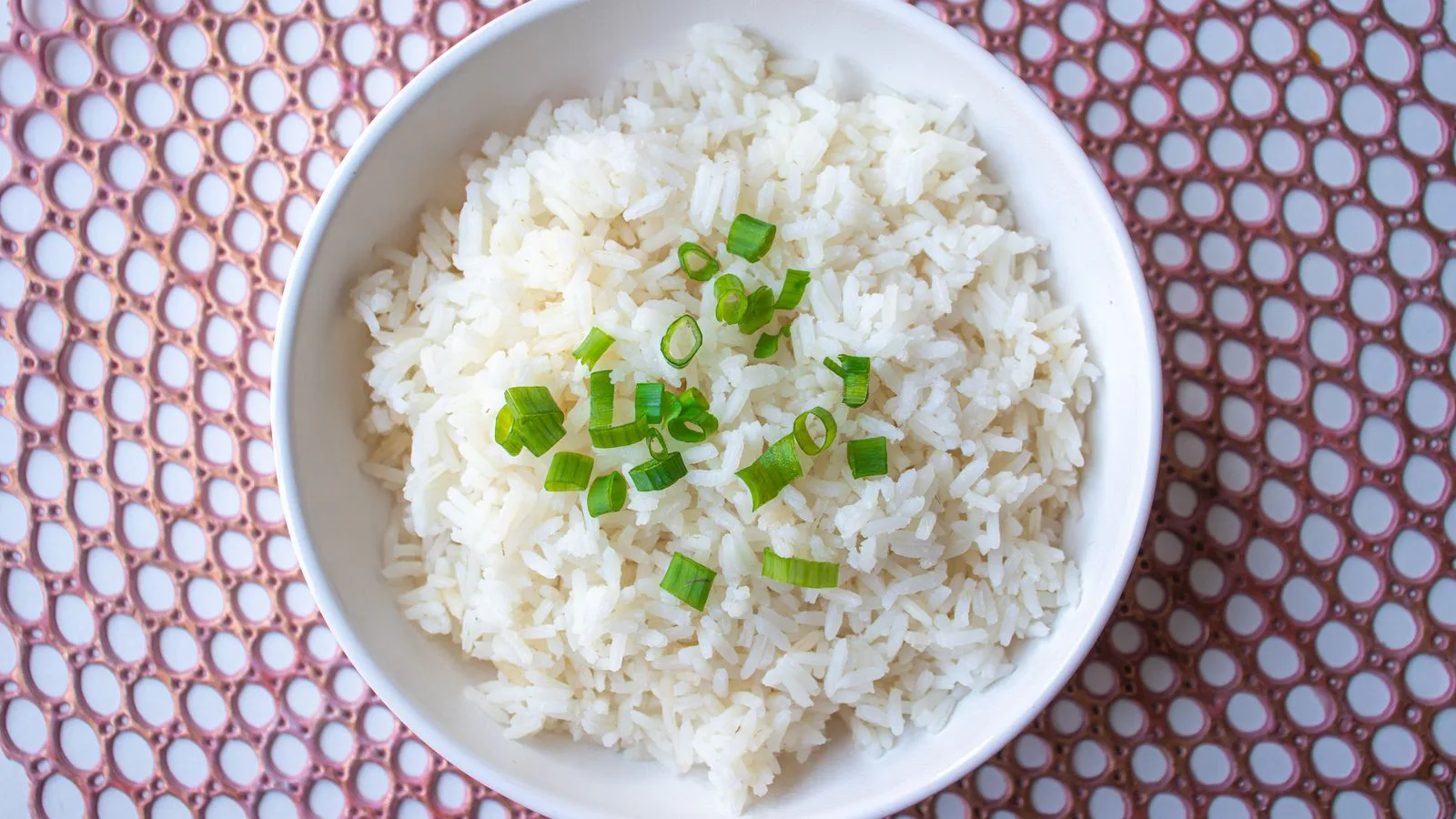
A good rule for rice is about 75 g of dry rice per person as a side, or 90 g as a main. Learn the standard water ratio and how to scale rice for any number of people.
How much dry rice per person
The reliable starting point is around 75 g of dry rice per person for a side dish, and about 90 g when rice carries the meal, such as in a risotto, biryani or a rice bowl. Because dry rice roughly triples in volume as it cooks, 75 g dry yields a cooked portion of about 200 to 220 g — plenty alongside a protein and vegetables.
Adjust for appetite and context. Serve a little more for very hungry eaters or a rice-heavy cuisine, and a little less for children or when the rice is one of several dishes at the table. When in doubt, cooking a touch extra is sensible, since leftover rice reheats or fries well the next day if cooled and stored promptly.
The rice-to-water ratio
For most long-grain white rice, a good default is about twice the volume of water to rice — one cup of rice to two cups of water. Basmati is often a little less, around 1:1.5, while brown rice needs more water and longer cooking, closer to 1:2.5. Measuring by volume keeps this simple: the same cup for rice and water makes scaling easy.
The method matters as much as the ratio. The absorption method — cook covered on low heat until the water is gone, then rest off the heat and fluff — suits most everyday rice. Some cooks prefer the pasta method, boiling in plenty of water and draining, which is more forgiving. Always follow the specific packet instructions when they differ from these general figures.
Scaling up and storing safely
Scaling rice for a crowd is straightforward because both the portion and the water ratio are linear: for ten people as a side, that is about 750 g of dry rice and roughly one and a half liters of water for standard white rice. For very large batches, cook in more than one pan or use a rice cooker, as an overloaded pot cooks unevenly.
Cooked rice needs care. Cool leftovers quickly, ideally within an hour, refrigerate promptly and eat within a day or so, reheating until piping hot all the way through. Rice left at room temperature can allow Bacillus cereus spores to grow and produce toxins, so do not leave cooked rice sitting out, and never reheat it more than once.
Worked with our own calculator
Rice Portion Calculator
Given
- People
- 2
- Rice type
- White
Result
- Dried rice (g)
- 150
- Cooking water (mL)
- 225
These figures are produced by the calculator below, not typed in by hand — they are recomputed whenever the tool changes.
Run it on your own figures →Frequently asked questions
- How much rice is one serving?
- One serving is about 75 g of dry rice as a side dish, rising to roughly 90 g when rice is the main part of the meal. Since dry rice roughly triples in volume, that gives a satisfying cooked portion of about 200 to 260 g.
- What is the correct rice-to-water ratio?
- For most long-grain white rice, use about 1 part rice to 2 parts water by volume. Basmati is often nearer 1:1.5, and brown rice wants more, around 1:2.5 with a longer cook. Always check the packet, which is tuned to that specific rice.
- How much does rice expand when cooked?
- Most white rice roughly triples in volume as it cooks, so one cup of dry rice makes about three cups cooked. Brown and some other varieties can expand a little more. This is why a modest dry portion becomes a full serving on the plate.
- Is it safe to reheat leftover rice?
- Yes, if you handle it well. Cool cooked rice quickly, refrigerate within about an hour, use it within a day and reheat until piping hot throughout. Do not leave rice at room temperature for long and never reheat it more than once, to limit the risk from Bacillus cereus.
Articles you may find interesting
All guides →Related tools
Sources
Spotted a mistake in this article?