Insulate or Replace the Heating: Which Repays First, and Why the Answer Inverts
Published 7/30/2026 · 14 min read · Real-estate calculators

Marco Bianchi — Home, DIY & motoring writer at OneKitly
Renovation · Materials
Checked against 5 sources
Divide the cost of any measure by the kilowatt-hours a year it permanently saves, and you get one number that lets a 3,500-euro loft job, a 21,600-euro wall job and an 8,000-euro heat-pump premium be compared on the same axis. Divide that number by the price of a delivered kilowatt-hour of heat — in France, gas at 14.36 cents through a condensing boiler working at 88.2 % of the billed kilowatt-hour is 16.28 cents — and you have the payback in years. On a 100-square-metre house built before 1975 and using 21,000 kilowatt-hours of heat a year, loft insulation costs about 0.83 euros per annual kilowatt-hour saved and repays in about 5 years; external wall insulation costs about 4.11 and repays in about 25; triple glazing costs about 6.67 and repays in about 41. On the same house built after 2000 and using 7,000 kilowatt-hours, the identical loft job costs about 5.00 per annual kilowatt-hour and repays in about 31 years, the wall job in about 190 and the glazing in about 246. The inversion is real but its cause is not the age of the building as such: it is that insulation's cost is set by surface area, which the geometry fixes, while its saving is set by how bad the envelope was. The heat generator behaves differently again. A heat pump on a pre-1975 house's existing 70-degree radiators, at a seasonal coefficient of 2.2, saves about 974 euros a year in France and repays 8,000 euros of extra capital in about 8 years — but on the same house in Germany it costs about 781 euros a year more than the boiler, and in Spain about 274 more, so it never repays at all. Insulating first fixes that: cutting the demand and dropping the flow temperature to 55 degrees lifts the coefficient to about 3.2, which turns both the German and the Spanish case positive and, in France, shortens the heat pump's own payback from 8.2 years to 7.7 despite the demand being 40 % smaller.
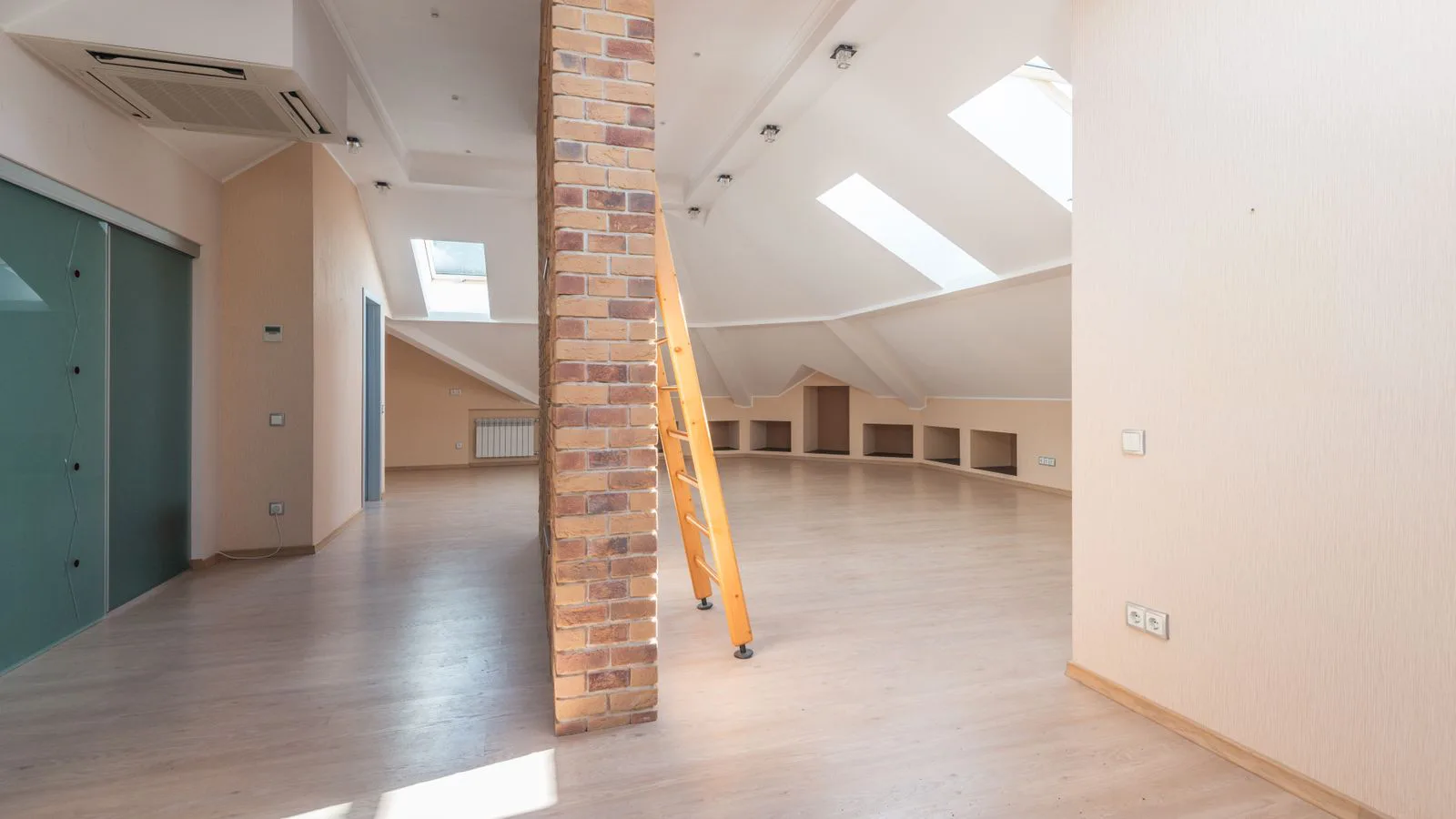
Put both on one axis — euros paid per kilowatt-hour a year of permanent saving — and the comparison becomes decidable. The same loft job costs 0.83 euros per kilowatt-hour a year in a 1965 house and 5.00 in a 2005 one, a factor of six. That, and not the age of the building by itself, is what inverts the verdict.
One metric, and it puts every measure on the same axis
The reason these comparisons usually go nowhere is that they score the options on different criteria: insulation gets talked about in centimetres and thermal conductivity, the heat generator in kilowatts and seasonal coefficients, and nothing lines up. One quantity makes them commensurable: the price you pay for one kilowatt-hour a year of permanent saving. Take the installed cost of anything, divide by the kilowatt-hours a year it removes from the bill, and you have it. Then divide that by the cost of a delivered kilowatt-hour of heat, and the answer comes out in years.
The cost of delivered heat is worth computing once and keeping. Using Eurostat's household gas prices for the second half of 2025 and a condensing boiler delivering 88.2 % of the billed kilowatt-hour, a kilowatt-hour of heat costs 16.28 cents in France, 16.79 in Italy, 15.93 in Portugal, 13.87 in Germany and 10.83 in Spain. Those five numbers are the divisor for every fabric measure in this article. The unit costs of the works themselves — 35 euros a square metre for loft insulation, 180 for external wall insulation, 700 for triple glazing, and an 8,000-euro premium for a heat pump over a like-for-like boiler replacement — are stated assumptions, not sourced figures. Replace them with your own quotes: that is the point of the metric.
Why the same loft job costs six times more in a newer house
Take a hundred square metres of loft at 35 euros a square metre — 3,500 euros — in two houses of identical footprint. In the pre-1975 house using 21,000 kilowatt-hours of heat a year, the roof is a large share of the loss and the job removes about 20 % of the demand: 4,200 kilowatt-hours a year, for 0.83 euros each. In the post-2000 house using 7,000 kilowatt-hours, the roof is already insulated to some standard and topping it up removes perhaps 10 %: 700 kilowatt-hours a year, for 5.00 euros each. The bill is identical, the physics is identical, and the price of the outcome differs by a factor of six.
The mechanism generalises, and it is the whole reason the verdict inverts. The cost of a fabric measure is set by area — square metres of roof, of wall, of glass — which the building's geometry fixes and no amount of energy performance changes. The saving is set by how bad that surface currently is. So the price per kilowatt-hour a year saved is roughly inversely proportional to how poor the envelope was, and every fabric measure gets steadily more expensive as the building gets better. That is also why external wall insulation at 21,600 euros repays in 25 years in the old house and in 190 in the new one, and why triple glazing does not repay on energy alone in either: the glass area is small and its share of the total loss is smaller than the price suggests.
The fabric is a bet on a quantity, the generator is a bet on a price
The two kinds of measure are not just different in size; they are different in kind, and that matters more than any single payback figure. Insulation removes kilowatt-hours. Whatever happens to energy prices afterwards, those kilowatt-hours stay removed, and the value of the measure rises with every price increase. A heat generator does not remove kilowatt-hours at all: it changes the price you pay per kilowatt-hour of heat, which means its entire return depends on a ratio of two prices that governments and markets move twice a year. Insulation is a hedge; a heat pump is a position.
The consequence shows up in the country columns. On the pre-1975 house, a heat pump on the existing 70-degree radiators at a seasonal coefficient of 2.2 saves about 974 euros a year in France — but in Germany, where electricity costs 38.69 cents against gas at 12.23, the same machine in the same house costs about 781 euros a year more than the boiler, and in Spain, where gas is only 9.55 cents, about 274 euros a year more. Insulation does not have national cases like that: 4,200 kilowatt-hours saved is 4,200 kilowatt-hours saved everywhere, and only its monetary value differs. That is the deeper reason to look at the fabric first in a bad building — not that it always repays faster, but that its return does not depend on a policy you do not control.
Order matters: insulating first shortens the heat pump's own payback
Here is the result that makes the two measures allies rather than rivals, and it is counter-intuitive enough to be worth checking. In the French pre-1975 house, a heat pump installed as it stands works at a seasonal coefficient of about 2.2 on 21,000 kilowatt-hours, saves about 974 euros a year and repays 8,000 euros of extra capital in 8.2 years. Insulate first: the demand falls about 40 %, to 12,600 kilowatt-hours, and the emitters can now be fed at 55 degrees instead of 70, which lifts the coefficient to about 3.2. The saving is now about 1,043 euros a year — larger, despite 40 % less heat being needed — and the pump's own payback falls to 7.7 years. Lowering the flow temperature buys back more than the shrinking demand takes away.
In Germany and Spain the same sequence does something more dramatic than shortening a payback: it creates one. On the uninsulated house the heat pump loses money in both countries; after the fabric work has cut the demand to 12,600 kilowatt-hours and let the flow temperature drop to 55 degrees, it saves about 224 euros a year in Germany and about 313 in Spain, which repays 8,000 euros in about 36 and 26 years respectively. Those are long enough to be inside the machine's own service life rather than comfortably shorter than it — but a long finite number is a different kind of object from a negative one. That is the honest reformulation of the question this article was asked: in a poorly insulated building the fabric work is not competing with the heat pump, it is the condition under which the heat pump has a return at all.
What would change this verdict
Three things, and the first is the one nobody models. Households in cold, underheated homes very often take the benefit of insulation as warmth rather than as a lower bill — they heat rooms they used to close off, or hold the house two degrees higher — so the measured saving comes in well below the modelled one. That is not a failure of the investment; it is a rational purchase of comfort, and it is a large part of why real paybacks in poor housing run longer than tables like the one here suggest. Say out loud, before the work, which of the two you intend to take.
The second is policy. The recast energy performance of buildings directive, Directive (EU) 2024/1275 of 24 April 2024, requires each member state to have set a national trajectory by 29 May 2026 under which the average primary energy use of the whole residential stock falls at least 16 % against 2020 by 2030 and 20 to 22 % by 2035 — with at least 55 % of that decrease coming from renovating the 43 % worst-performing residential buildings. If your building is in that worst-performing group, the measures priced here may stop being purely a return calculation and start being a condition of letting or selling. The third is the grant regime, which changes the numerator of every payback in this article and nothing else: check what is available before signing, and check the payback both with and without it.
| Measure | Assumed cost | Payback, house built before 1975 | Payback, house built after 2000 |
|---|---|---|---|
| Loft insulation, 100 square metres | 3,500 euros | about 5 years — 0.83 euros per annual kilowatt-hour saved | about 31 years — 5.00 euros per annual kilowatt-hour saved |
| Heat pump premium over a like-for-like boiler, France | 8,000 euros | about 8 years at SCOP 2.2 on the existing radiators | about 12 years at SCOP 4.0 on underfloor pipes |
| Same heat pump, same house, Germany and Spain | 8,000 euros | never — it costs about 781 euros a year more in Germany, 274 in Spain | about 27 years in Germany, about 28 in Spain |
| External wall insulation, 120 square metres | 21,600 euros | about 25 years — 4.11 euros per annual kilowatt-hour saved | about 190 years — it does not repay on energy alone |
| Triple glazing, 20 square metres | 14,000 euros | about 41 years — 6.67 euros per annual kilowatt-hour saved | about 246 years — it does not repay on energy alone |
On this site
Frequently asked questions
- So triple glazing is never worth it?
- It is never worth it on energy alone, which is a narrower claim than it sounds. Glazing buys several things a spreadsheet cannot price: noise, condensation, draughts, the ability to sit near a window in January, and the removal of a cold surface that makes a room feel colder than its air temperature. If the windows are being replaced anyway because they are failing, the marginal cost of the better specification is small and the arithmetic changes completely — the right comparison is then between double and triple, not between triple and nothing. What the numbers do rule out is replacing sound windows on the promise of an energy saving.
- Where do the assumed percentages of heat demand saved come from?
- They are assumptions, stated as such, chosen to be plausible for the two building types rather than read from any source — 20 % from a loft in an uninsulated house, 25 % from external walls, 10 % from glazing, and roughly half those shares in a building already built to a modern standard. They are the weakest part of the arithmetic and the part you should replace first. A proper heat-loss survey computes each element's share of the total for your actual building, and if the survey says the roof is 30 % of your losses rather than 20 %, every payback in the loft row shortens by a third. What the survey cannot change is the structure of the conclusion, because that follows from cost being set by area and saving by condition.
- Does this mean a new house should never be insulated further?
- It means further insulation in a good building will not repay through the energy bill, which is a different statement. There are three reasons to do it anyway, and none of them is a payback. Regulation may require it, particularly under a national renovation trajectory. A very low heat demand is what makes a small, cheap, quiet heat pump running at low flow temperature possible, and that machine may be worth more than the insulation cost. And if scaffolding is up or a wall is open for another reason, the marginal cost of insulating while you are there is a fraction of doing it alone — which is the single most important scheduling rule in renovation and the one most often missed.
- Why does the heat pump repay faster in the old house than the new one?
- Because its saving is a price difference multiplied by a quantity, and the old house has far more quantity. In the French example the pre-1975 house at a seasonal coefficient of 2.2 saves about 974 euros a year on 21,000 kilowatt-hours, and the post-2000 house at a coefficient of 4.0 — a much better machine performance — saves only about 692 euros on 7,000 kilowatt-hours. The efficiency is nearly doubled and the saving still falls, because there is two-thirds less heat to be efficient about. This is the point where the usual advice, that heat pumps suit new buildings, needs qualifying: they suit new buildings in the sense that they work well there, and they suit old buildings in the sense that there is more money to be saved there — provided the flow temperature can be brought down.
- Should I do everything at once or one measure at a time?
- One at a time, in order of price per kilowatt-hour a year saved, is the financially disciplined answer, and it also happens to be the technically correct one — because each fabric measure changes the demand and the flow temperature, and therefore changes the sizing and the economics of everything you do next. The one exception is scaffolding and disruption: if two measures share a cost that would otherwise be paid twice, do them together even if one of them would not stand on its own. Never size a heat generator before the fabric work is decided, because a machine sized for the old heat loss will be oversized for the new one, will cycle badly, and will underperform the coefficient it was sold on.
Articles you may find interesting
All guides →Related tools
This is a general explanation of how a calculation works, not financial, tax or energy advice. Every price, rate and threshold is given with the year it applies to and the source that publishes it, because these numbers move — energy prices are republished twice a year, tax rules change with each budget, and a transfer tax changes whenever a region legislates. The worked examples state their assumptions in full and are arithmetic, not forecasts: change one input and the verdict can change with it. Check any figure against the source cited, and get a quote for your own building, before you act on any of it.
Sources
- Eurostat — nrg_pc_202 — Gas prices for household consumers, band D2, all taxes and levies included, 2025-S2, and nrg_pc_204 for electricity: the prices behind the cost of a delivered kilowatt-hour of heat
- Eurostat — nrg_bal_cv — Calorific values: natural gas net calorific value is exactly 0.900 times the gross value in 2023, which is why a boiler rated 98 % on net delivers 88.2 % of the billed kilowatt-hour
- EUR-Lex — Directive (EU) 2024/1275 of 24 April 2024, art. 9(2): the national residential trajectory due by 29 May 2026, the 16 % decrease by 2030 and 20–22 % by 2035, and the 55 % share to come from the 43 % worst-performing residential buildings
- EUR-Lex — Commission Regulation (EU) No 813/2013 — ecodesign requirements for space heaters, which define the seasonal space-heating energy efficiency a datasheet quotes
- European Commission — Energy performance of buildings directive — Official overview of the recast directive, including national building renovation plans and minimum energy performance standards
Spotted a mistake in this article?