Strength Standards: What Counts as Strong, in Multiples of Bodyweight
Published 7/2/2026 · 4 min read · Sport calculators

Strength standards express a one-rep max as a multiple of bodyweight, which makes lifters of different sizes comparable. For men the usual reference points are a bench press at 0.75× bodyweight for a beginner, 1.25× at intermediate and 2.0× at elite; a squat at 1.0×, 1.5× and 2.75×; a deadlift at 1.25×, 2.0× and 3.0×. For women the same ladder runs at roughly 0.4×, 0.75× and 1.25× on bench, 0.5×, 1.25× and 2.0× on squat, and 0.5×, 1.25× and 2.25× on deadlift. So a 176 lb man pressing 220 lb sits exactly at intermediate. These are rules of thumb from gym data rather than a validated standard, and they ignore age, limb length, training history and which federation you ask.
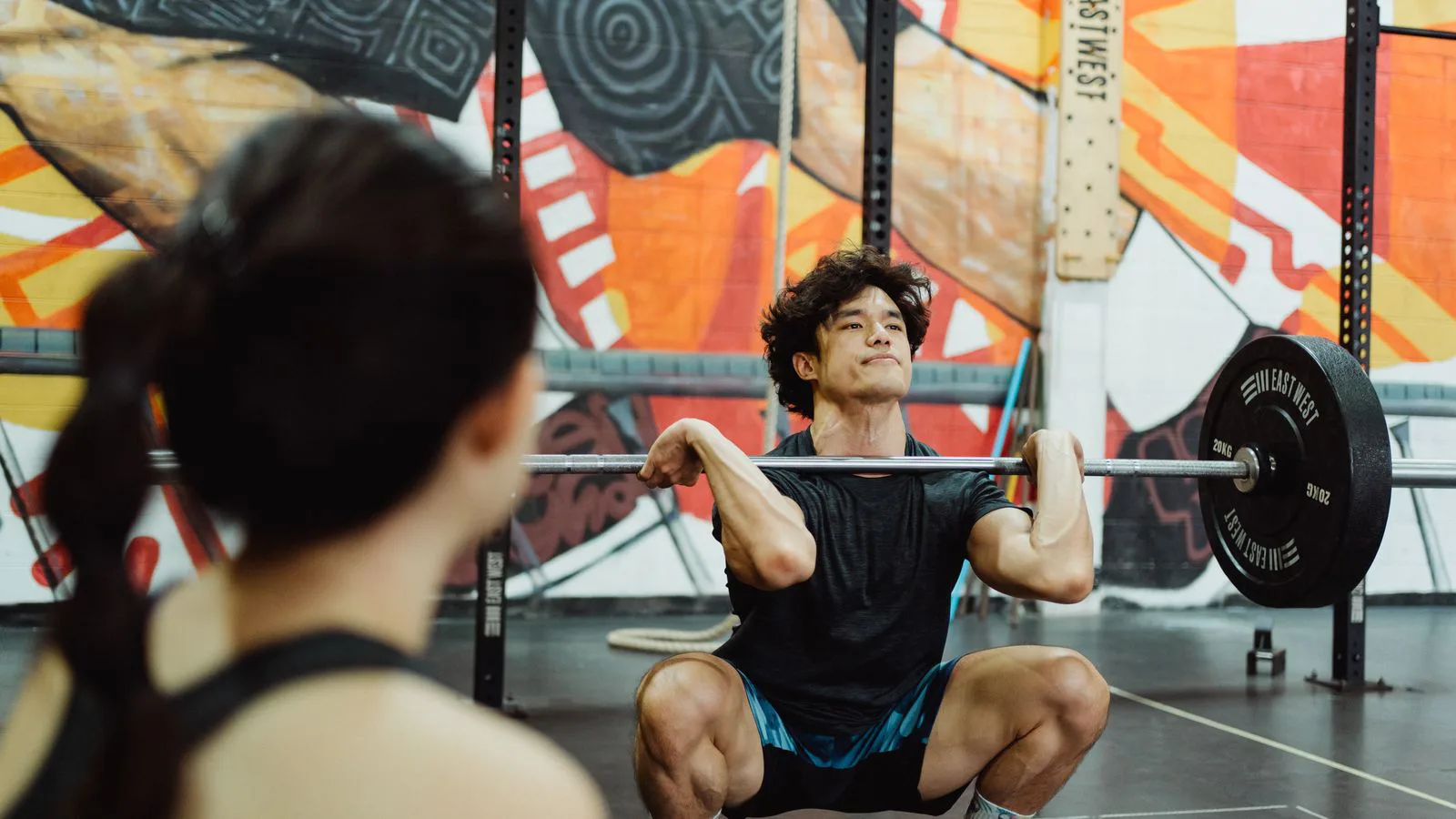
A 176 lb man benching 220 lb is intermediate, not strong. Here are the usual bodyweight multiples for bench, squat and deadlift, and why the labels mislead more often than they help.
Why bodyweight multiples, and where they break
Absolute load says nothing on its own: 220 lb is a serious bench for a 130 lb lifter and a modest one at 220 lb of bodyweight. Dividing by bodyweight puts everyone on one scale, which is why gyms, federations and every online calculator use it.
The correction is imperfect at the extremes. Strength rises with bodyweight but not proportionally, so the same multiple is harder for a heavy lifter than a light one — the reason powerlifting uses coefficients such as Wilks or DOTS rather than a plain ratio. If you are far from average size, expect the labels to flatter you at one end and punish you at the other.
The labels are the least useful part
Beginner, intermediate and advanced describe a lift, not a person, and one lifter routinely sits at three different levels across the three movements. Long femurs make squats look weak, long arms make deadlifts look strong, and a wide ribcage flatters the bench — none of which says anything about training quality.
Their real use is diagnostic. If your bench sits at intermediate and your squat at beginner, the standards have told you where the next block of training should go — which is worth far more than the label itself. Read them as a map of imbalances, not as a rank.
Estimating a max without testing one
You do not need to attempt a true one-rep max to place yourself. A set taken close to failure at five repetitions predicts the max within a few percent through any of the standard formulas, and the estimate gets less reliable the further past about ten repetitions you go.
That route is also safer. A genuine maximum attempt is where technique breaks down under load, and it is worth doing only with a spotter, on a rack with safeties set, and after weeks of specific preparation. The estimate costs none of that and answers the same question.
| Level | Bench, men | Squat, men | Deadlift, men | Bench, women | Squat, women |
|---|---|---|---|---|---|
| Beginner | 0.75× (132 lb) | 1.0× (176 lb) | 1.25× (220 lb) | 0.4× | 0.5× |
| Novice | 1.0× (176 lb) | 1.25× (220 lb) | 1.5× (265 lb) | 0.5× | 0.75× |
| Intermediate | 1.25× (220 lb) | 1.5× (265 lb) | 2.0× (353 lb) | 0.75× | 1.25× |
| Advanced | 1.75× (309 lb) | 2.25× (397 lb) | 2.5× (441 lb) | 1.0× | 1.5× |
| Elite | 2.0× (353 lb) | 2.75× (485 lb) | 3.0× (529 lb) | 1.25× | 2.0× |
Frequently asked questions
- How long does it take to reach intermediate?
- Commonly one to two years of consistent training for men and a similar span for women, though the range is wide and depends far more on consistency than on programme choice. Progress is fastest in the first months and slows sharply after that, which is normal rather than a sign anything is wrong.
- Do these standards apply after 50?
- Not directly. Most published tables are built from younger lifters, and maximal strength declines gradually from around the fourth decade even in trained people. Judge yourself against your own trend rather than a table, and note that the training that slows that decline is the same training the table measures.
- Should I chase the standards or a programme?
- A programme. Standards are a snapshot, and training towards a snapshot tends to produce max attempts instead of the accumulated volume that actually raises the max. Test twice a year, train the rest of the time, and let the label follow.
Articles you may find interesting
All guides →Related tools
Maximal-effort tests carry real risk. Do not attempt one without a base of training, a proper warm-up and, for heavy lifting, a spotter. If you are over 40, have been inactive, or have any heart, joint or blood pressure condition, get medical clearance first.
Sources
Spotted a mistake in this article?