The Sourdough Timeline: An Hour-by-Hour Schedule That Fits a Real Day
Published 6/22/2026 · 6 min read · Everyday calculators

Marco Bianchi — Home, DIY & motoring writer at OneKitly
Renovation · Materials
Checked against 2 sources
Anchor the schedule to the hour you want the loaf out of the oven and work backwards. In a 75 °F kitchen the sequence is: feed the levain 6 hours before mixing, autolyse flour and water alone for 1 hour, add levain and salt, bulk ferment for 5 hours with four sets of stretch-and-folds inside the first 2 hours 30, pre-shape and shape over 30 minutes, then retard in the fridge at 39 °F for 12 to 16 hours and bake straight from cold. Feeding at 8 in the morning puts the loaf in the oven at 9 the next day — around 26 hours elapsed for roughly 40 minutes of hands-on work. Only the bulk really moves: the same dough needs about 7 hours 15 at 68 °F and about 3 hours 30 at 82 °F, because the fermentation rate changes by a factor of roughly 2.5 for every 18 °F.
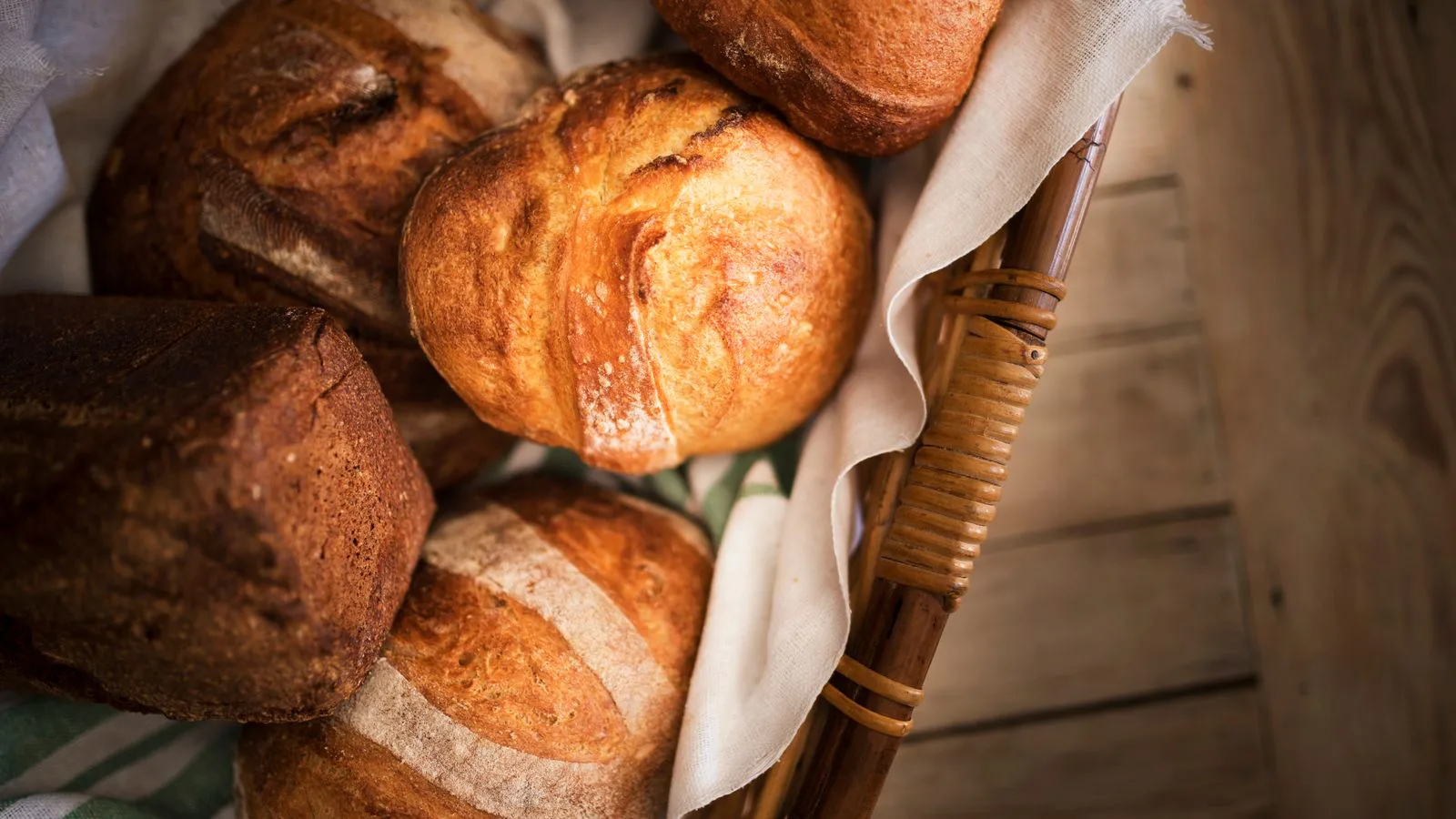
A full schedule from feeding the starter to slicing the loaf, and the one variable that moves every time on it. Five hours of bulk at 75 °F becomes about seven and a quarter at 68 °F.
Temperature sets the schedule, not the clock
Every published bulk time carries a hidden assumption about dough temperature, and almost nobody states it. The usual figure — five hours — assumes a dough around 75 °F. Fermentation speeds up by a factor of roughly 2.5 for every 18 °F, so the same dough that finishes in 5 hours at 75 °F needs about 7 hours 15 at 68 °F and is done in about 3 hours 30 at 82 °F. That is not a small correction: a winter kitchen and a summer kitchen are two different recipes wearing the same instructions.
The temperature that matters is the dough's, not the room's. Friction from mixing adds a couple of degrees, and the water is the only lever you control cheaply — professional bakers set a desired dough temperature and solve for water temperature before they mix. If you do nothing else with this article, take the dough's temperature at the end of mixing and again three hours later. Two readings will tell you more about why last week's loaf failed than any amount of staring at the timer.
The cold retard is what makes the timeline fit a day
Twelve to sixteen hours at 39 °F is not primarily a flavour technique, whatever the internet says — it is a scheduling device. Fermentation does not stop in the fridge, it slows down enormously, which turns a rigid five-hour window into an overnight one you can start whenever the evening allows. The loaf in the table above sits in the fridge from 20:30 to 09:00 because that is when the baker is asleep, and it would be equally happy coming out at 07:00 or at midday.
It does buy two real advantages beyond convenience. Cold dough is firm, so the blade cuts cleanly instead of dragging, and a clean score is most of what people mean by a good ear. And the slower, cooler phase favours the acid-producing bacteria over the yeast, which shifts the flavour tangier. What it does not do is rescue a bulk that went too far — an over-fermented dough put in the fridge comes out over-fermented and cold.
Read the dough, not the timetable — and stop waiting for it to double
The most repeated instruction in home sourdough is also the most destructive: let the dough double during the bulk. That advice comes from commercial-yeast baking, where the dough is stiffer and the gas comes fast. A wet sourdough at 75 to 80 percent hydration, and especially one with whole grain in it, is usually finished at a 50 to 75 percent rise — by the time it has doubled, the gluten has been chewed through by protease and the loaf will spread flat on the peel. If your bakes come out dense and pancake-shaped, the odds are you are over-fermenting, not under-fermenting.
Two cheap instruments make this readable instead of mystical. An aliquot jar — a small straight-sided container filled with a walnut-sized piece of the same dough, marked at the start — converts a vague judgement into a percentage you can see. And a thermometer in the finished loaf settles doneness: 205 to 210 °F at the centre, which usually arrives before the crust looks as dark as it should. Bake to colour and confirm with the probe, in that order.
| Clock | Step | How long | What tells you it is ready |
|---|---|---|---|
| 08:00, day 1 | Feed the levain, 1 part starter to 5 flour to 5 water | 6 h | Domed and webbed inside; a spoonful floats |
| 14:00 | Autolyse — mix flour and water only | 1 h | No dry flour left; slack, shaggy dough |
| 15:00 | Add levain and salt; bulk ferment, four sets of folds in the first 2 h 30 | 5 h | Risen 50 to 75 percent, domed, jiggly, bubbles at the edge |
| 20:00 | Pre-shape, bench rest, then final shape into the banneton | 30 min | Taut skin, seam sealed, holds its shape on the bench |
| 20:30 | Cold retard in the fridge at 39 °F | 12 h 30 | Firm and cold right through; a poke springs back slowly |
| 09:00, day 2 | Score and bake covered at 475 °F | 20 min | Full oven spring; the ear has lifted and opened |
| 09:20 | Uncover and finish at 450 °F | 25 min | Deep brown crust; core at 205 to 210 °F |
| 09:45 | Cool on a rack before slicing | 2 h minimum | Hollow tap on the base; crumb fully set |
Frequently asked questions
- Can I skip the cold retard and bake the same day?
- Yes. Replace it with a final proof at room temperature of about 1 hour 30 to 2 hours 30 at 75 °F, and start the levain in the evening so the mix falls early the next morning. You lose the tang and the easy scoring, and you gain a loaf out of the oven by mid-afternoon. Same-day sourdough is a legitimate bread, not a compromise — it just tastes milder.
- My kitchen is 64 °F in winter. What do I change?
- Do not extend the bulk to nine hours and hope — raise the dough temperature instead. Use warmer water at mixing, and park the tub somewhere genuinely warm: an oven with only the light on, or a proofing box, both land around 78 to 80 °F. If you cannot warm it, plan for roughly 8 hours 40 of bulk at 64 °F and accept that the fermentation will be more acidic, because the bacteria tolerate cold better than the yeast does.
- How long does the loaf really need to cool before I cut it?
- At least two hours for a standard loaf, and the reason is physical rather than aesthetic. Starch retrogradation — the crumb setting into its final structure — continues well below 212 °F, and cutting early releases the steam that is still finishing the job, which is why a hot slice looks gummy and the same loaf is fine the next morning. A small roll can go after 30 minutes; a large, high-hydration boule is better after three.
Articles you may find interesting
All guides →Related tools
Sources
Spotted a mistake in this article?