Tyre Tread Depth: the Legal Limit Is Not the Safe Limit
Published 12/19/2025 · 13 min read · Car calculators

Marco Bianchi — Home, DIY & motoring writer at OneKitly
Renovation · Materials
Checked against 7 sources
In the United States the usual legal minimum is 2/32 of an inch — 1.59 mm — marked by treadwear indicator bars moulded into the main grooves, with California and Idaho at 1/32 and commercial steer axles at 4/32 under 49 CFR 393.75. NHTSA chose 2/32 because traction falls away rapidly below it, which is a statement about where a tyre becomes indefensible, not about where it stops being good. Tread has exactly one job: getting water out from under the contact patch. In the dry it does nothing useful — the fastest dry tyre ever made is a slick — but in the wet it is the whole story, and the water a groove can move falls with its depth. TyreSafe reports MIRA testing in which tyres at the 1.6 mm European limit needed up to 44% more wet braking distance than the same tyres at 3 mm. Run that ratio through the braking equation and it means that at the point where the 3 mm tyre has stopped from 60 mph, the worn one is still doing 33 mph. Continental, TyreSafe and ADAC all recommend replacement at 3 mm for summer tyres and 4 mm for winter ones — about 4/32 and 5/32 of an inch — and they are describing a different quantity from the one the law defines.
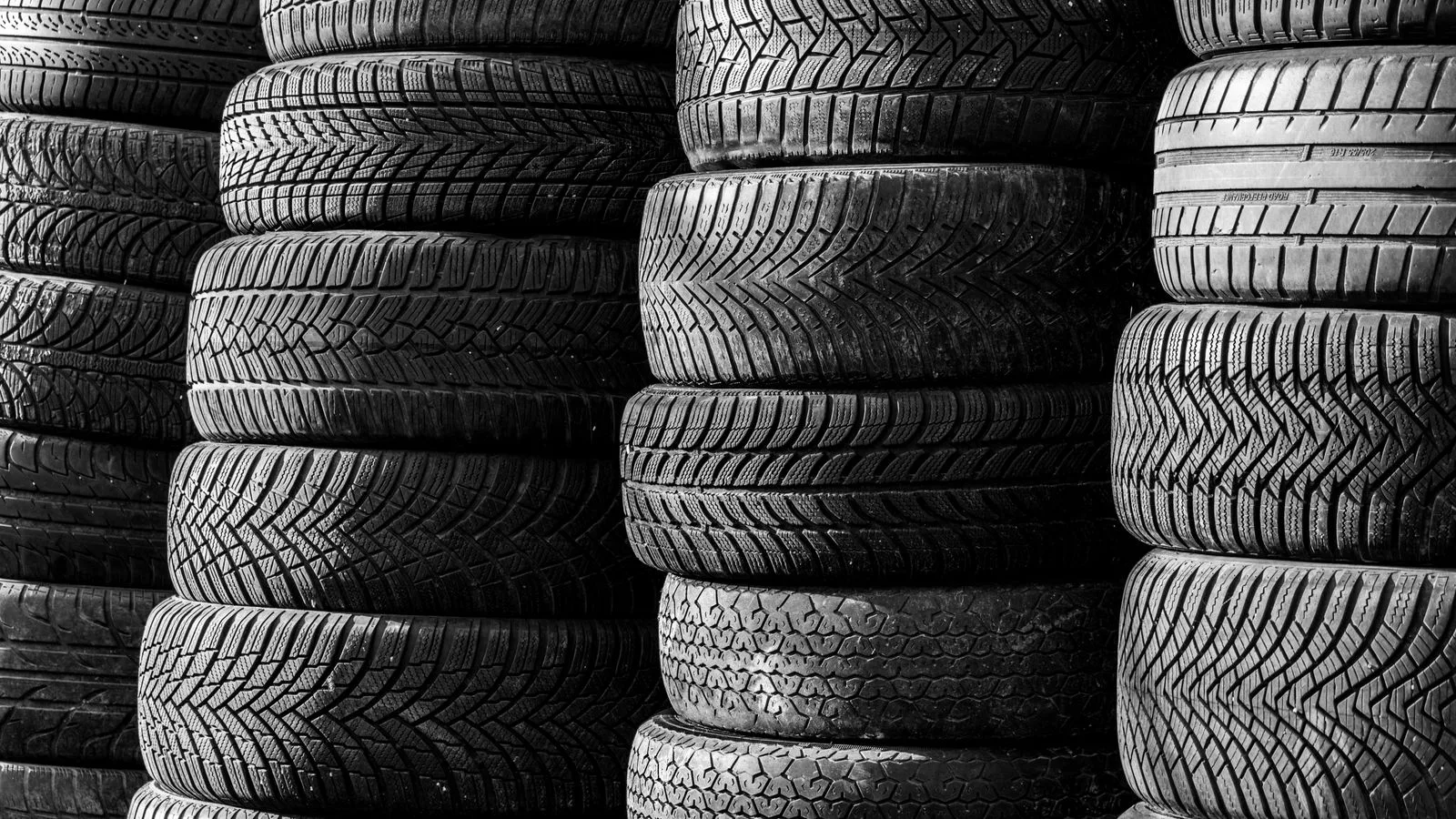
The legal minimum exists to define an offence, not to describe a safe tyre. Tread does one job — getting water out of the contact patch — so its effect is near zero in the dry and decisive in the wet. Here is what the numbers say, and how to measure your own.
A legal minimum is written to define an offence
In most of the United States the threshold is 2/32 of an inch, which is 1.59 mm, and it is enforced through the treadwear indicator bars that federal standards require manufacturers to mould into the main grooves at exactly that depth. California and Idaho set 1/32 instead, several states have no numeric rule at all and fall back on a general unsafe-vehicle statute, and commercial vehicles are held to 4/32 on steer axles and 2/32 elsewhere under 49 CFR 393.75.
NHTSA's own reasoning for 2/32 is instructive: early studies showed that a tyre worn to that depth loses traction rapidly, and the agency picked the point at which a tyre becomes indefensible. That is the right way to set an enforcement threshold and the wrong way to set a personal one. A speed limit is not a recommendation to drive at it in fog; the tread minimum is the same kind of number.
Tread does one job, and it is invisible in the dry
Grip comes from rubber touching road. Grooves remove rubber, so on a dry surface a grooved tyre grips slightly less than a smooth one — which is precisely why racing cars in the dry run slicks. Nothing about a worn road tyre is worse in the dry than a new one; if anything the contact patch is marginally larger.
Water changes the problem completely. A film of water between rubber and road carries no shear force at all, so for the tyre to grip, the water has to be somewhere else within the few thousandths of a second the contact patch spends over a given piece of road. The grooves are the pipes that take it there, and the volume a pipe can move is proportional to its cross-section. Halve the depth and you have roughly halved the drainage.
This is why a worn tyre gives so little warning. On the commute to work, in the dry, on a road you know, it feels identical to a new one, and it genuinely is. The bill arrives on one wet evening, on one hard stop, once.
What the wet penalty actually looks like
The most quotable published comparison comes from MIRA testing reported by TyreSafe: the difference in wet braking distance between a tyre worn to 3 mm and one at the 1.6 mm limit can be as much as 44%. That is a ratio, not a distance, which is exactly what makes it useful — a ratio travels across vehicles, speeds and surfaces in a way that a single number of metres does not.
Put the ratio into the braking equation and it stops being an abstraction. Braking distance is proportional to the square of the speed, so if one tyre needs 1.44 times the distance of the other, then at the point where the better tyre has come to rest, the worn one is still travelling at √(1 − 1/1.44) = 55.3% of the initial speed. From 60 mph that is 33 mph — into whatever the better car has already stopped short of. This compares braking only; the reaction distance before the pedal moves is identical for both and is covered in our article on stopping distance.
ADAC's own wear testing reaches the same place from a different direction: on badly worn tyres it measured wet braking up to 23% longer, and reported that at the point where the new tyre had stopped, the worn one was still doing close to 35 km/h. Different test, different tyres, same conclusion — the loss is not gradual and polite, it is concentrated in the last few millimetres.
Aquaplaning: the threshold moves down as the tread wears
Aquaplaning is a different failure from poor wet braking. It is not gradual loss of grip; it is the tyre climbing onto a wedge of water and losing contact entirely, at which point steering and braking both do nothing at all. Horne and Dreher established the classic relationship for NASA in 1963: the onset speed rises with the square root of inflation pressure, roughly 9√p in knots with pressure in psi.
Converted to road units, that is about 10.36√p miles per hour with p in psi: 56.7 mph at 30 psi, 58.6 mph at 32, 61.3 mph at 35. The formula was derived for aircraft tyres on flooded runways and gives an order of magnitude rather than a promise, and note what is not in it — tread depth. What depth changes is the water depth at which the tyre reaches that condition, which is why the same road and the same speed can be entirely safe on one tyre and not on another.
ADAC put a number on that shift. In a winter-tyre test, a tyre worn to 5/32 of an inch began aquaplaning at about 39 mph where the same tyre when new held on to about 54 mph — some 15 mph lost for half the tread, and it happened at a speed you would reach on an ordinary main road, not on an interstate.
Measuring it properly: across the width, not in one spot
A single reading in the middle of the tread tells you almost nothing, because tyres rarely wear evenly. Take at least three readings across the width — inner shoulder, centre, outer shoulder — at three places around the circumference, and treat the lowest as the tyre's depth. A depth gauge costs a few dollars. The moulded treadwear indicator bars give you the legal threshold for free: when the surrounding tread wears down flush with them, the tyre is at 2/32 of an inch, and their positions are marked by a small triangle, the letters TWI or the maker's logo on the shoulder.
For the more useful 3 mm threshold there is a coin trick in each market. In the United States, a penny inserted with Lincoln's head downwards shows the legal 2/32 when the top of his head stays visible, and a quarter with Washington's head does the same job at 4/32 — the depth you actually want to act on. In Europe the gold outer band of a 1-euro coin is exactly 3 mm wide, so if the gold disappears into the groove you are still above the recommended replacement point.
Uneven wear is not just an inconvenience, it is a diagnosis, and the pattern tells you which fault. Both shoulders worn with the centre intact means chronic under-inflation. Centre worn with both shoulders intact means over-inflation. One shoulder only, on one side, means camber — worn suspension bushes, a tired ball joint or an alignment that has drifted. A saw-toothed, feathered edge you can feel with your hand in one direction but not the other means incorrect toe. Scalloped patches at regular intervals around the circumference, called cupping, point at worn dampers or an unbalanced wheel.
Age is a separate failure mode from depth
A tyre can have plenty of tread and still be finished. Rubber compounds harden as the plasticisers migrate out, ozone and ultraviolet attack the surface, and the bond between the rubber and the internal belts degrades whether or not the tyre turns. The result is a tyre that looks legal, measures legal and grips like a hockey puck when it is cold and wet.
The date is stamped on the sidewall. Find the DOT code and read the last four digits: the first two are the week of manufacture, the last two the year, so 2321 means the twenty-third week of 2021. Continental's published position is that all tyres more than ten years old should be taken out of service, including the spare, and ADAC uses eight years for winter tyres and ten for summer. That spare in the boot has usually never turned a metre and is often the oldest tyre on the car.
What to actually do
Set your own threshold at 4/32 of an inch for summer tyres and higher for winter ones, check all four across the width every couple of months, and treat any uneven pattern as a wheel alignment or pressure problem to fix before the new tyres go on — otherwise the new ones will wear the same way. Replace in pairs on the same axle so that the two ends of the car behave symmetrically.
If you are replacing only two, tyre manufacturers are unanimous that the better pair goes on the rear axle, even on a front-wheel-drive car. The reasoning is about what happens when grip runs out: front grip loss makes the car push wide, which is alarming and recoverable; rear grip loss makes it rotate, which is fast and much harder to correct. You would rather understeer in the wet than spin.
One honest complication before you throw away a set at 3 mm. A premium tyre worn to the legal limit can out-brake a cheap tyre when new, which is why some manufacturers argue against a blanket early-replacement rule and why regulators have looked at testing tyres in a worn state rather than only new. That argument is about the choice of tyre, not about the direction of the effect: any given tyre is worse worn than new, and 3 mm remains a sound personal threshold.
| Tread depth | Status | What changes |
|---|---|---|
| 10/32 in | New summer tyre | Full water evacuation; this is the baseline every test compares against |
| 5/32 in | Replace winter tyres | ADAC measured aquaplaning beginning about 15 mph lower on a winter tyre worn to this depth than on the same tyre when new |
| 4/32 in | Replace summer tyres | The depth Continental, TyreSafe and ADAC all name; a US quarter test fails here |
| 3/32 in | Plan the replacement now | Wet grip is falling steeply and there is no margin left for a wet motorway |
| 2/32 in | Legal minimum in most US states | The treadwear indicator bars are now flush with the surrounding tread |
| Below 2/32 in | Offence | An illegal tyre, and one your insurer may raise after a claim |
Frequently asked questions
- What is the legal minimum tread depth?
- In most US states it is 2/32 of an inch, equal to 1.59 mm, with California and Idaho at 1/32 and several states relying on a general unsafe-vehicle rule instead of a number; commercial vehicles run 4/32 on steer axles under 49 CFR 393.75. Across the European Union and the United Kingdom it is 1.6 mm, across the central three-quarters of the tread and the whole circumference. Some countries add winter-specific rules, so check before you cross a border.
- How much worse is a tyre at the legal limit in the wet?
- TyreSafe reports MIRA testing in which wet braking distance was up to 44% longer at the 1.6 mm limit than at 3 mm, and ADAC's separate wear testing found penalties up to 23% on the tyres it examined. The exact number depends on the tyre, the vehicle, the speed and the depth of water, which is why the ratio is more useful than any single distance. Whatever the figure, it applies only to braking; the reaction distance is unchanged.
- My tyres are worn on both shoulders but fine in the middle. What does that mean?
- Chronic under-inflation. Too little pressure lets the centre of the tread lift away from the road, so the shoulders carry the load and wear first. Centre wear with good shoulders is the opposite fault, over-inflation. Wear on one shoulder only points at camber or alignment rather than pressure. Fix the cause before fitting new tyres, or the new set will develop the same pattern.
- How old is too old for a tyre with plenty of tread left?
- Continental's published guidance is that every tyre over ten years old, including the spare, should be replaced regardless of how it looks, and ADAC uses eight years for winter tyres and ten for summer ones. Read the age from the last four digits of the DOT code on the sidewall: week, then year. A tyre that has spent its life outdoors, underinflated or carrying heavy loads ages faster than the calendar suggests.
- If I only replace two tyres, which axle gets the new ones?
- The rear, on any car, including front-wheel drive. It is counter-intuitive, because the front tyres do the steering and most of the braking, but the failure modes are not symmetrical: losing grip at the front makes the car run wide, which is survivable, while losing it at the rear makes the car spin, which usually is not recoverable by an ordinary driver in an emergency.
- Does tread depth matter in the dry at all?
- Barely, and what effect there is runs the other way. Grooves remove rubber from the contact patch, so a shallower tread has marginally more rubber on the road in the dry — the reason competition tyres for dry conditions have no grooves at all. That is exactly what makes worn tyres dangerous rather than merely poor: they give no warning in the conditions where most of your driving happens.
Articles you may find interesting
All guides →Related tools
The figures in this article are illustrative and come from published tests on other vehicles and other tyres; they are not a measurement of yours. Legal minimum tread depths, how they are measured and the rules for winter tyres all vary by country and change over time — check the rules where you drive and where you are driving to. And tread depth is only one of the ways a tyre fails: age, sidewall damage, uneven wear, impact bruises and previous repairs all matter. If a tyre is worn, damaged or you are simply unsure, have it assessed by a tyre professional rather than by a web page.
Sources
- TyreSafe — The Complete Guide to Tyre Tread Depth — UK legal requirement and MIRA wet-braking testing
- ADAC — Gefahr durch abgefahrene Reifen: Profil richtig kontrollieren
- ADAC — Profiltiefe: Test zeigt, wie gefährlich abgefahrene Reifen sind
- Continental — Replacing tires — recommended minimum tread depth and tyre age
- US Federal Motor Carrier Safety Administration — 49 CFR § 393.75 — Tires (tread depth requirements)
- NASA Langley Research Center — Walter B. Horne and Robert C. Dreher, Phenomena of Pneumatic Tire Hydroplaning, NASA TN D-2056
- National Highway Traffic Safety Administration — Federal Motor Vehicle Safety Standards; Tires — treadwear indicators
Spotted a mistake in this article?