Corrected Calcium: Why Albumin Changes the Number
Published 12/26/2025 · 13 min read · Health calculators

Calcium travels in blood in three states: roughly half is free ionised calcium, which is the physiologically active form; a little under half is bound to albumin; and a small remainder is complexed to anions such as citrate and phosphate. A routine total-calcium assay measures all three added together. That is fine while albumin is normal, but if albumin falls, the bound pool shrinks and the total falls with it — even though the ionised calcium, the part that actually does anything, has not moved. The correction formula undoes that. In conventional units, the Payne 1973 equation is corrected calcium (mg/dL) = measured calcium + 0.8 x (4.0 − albumin in g/dL); in SI units it is corrected calcium (mmol/L) = measured calcium + 0.02 x (40 − albumin in g/L). Those are not two constants but one, because calcium's molar mass is 40.078 g/mol, so 1 mmol/L is 4.008 mg/dL and 0.8 ÷ 40.078 = 0.0200. The honest caveat comes next: it is a linear fit to a 1970s hospital population and it performs poorly in critical illness, kidney disease and severe hypoalbuminaemia. Where it matters, measure ionised calcium.
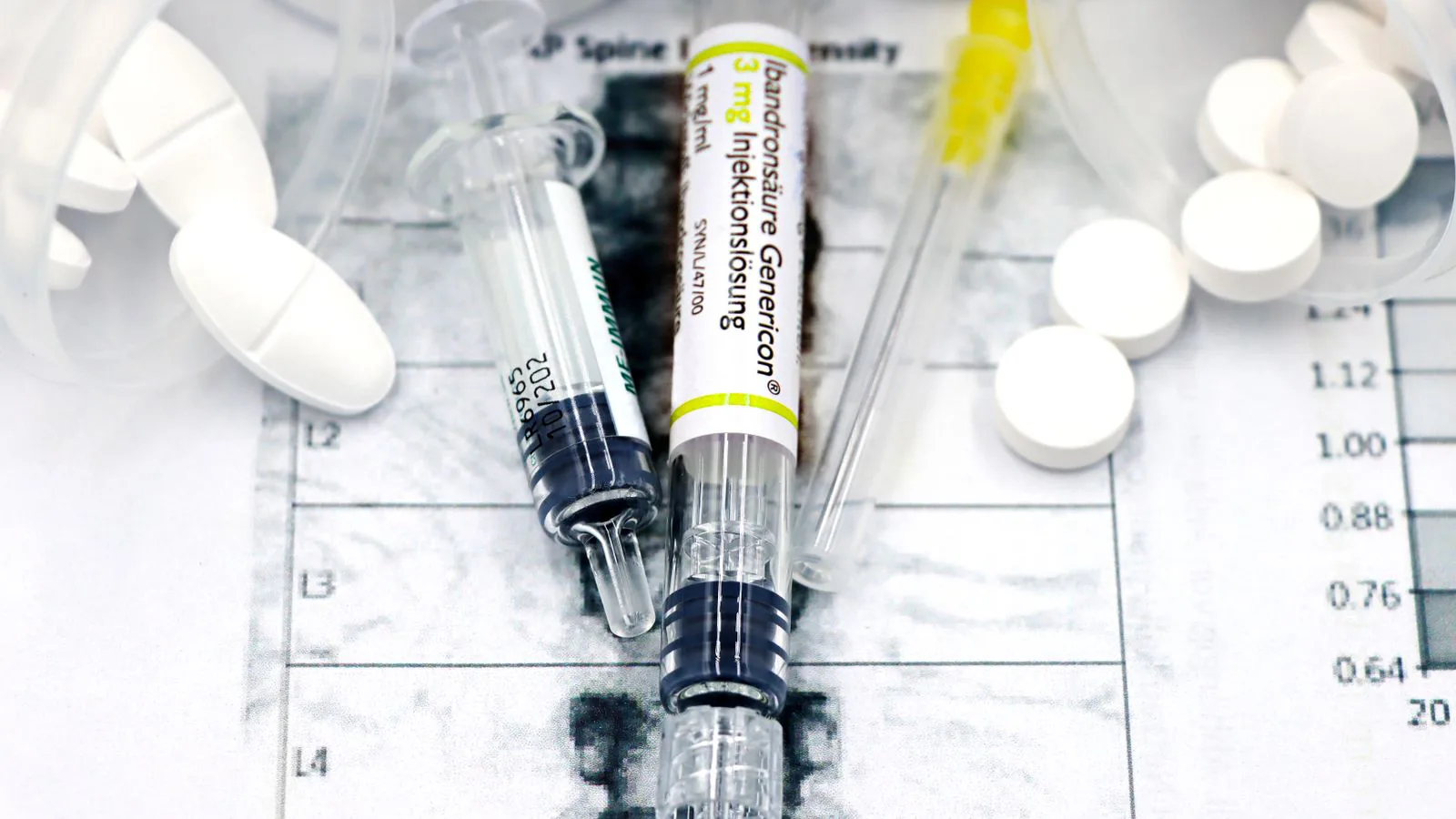
About half of blood calcium is bound to albumin and inactive, so a total-calcium result on a low-albumin patient reads low even when the active fraction is normal. Here is the correction in both unit systems, a worked case, and the honest verdict on how badly it performs.
Half the calcium in your blood is doing nothing
Calcium in plasma exists in three pools. Around half circulates as free ionised calcium, and that is the fraction the body senses and regulates: it is what parathyroid hormone responds to, what drives neuromuscular excitability, and what causes symptoms when it is too high or too low. A little under half is reversibly bound to proteins, overwhelmingly albumin. A remaining tenth or so is complexed with small anions such as citrate, bicarbonate and phosphate. A standard total-calcium assay dissolves this distinction: it reports the sum, because it measures all the calcium in the tube regardless of what it is attached to.
So consider a patient whose albumin has fallen — after major surgery, in liver disease, in nephrotic syndrome, in malnutrition, in any severe inflammatory illness. There is now less protein to bind calcium to, so the bound pool shrinks. The ionised calcium is unchanged, because the parathyroid axis has been holding it steady all along, but the total drops because one of its three components has gone. The laboratory duly reports a low calcium, and if nobody looks at the albumin, that patient gets investigated or supplemented for a hypocalcaemia they do not have. The correction formula exists precisely to catch this — it estimates what the total would have been if the albumin had been normal.
The formula in both unit systems, and why the constants differ
In conventional units the Payne equation reads: corrected calcium (mg/dL) = measured calcium + 0.8 x (4.0 − albumin in g/dL). In SI units it reads: corrected calcium (mmol/L) = measured calcium + 0.02 x (40 − albumin in g/L). People often assume these are two competing corrections. They are one correction written twice. Calcium's molar mass is 40.078 g/mol, so 1 mmol/L equals 4.0078 mg/dL. Albumin of 4.0 g/dL is the same as 40 g/L, so a drop of 1 g/dL is a drop of 10 g/L. Take the conventional slope of 0.8 mg/dL per g/dL, convert the calcium side into mmol/L by dividing by 4.0078, and convert the albumin side into g/L by dividing by 10: 0.8 ÷ 4.0078 ÷ 10 = 0.019961, which is 0.02 to the precision anyone prints.
Both forms also carry an implicit reference albumin — 4.0 g/dL or 40 g/L — and that number is a convention, not a constant of nature. Some laboratories anchor the correction to their own median albumin instead, which shifts every corrected result by a fixed amount. If you compare a corrected calcium from one hospital with one from another, check that they used the same anchor before concluding that anything changed. And check that the albumin was measured by a comparable method: bromocresol green and bromocresol purple assays do not give identical albumin values, and any difference between them propagates straight into the corrected calcium.
A case where the correction changes the answer
Take a patient several days after major abdominal surgery. The total calcium comes back at 8.2 mg/dL (2.05 mmol/L), below a typical reference range, and the albumin at 2.4 g/dL (24 g/L), well below normal. Apply the correction: 8.2 + 0.8 x (4.0 − 2.4) = 8.2 + 1.28 = 9.48 mg/dL. In SI: 2.05 + 0.02 x (40 − 24) = 2.05 + 0.32 = 2.37 mmol/L. Divide 9.48 by 4.008 and you get 2.365 mmol/L, which matches the SI result to rounding — the check that both routes are the same manoeuvre. The interpretation has flipped from apparent hypocalcaemia to a normal corrected value, and the clinical question changes from investigating low calcium to investigating low albumin.
The correction can also work in the other direction, and that case is the one worth fearing. A patient with a total calcium comfortably inside the reference range but an albumin of 2.0 g/dL (20 g/L) picks up a correction of 1.6 mg/dL (0.4 mmol/L), which can lift an unremarkable-looking result into the hypercalcaemic range. Primary hyperparathyroidism and malignancy-associated hypercalcaemia are both diagnoses that get missed this way, which is why NICE guidance on primary hyperparathyroidism is written in terms of albumin-adjusted serum calcium rather than the raw total. Whichever direction it moves the number, the correction is telling you the same thing: a total calcium read without its albumin is an incomplete result.
The honest critique: a 1970s regression used where it fails
The correction is not a physical law. Payne and colleagues published it in the BMJ in 1973 as a linear regression fitted to hospital patients of that era, and it inherits every limitation of that design. A single slope assumes calcium binds albumin the same way in everyone, which it does not: binding depends on pH, on the concentration of competing ions, on citrate loads from transfusion or citrate anticoagulation, and on the presence of paraproteins or other abnormal proteins. Nothing in the formula sees any of that. It sees one number and adjusts another.
The consequence is uncomfortable: the correction performs worst exactly where clinicians lean on it hardest. Work in critical care has found that albumin-adjusted calcium is not a reliable way to diagnose hypercalcaemia or hypocalcaemia in the critically ill, where pH swings, citrate exposure and profound hypoalbuminaemia all coincide. In chronic kidney disease the picture is similar, and nephrology reviews have documented how poorly total and adjusted calcium track ionised calcium in that population — which matters because mineral and bone disorder management turns on the calcium value. The general pattern is that the more abnormal the albumin, the further the linear fit is from the data it was built on.
So what should you do with it? Treat corrected calcium as a screening adjustment on an outpatient with mildly abnormal albumin, which is the setting it was built for and where guidelines still use it. Treat it as inadequate whenever the decision is consequential and the patient is critically ill, has advanced kidney disease, has severe hypoalbuminaemia, or is receiving citrate. In those cases the answer is not a better formula. It is a direct measurement of ionised calcium on a properly handled anaerobic sample — the reference standard the correction has been approximating all along.
The same manoeuvre elsewhere: corrected sodium in hyperglycaemia
Corrected sodium is conceptually identical. In marked hyperglycaemia, glucose stays largely outside cells and pulls water out of them into the plasma. That extra water dilutes the sodium, so the measured value falls even though total body sodium has not changed — a dilutional hyponatraemia. As with calcium, the measurement is correct and the interpretation is what needs adjusting, so the formula estimates what the sodium would read at a normal glucose. The classic Katz version from 1973 adds 1.6 mmol/L of sodium for every 100 mg/dL of glucose above 100 mg/dL. Because 100 mg/dL is 5.55 mmol/L, that is 1.6 ÷ 5.551 = 0.288 mmol/L of sodium per mmol/L of glucose above the reference — the same coefficient, again written in two unit systems.
Work the standard case. A patient presents with a sodium of 130 mmol/L and a glucose of 600 mg/dL (33.3 mmol/L). The Katz correction adds 1.6 x 5 = 8, giving a corrected sodium of 138 mmol/L. Hillier and colleagues argued in 1999 that the true relationship is steeper, around 2.4 mmol/L per 100 mg/dL, which gives 130 + 12 = 142 mmol/L. Either way the reading flips: the apparent hyponatraemia is an artefact, and the patient is in fact water-depleted, which changes the fluid plan. And exactly as with calcium, the two published coefficients disagree because both are regressions, fitted in different settings, to a relationship that is not perfectly linear. Corrections tell you which way to look. They do not close the question.
| Quantity | Conventional units | SI units | Reading |
|---|---|---|---|
| Measured total calcium | 8.2 mg/dL | 2.05 mmol/L | Below a typical reference range |
| Albumin | 2.4 g/dL | 24 g/L | Markedly low |
| Correction term | 0.8 x (4.0 − 2.4) = 1.28 mg/dL | 0.02 x (40 − 24) = 0.32 mmol/L | The two terms are the same amount of calcium |
| Corrected calcium | 9.48 mg/dL | 2.37 mmol/L | Within a typical reference range |
| Cross-check of the two routes | 9.48 ÷ 4.008 | = 2.365 mmol/L | Agrees with 2.37 to rounding — one formula, two unit systems |
| What would settle it | Ionised calcium, measured directly | Ionised calcium, measured directly | The reference standard; the correction only estimates it |
Worked with our own calculator
Corrected calcium calculator
Given
- Measured calcium (mg/dL)
- 4.3
- Serum albumin (g/dL)
- 1.6
Result
- Corrected calcium (mg/dL)
- 6.22
These figures are produced by the calculator below, not typed in by hand — they are recomputed whenever the tool changes.
Run it on your own figures →Frequently asked questions
- Should I use corrected calcium or ionised calcium?
- Ionised calcium whenever the decision matters and the patient is not straightforward. It is the physiologically active fraction and it is measured rather than estimated, so it is the reference standard; corrected calcium is an estimate of it built from a linear fit. The corrected value remains reasonable for outpatient screening with mildly abnormal albumin, which is where guidelines still use it — NICE writes its primary hyperparathyroidism recommendations in albumin-adjusted terms. But in critical illness, advanced kidney disease, severe hypoalbuminaemia, paraproteinaemia or citrate exposure, published work has repeatedly found the adjustment unreliable. If the ionised result would change what you do, order it rather than compute a substitute. Ionised calcium does need careful sample handling, anaerobic and promptly analysed, because pH changes in the tube move the result.
- Why are there two different constants, 0.8 and 0.02?
- There is only one constant, expressed in two unit systems. The conventional form adds 0.8 mg/dL of calcium for every 1 g/dL that albumin sits below 4.0 g/dL. The SI form adds 0.02 mmol/L for every 1 g/L that albumin sits below 40 g/L. Convert one into the other and they land on the same place: calcium's molar mass is 40.078 g/mol, so 1 mmol/L is 4.0078 mg/dL, and 1 g/dL of albumin is 10 g/L. Divide the conventional slope by both conversion factors and 0.8 ÷ 4.0078 ÷ 10 = 0.019961 mmol/L per g/L, which is printed as 0.02. If you ever see the two forms give materially different corrected values, one of the inputs is in the wrong unit — an albumin of 24 entered as g/dL rather than g/L, for instance.
- My corrected calcium is normal but my total is low. Which one counts?
- Neither figure answers that on its own, which is why the result belongs with the clinician who ordered it. What the pair is telling you is that your albumin is low, and the useful question becomes why — because the answer to that is usually the thing that needs attention, not the calcium. Low albumin follows liver disease, kidney protein loss, inflammation, malnutrition, and the days after major surgery, and it also falls simply from lying down for a long time or from intravenous fluids diluting the plasma. If symptoms suggest a genuine calcium problem — tingling around the mouth or in the fingers, cramps, confusion, or on the high side thirst, constipation and drowsiness — an ionised calcium settles the question directly. Do not start calcium or vitamin D supplements on the basis of a corrected number alone.
- Is corrected sodium the same kind of adjustment?
- Exactly the same manoeuvre, applied to a different distortion. With calcium, a low albumin removes binding sites and the total falls while the active fraction holds steady. With sodium, a high glucose draws water out of cells into the plasma and dilutes the sodium, so the measured value falls while total body sodium is unchanged. In both cases the assay is right and the interpretation is wrong, and in both cases a published linear coefficient converts the measurement into what it would have read under normal conditions. Katz's 1973 factor adds 1.6 mmol/L of sodium per 100 mg/dL of glucose above 100 mg/dL, so a sodium of 130 with a glucose of 600 mg/dL (33.3 mmol/L) corrects to 138. Hillier's 1999 factor of 2.4 gives 142 instead. The two coefficients disagree because both are regressions on an imperfectly linear relationship — the same reason the calcium correction is fallible.
- Does the correction still matter if my albumin is normal?
- Barely, and that is the point. The correction term is proportional to how far albumin sits from the reference value, so at exactly 4.0 g/dL (40 g/L) it is zero and the corrected calcium equals the measured one. At an albumin of 3.5 g/dL (35 g/L), a mild deviation, the term is 0.8 x 0.5 = 0.4 mg/dL, or 0.02 x 5 = 0.1 mmol/L — small enough that it rarely changes a decision. The adjustment only becomes clinically interesting once albumin is well outside its range, which is unfortunately the same territory where the linear fit is least trustworthy. That is the tension at the heart of this calculation: it does almost nothing when it is reliable, and it does a lot when it is not.
Articles you may find interesting
All guides →Related tools
This article explains how a laboratory calculation works. It is not medical advice and it cannot interpret your result. Reference ranges differ between laboratories, and the same number means different things in different clinical situations — take your report to the clinician who ordered the test.
Sources
- BMJ (Payne RB, Little AJ, Williams RB, Milner JR, 1973) — Interpretation of serum calcium in patients with abnormal serum proteins
- NICE — Hyperparathyroidism (primary): diagnosis, assessment and initial management (NG132)
- KDIGO — Clinical Practice Guideline Update for the Diagnosis, Evaluation, Prevention and Treatment of Chronic Kidney Disease–Mineral and Bone Disorder
- Critical Care Medicine (Slomp J et al., 2003) — Albumin-adjusted calcium is not suitable for diagnosis of hyper- and hypocalcemia in the critically ill
- Journal of the American Society of Nephrology (Gauci C et al., 2008) — Pitfalls of measuring total blood calcium in patients with CKD
- The American Journal of Medicine (Hillier TA, Abbott RD, Barrett EJ, 1999) — Hyponatremia: evaluating the correction factor for hyperglycemia
- American Diabetes Association — Hyperglycemic crises in adults with diabetes (consensus report)
Spotted a mistake in this article?