HbA1c to Average Blood Sugar: The Full Conversion Table
Published 6/29/2026 · 4 min read · Health calculators

The conversion comes from the ADAG study and is a straight line: estimated average glucose in mg/dL = 28.7 × HbA1c − 46.7, and in mmol/L = 1.59 × HbA1c − 2.59. So an HbA1c of 7 percent is an average glucose of 154 mg/dL or 8.5 mmol/L, 6.5 percent is 140 mg/dL or 7.7 mmol/L, and 8 percent is 183 mg/dL or 10.1 mmol/L. Europe usually reports HbA1c in mmol/mol instead of percent, converted with (percent − 2.15) × 10.929 — so 7 percent is 53 mmol/mol. The diagnostic thresholds are below 5.7 percent (39 mmol/mol) for normal, 5.7 to 6.4 percent (39 to 47) for prediabetes and 6.5 percent (48) or above for diabetes.
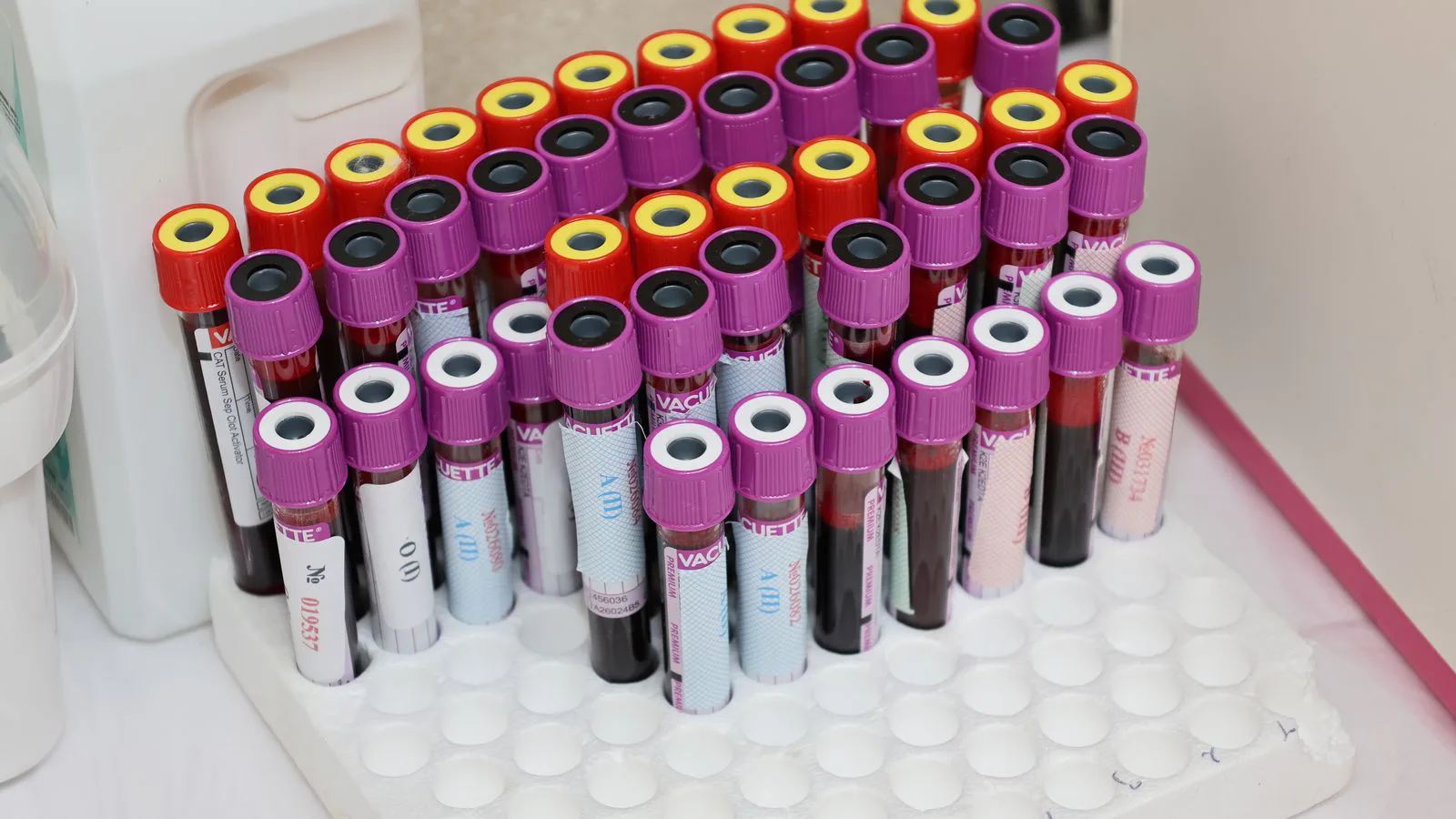
An HbA1c of 7 percent corresponds to an average glucose of about 154 mg/dL, or 8.5 mmol/L, or 53 mmol/mol. Here is the whole table, the formulas behind it, and when the number cannot be trusted.
What HbA1c actually measures
Glucose in the blood attaches slowly to haemoglobin inside red blood cells, and the reaction is irreversible. HbA1c is the proportion of haemoglobin carrying that attachment, so it rises and falls with how much glucose has been present over the life of those cells — roughly three months, though the most recent four weeks contribute about half the value.
That weighting is why a good last month can pull the figure down noticeably, and why a test taken two weeks after a change of treatment shows almost nothing. It is also why HbA1c cannot see variability: the same average can come from steady readings or from a daily swing between hypoglycaemia and 300 mg/dL, and only continuous monitoring distinguishes them.
Three units for one measurement
The percentage is the older DCCT-aligned unit and remains standard in the United States. Most of Europe reports the IFCC unit, mmol/mol, which is a different scale entirely rather than a rescaling — 7 percent is 53 mmol/mol, and the numbers are not interchangeable at a glance. The average glucose figure is a third thing again, derived from the HbA1c rather than measured.
Confusing them is a genuine hazard when a result crosses a border or an app. A reading of 48 is a diabetes-range HbA1c in mmol/mol and an unremarkable fasting glucose in mg/dL, and the two live in the same conversation. Always carry the unit with the number.
When the number cannot be trusted
HbA1c assumes red blood cells live a normal length of time. Anything that shortens that life — haemolytic anaemia, recent blood loss, a transfusion, advanced kidney disease, some haemoglobin variants — gives cells less time to accumulate glucose and pulls the result down, even when glucose is high. Conditions that lengthen it, such as iron-deficiency anaemia, push the result up.
Pregnancy shifts it too, which is one reason gestational diabetes is diagnosed with a glucose tolerance test rather than HbA1c. If any of this applies to you, the estimated average in the table is not a description of your glucose, and your team will use direct measurements instead.
| HbA1c (%) | HbA1c (mmol/mol) | Average glucose (mg/dL) | Average glucose (mmol/L) |
|---|---|---|---|
| 5.0 | 31 | 97 | 5.4 |
| 5.7 | 39 | 117 | 6.5 |
| 6.0 | 42 | 125 | 7.0 |
| 6.5 | 48 | 140 | 7.7 |
| 7.0 | 53 | 154 | 8.5 |
| 8.0 | 64 | 183 | 10.1 |
| 9.0 | 75 | 212 | 11.7 |
| 10.0 | 86 | 240 | 13.3 |
| 11.0 | 97 | 269 | 14.9 |
| 12.0 | 108 | 298 | 16.5 |
Frequently asked questions
- How quickly does HbA1c respond to a change?
- Partly within four to six weeks, fully after about three months, because the recent weeks carry more weight than the older ones. That is why repeat testing is usually spaced at least three months apart — a sooner test mostly measures the previous period again.
- Why does my meter average not match my HbA1c?
- Because a meter averages the moments you chose to test, and those are rarely spread evenly across the day and night. Testing mostly before meals produces an average below the true one; the HbA1c includes every hour, including the ones you were asleep for.
- Is a lower HbA1c always better?
- No, and this is important. A very low figure reached through frequent hypoglycaemia is worse than a slightly higher one reached steadily, and targets are individualised — older people and those with other conditions are often given a deliberately higher one. The target is a clinical decision, not a personal best.
Articles you may find interesting
All guides →Related tools
This article is general information, not medical or dietary advice. Do not change your diet, your medication or your insulin doses on the basis of a web page — talk to your doctor, dietitian or diabetes team, who can see your own results and history.
Sources
Spotted a mistake in this article?