Pizza Dough Hydration Explained: What the Percentage Means
Published 2/23/2026 · 4 min read · Everyday calculators

Marco Bianchi — Home, DIY & motoring writer at OneKitly
Renovation · Materials
Checked against 2 sources
Hydration is the weight of water divided by the weight of flour, written as a percentage — so 650 g of water with 1000 g of flour is 65% hydration. Higher hydration makes a wetter, stickier dough that bakes into an open, airy crust with big holes, while lower hydration gives a stiffer dough and a denser, chewier crust. Most home pizza sits between 60% and 70%, and the flour's protein strength sets how much water it can hold.
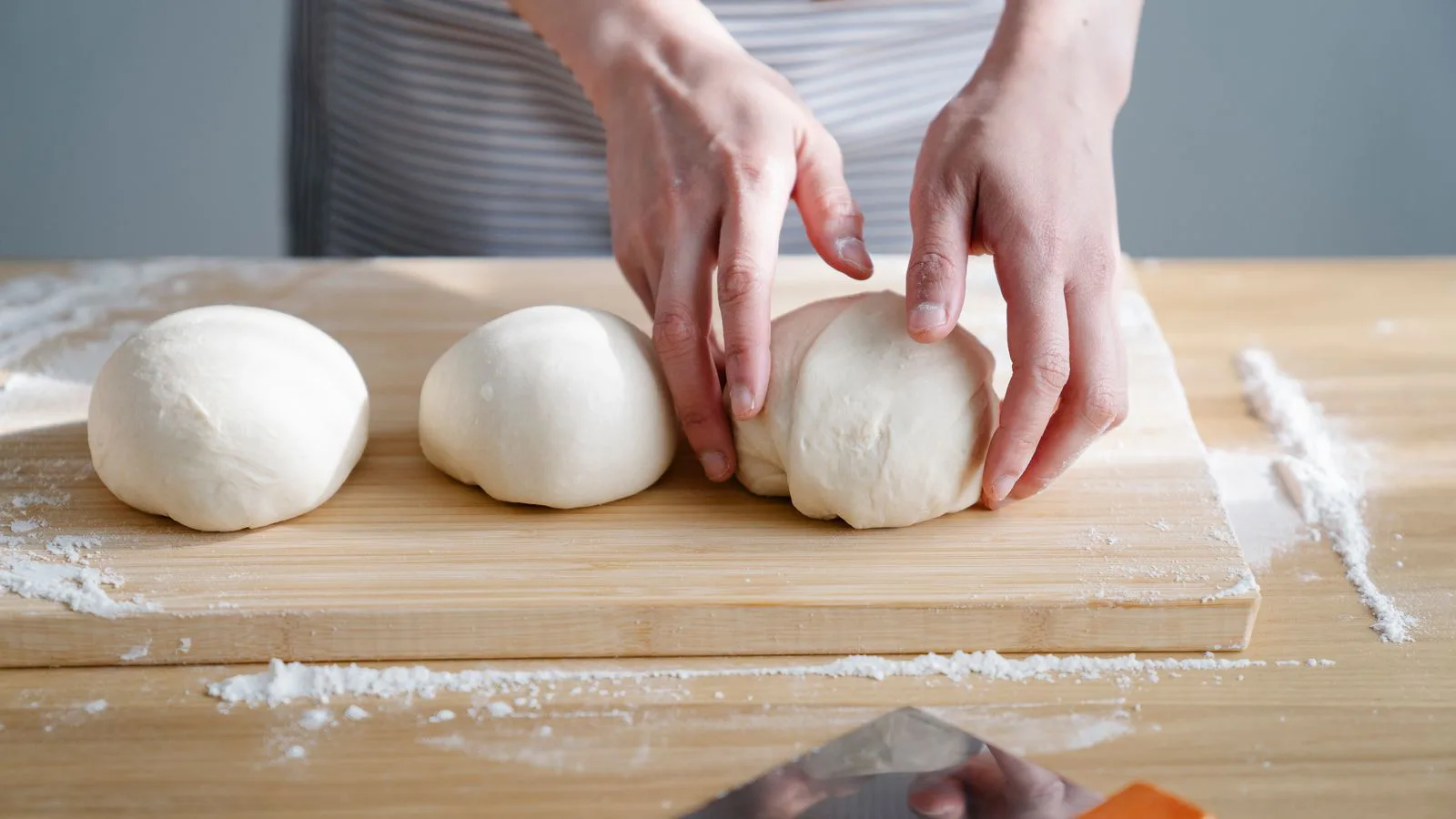
Understand what hydration percentage means, how water-to-flour ratio shapes your crust, and which level to choose for pan, Neapolitan, or New York style pizza.
The formula behind hydration percentage
Hydration uses baker's percentages, where flour is always 100% and every other ingredient is measured against it. Water divided by flour, times 100, gives the hydration figure: 600 g of water on 1000 g of flour is 60%, and 700 g is 70%. Because it is a ratio, it scales cleanly — the same 65% dough works whether you mix one pizza or ten.
Salt, yeast, and oil are counted the same way but do not enter the hydration number — only water and any other liquids do. If a recipe adds oil or milk, a careful baker folds their water content into the total, but for most home doughs plain water against flour is close enough.
How hydration shapes the crust
More water means more steam in the oven, and steam is what puffs the crumb into big, irregular holes. A high-hydration dough of 70% or more, given time and a hot bake, opens into a light, blistered rim. A drier dough near 58–60% traps less steam, so it bakes tighter and chewier — ideal when you want structure to hold heavy toppings.
Higher hydration also makes dough harder to handle: it sticks, spreads, and needs a gentler touch and often a longer, folded fermentation to build strength without kneading. That trade-off is why beginners usually start nearer 60% and climb toward 70% as their shaping improves.
Choosing hydration by pizza style
Neapolitan dough runs around 58–62%, low enough to shape by hand and bake in 90 seconds in a blistering wood oven. New York style sits near 62–65% with a little oil for a foldable, chewy slice. Roman al taglio and airy pan pizzas push to 75–85%, where the very wet dough gives that honeycomb interior.
Match hydration to your flour and oven, not just the style. A stronger bread flour with more protein can carry a higher hydration without turning to soup, and a hotter oven sets the crust before a wet dough spreads. Start from the style's range, then adjust a few points at a time until the crust matches what you want.
Worked with our own calculator
Pizza dough calculator
Given
- Number of pizzas
- 8
- Dough ball weight (g)
- 275
- Hydration (%)
- 130
Result
- Flour (g)
- 947
- Water (g)
- 1,231
- Salt (g)
- 18.941
- Fresh yeast (g)
- 2.841
These figures are produced by the calculator below, not typed in by hand — they are recomputed whenever the tool changes.
Run it on your own figures →Frequently asked questions
- What hydration should a beginner start with?
- Around 60–62% is forgiving: the dough holds together, shapes easily, and still bakes into a good crust. Once handling feels comfortable, raise the water a few points at a time toward 68–70% for a more open crumb.
- Does higher hydration always make a better pizza?
- No — it makes a different pizza. High hydration suits light, airy styles baked very hot, but a stiffer dough is better for a sturdy base under heavy toppings. The right hydration depends on the style, your flour, and your oven, not on chasing the highest number.
- How does flour affect how much water I can add?
- Protein is the key. Strong bread or high-gluten flour forms more gluten and absorbs more water, so it holds a higher hydration without collapsing. A weaker all-purpose flour turns slack and sticky at the same percentage, so drop the water a few points when you use it.
- How do I measure hydration accurately?
- Weigh everything with a kitchen scale — cups vary too much for reliable ratios. Weigh the flour, weigh the water, divide water by flour, and multiply by 100. Working by weight is the only way to hit the same hydration batch after batch.
Articles you may find interesting
All guides →Related tools
Sources
Spotted a mistake in this article?