How Long to Thaw a Turkey (Safely, Every Time)
Published 1/19/2026 · 4 min read · Everyday calculators

Marco Bianchi — Home, DIY & motoring writer at OneKitly
Renovation · Materials
Checked against 2 sources
In the refrigerator, allow about 24 hours of thawing for every 4 to 5 lb of turkey — so a 15 lb bird needs roughly 3 to 4 days. The faster cold-water method takes about 30 minutes per pound, with the wrapped turkey submerged in cold water changed every 30 minutes. Never thaw a turkey on the counter: the outer layers spend too long in the 40 to 140 °F danger zone where bacteria multiply.
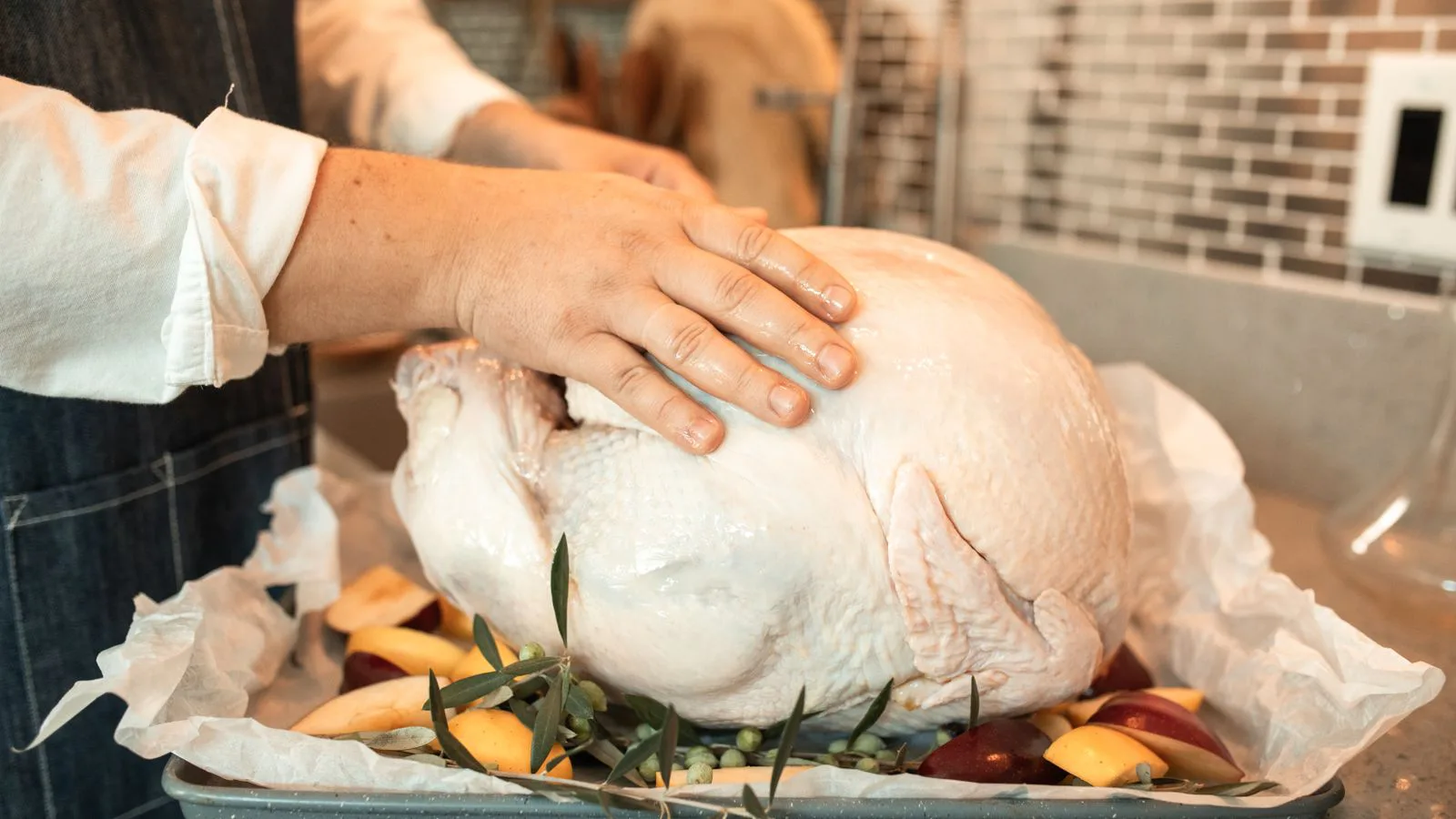
Fridge thawing needs about 24 hours per 4 to 5 lb; the cold-water method is faster. Follow food-safety rules to avoid bacteria.
Refrigerator thawing: slow but safest
The refrigerator method keeps the whole bird below 40 °F the entire time, so bacteria never get a warm window to grow. Plan on about 24 hours for every 4 to 5 lb: a 12 lb turkey needs about 3 days, a 20 lb bird up to 5. Set the turkey on a tray on the bottom shelf so any drips cannot land on other food.
Once thawed, a turkey is safe in the fridge for one to two more days before cooking, which gives helpful slack if your timing is off. If it is still partly frozen on cooking day, you can roast it straight away — just add about 50 percent to the cooking time and check the temperature with a thermometer.
Cold-water method: faster with attention
When you are short on days, cold-water thawing cuts the time to about 30 minutes per pound — so a 12 lb turkey thaws in roughly 6 hours. Keep the bird in a leak-proof bag and fully submerged in cold tap water, and change the water every 30 minutes so it never warms into the danger zone. A turkey thawed this way must be cooked immediately.
Never use warm or hot water to speed things up: it warms the surface into the range where bacteria thrive while the center is still frozen. The same rule rules out the counter and a warm garage. If the bag leaks, water can carry bacteria into the meat, so double-bag if you are unsure.
Food-safety rules that matter
The danger zone is 40 to 140 °F, the range where bacteria such as Salmonella multiply fastest. The whole point of safe thawing is to keep the surface out of that zone until cooking. Cook the turkey to an internal temperature of 165 °F, measured at the thickest part of the thigh without touching bone, and let it rest before carving.
Do not rinse a raw turkey in the sink: splashing spreads bacteria across the counter and nearby food, and cooking to temperature kills them anyway. Wash hands, boards and utensils after they touch raw poultry. A thaw calculator turns the bird's weight into a clear countdown so you start early enough to avoid unsafe shortcuts.
Worked with our own calculator
Turkey thawing time calculator
Given
- Turkey weight (kg)
- 5
- Method
- Fridge (~10.6 h/kg)
Result
- Thaw time (hours)
- 53
- Thaw time (days)
- 2.208
These figures are produced by the calculator below, not typed in by hand — they are recomputed whenever the tool changes.
Run it on your own figures →Frequently asked questions
- Can I thaw a turkey on the counter?
- No. At room temperature the outer layers quickly enter the 40 to 140 °F danger zone while the inside stays frozen, letting bacteria multiply. Always thaw in the fridge or in cold water.
- How long can a thawed turkey stay in the fridge?
- A turkey thawed in the refrigerator is safe there for one to two days before you cook it. That buffer is why the fridge method is the most forgiving if your schedule shifts.
- Can I cook a turkey that is still partly frozen?
- Yes. It is safe to roast a partly frozen turkey — just add roughly 50 percent to the cooking time and confirm it reaches 165 °F in the thigh. You cannot, however, deep-fry a turkey that is not fully thawed.
- Should I rinse the turkey before cooking?
- No. Rinsing raw turkey splashes bacteria around the sink and counter without making it safer, since cooking to 165 °F kills them. Skip the rinse and wash your hands and surfaces instead.
Articles you may find interesting
All guides →Related tools
Sources
Spotted a mistake in this article?