The Right Rice-to-Water Ratio for Every Type of Rice
Published 12/30/2025 · 4 min read · Everyday calculators

Marco Bianchi — Home, DIY & motoring writer at OneKitly
Renovation · Materials
Checked against 2 sources
For long-grain white rice, use a 1:1.5 ratio — 1 cup of rice to 1.5 cups of water. Brown rice needs more liquid at 1:2.25, while basmati and jasmine do best at 1:1.5 or slightly less. With the absorption method you bring the water to a boil, add rice, cover, and simmer on low until every drop is absorbed, then rest off the heat for 10 minutes.
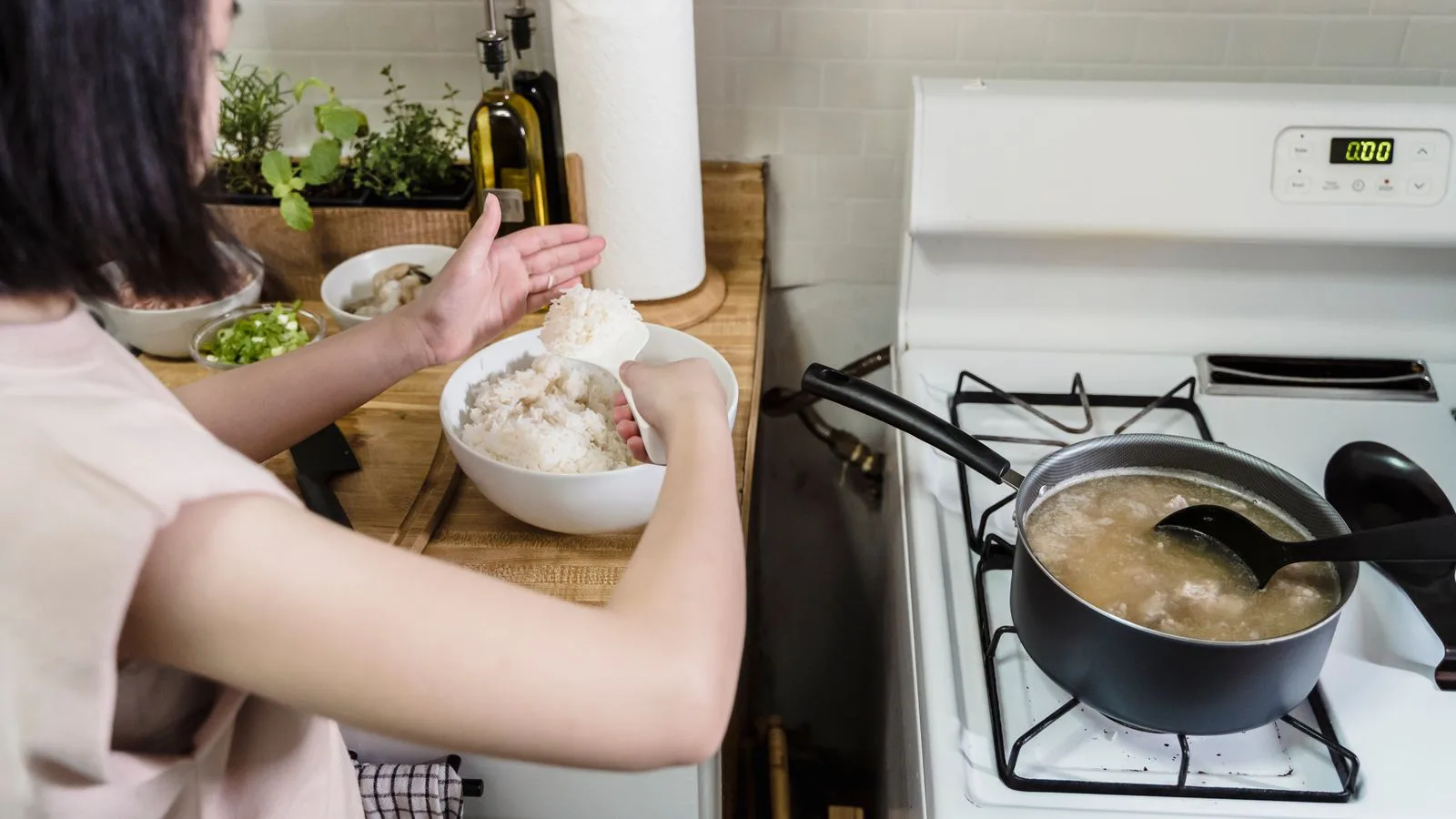
Learn the exact water ratio for white, brown, basmati and jasmine rice using the absorption method — no measuring guesswork.
Ratios by rice type
The water a rice needs depends on its grain and how much bran it keeps. Long-grain white rice absorbs at about 1:1.5. Basmati and jasmine, prized for separate fluffy grains, also sit near 1:1.5 — go slightly drier for basmati if you like it firm. Medium-grain and short-grain white rice hold more water, around 1:1.25 to 1:1.5, which gives the softer, stickier texture used in risotto bases and sushi rice.
Brown, red and other whole-grain rices keep their bran layer, which resists water and lengthens cooking. They need roughly 1:2.25 and about 40 to 45 minutes of simmering, versus 15 to 18 minutes for white rice. Rinsing white rice until the water runs clear removes surface starch and keeps grains from clumping; there is no need to rinse if you want a stickier result.
The absorption method step by step
The absorption method cooks rice in exactly the water it can soak up, so nothing is drained and no flavor is lost. Use a heavy pot with a tight lid so steam stays in. Bring the measured water to a boil, add the rinsed rice and a pinch of salt, stir once, then drop the heat to its lowest setting and cover. Resist lifting the lid: every peek releases steam and throws off the balance.
When the timer ends, take the pot off the heat but leave the lid on for 10 minutes. This rest lets the grains firm up and the last moisture redistribute, so the bottom is not soggy and the top not dry. Then fluff gently with a fork, lifting rather than stirring, to separate the grains without crushing them.
Common mistakes and how to fix them
Mushy rice usually means too much water or too high a heat. If grains are still hard when the water is gone, add a couple of tablespoons of hot water, cover and cook a few minutes more. Rice that sticks to the pot bottom is a sign the heat was too high or the pot too thin — lower the flame next time and let the rest step do its work before you scrape.
Scaling up is simple because the ratio stays fixed no matter the quantity: the same 1:1.5 works for 1 cup or 4 cups. Only the pot size and, slightly, the timing change with larger batches. A calculator removes the mental math for odd amounts and lets you dial in servings, rice type and the exact water in one step.
Worked with our own calculator
Rice to water ratio calculator
Given
- Rice (cups)
- 2
- Rice type
- Basmati (1:1.5)
Result
- Water (cups)
- 3
These figures are produced by the calculator below, not typed in by hand — they are recomputed whenever the tool changes.
Run it on your own figures →Frequently asked questions
- Should I rinse rice before cooking?
- Rinse white, basmati and jasmine rice until the water runs clear to remove surface starch and keep grains separate. Skip rinsing when you want a stickier texture, as for sushi or creamy dishes.
- Why is my rice mushy?
- Mushy rice comes from too much water or heat that is too high. Measure the water precisely, keep the simmer gentle, and always add the 10-minute covered rest so the grains firm up before you fluff them.
- Does the ratio change with quantity?
- No. The rice-to-water ratio is fixed, so 1:1.5 holds whether you cook a little or a lot. Only the pot size and, slightly, the timing shift with larger batches.
- Can I cook brown rice like white rice?
- Not quite. Brown rice keeps its bran, so it needs more water — about 1:2.25 — and roughly 40 to 45 minutes of simmering, more than double the time of white rice.
Articles you may find interesting
All guides →Related tools
Sources
Spotted a mistake in this article?